Construction Solution
Worker Collision Detection
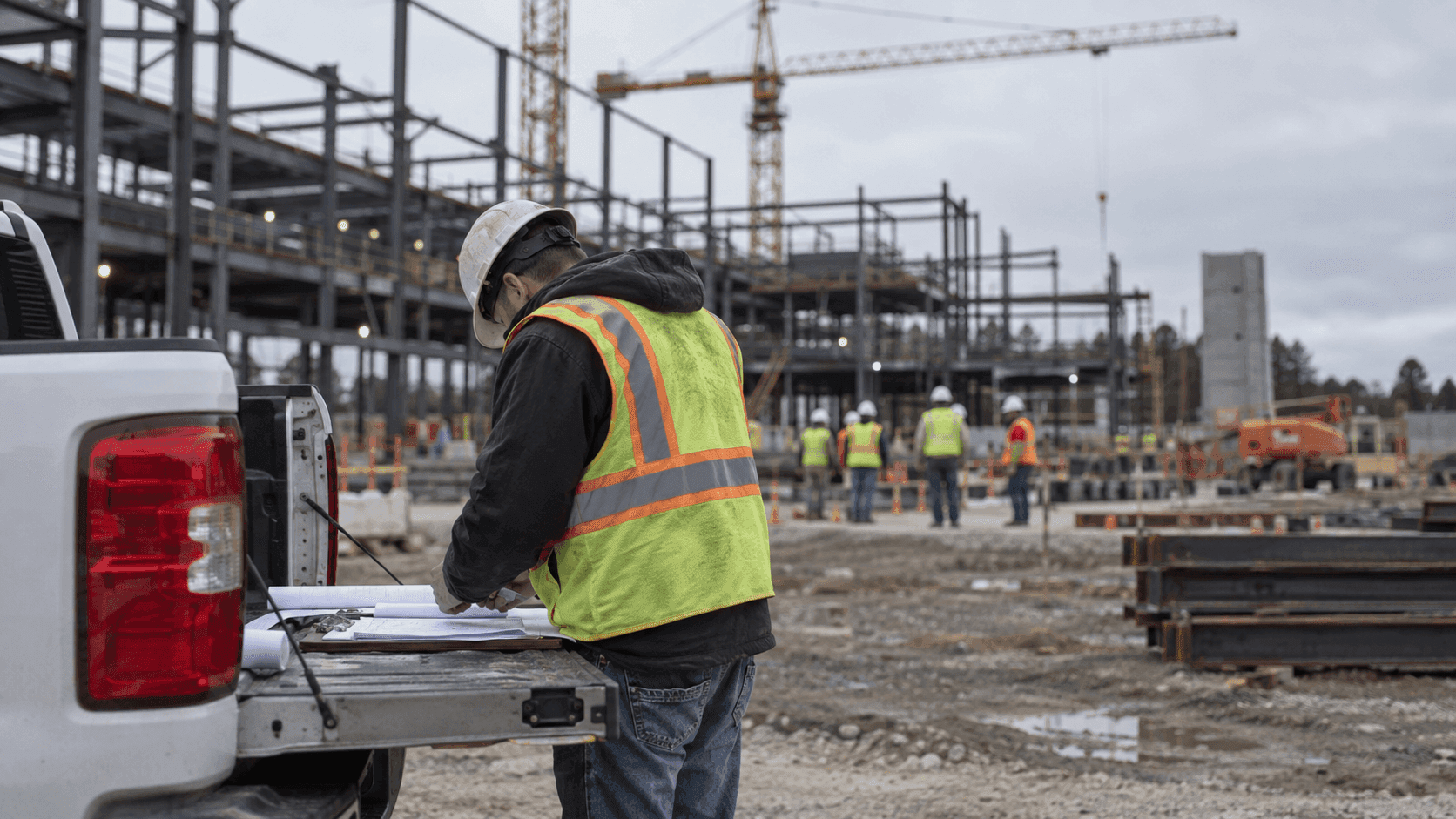
When a worker and heavy equipment come within the set distance, the tag warns with vibration and a buzzer, and the location and the action history are recorded automatically.

Track worker and equipment distance to detect and alert on collision risk
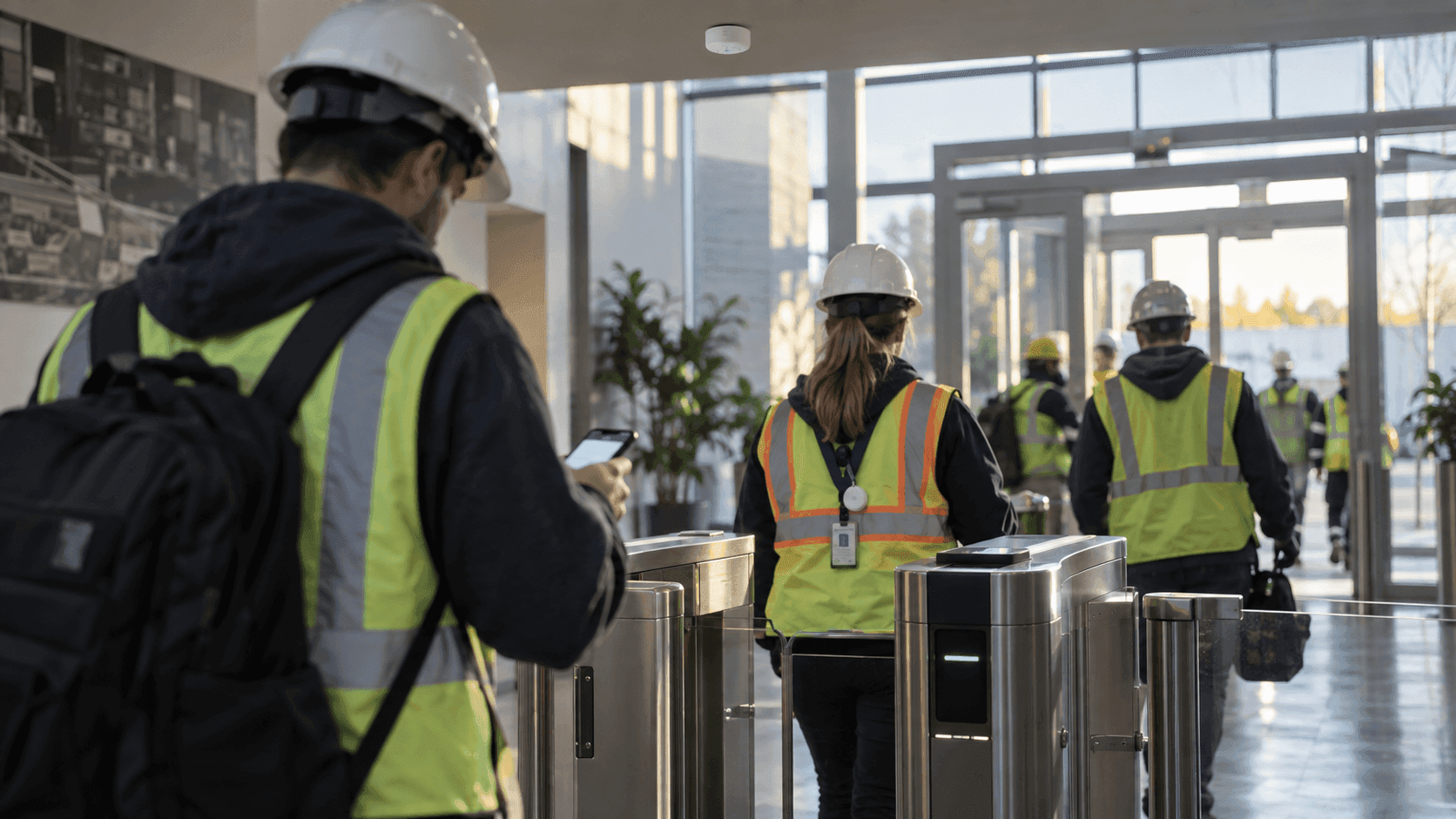
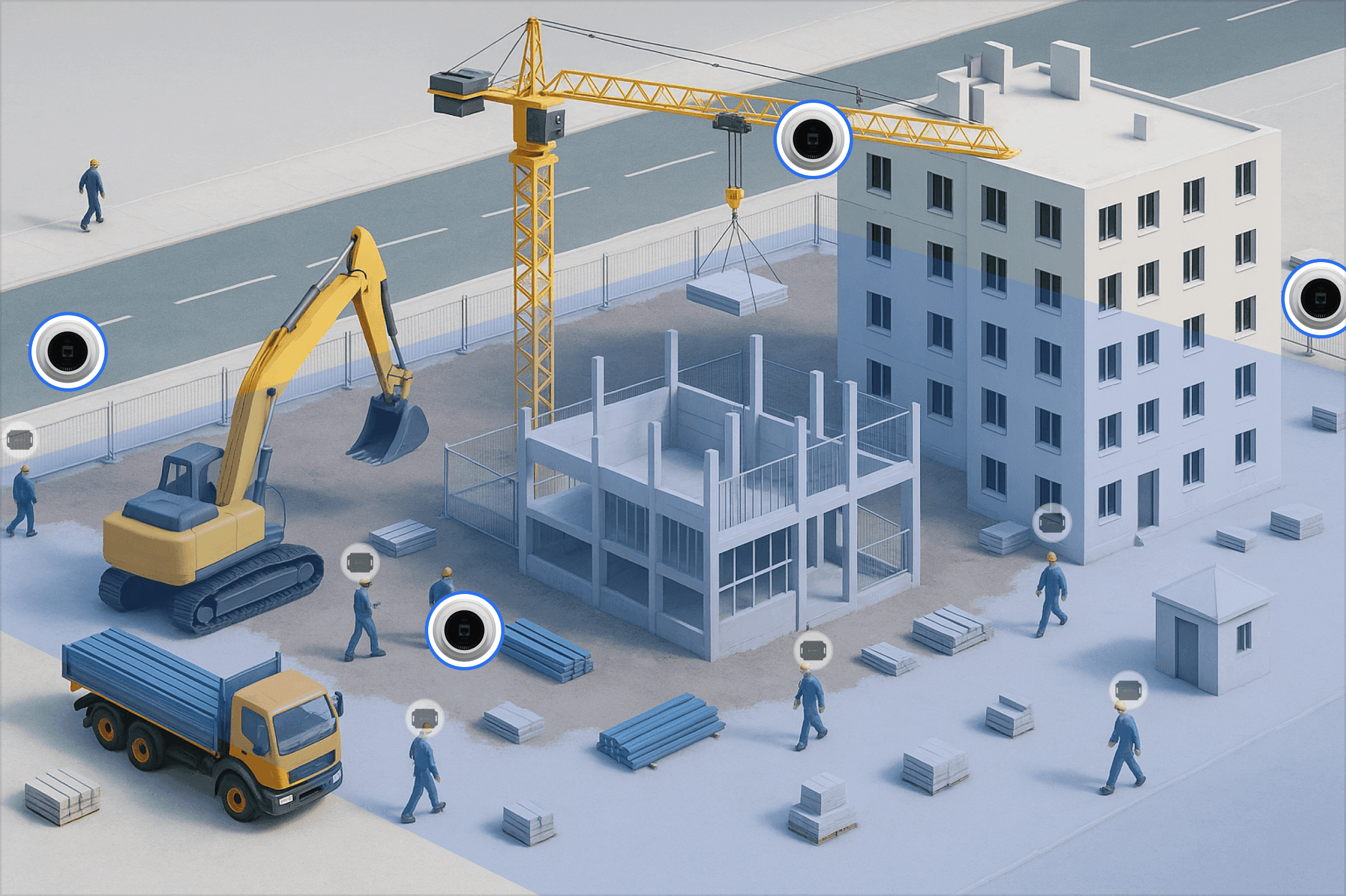
Location tags on worker helmets and heavy equipment let the distance between the two be calculated. Inside the set distance, the worker's tag warns with vibration and a buzzer, and the alert also appears on the monitoring screen and the manager's phone. Integrate CCTV and environmental sensors and the location and the response history can be reviewed together.
TwinTracker UWB
A reader that receives UWB signals and calculates location. It tracks multiple tags at once and provides positioning within ±10 cm in open indoor conditions. On sites with a lot of metal structure and multiple levels, anchor density is adjusted to design for the target accuracy.





Heavy Equipment Proximity Risk Detection
Worker and heavy equipment positions and the distance between them are checked on the same screen. Hazardous zone entry and evacuation headcount are checked on the same drawing as well.
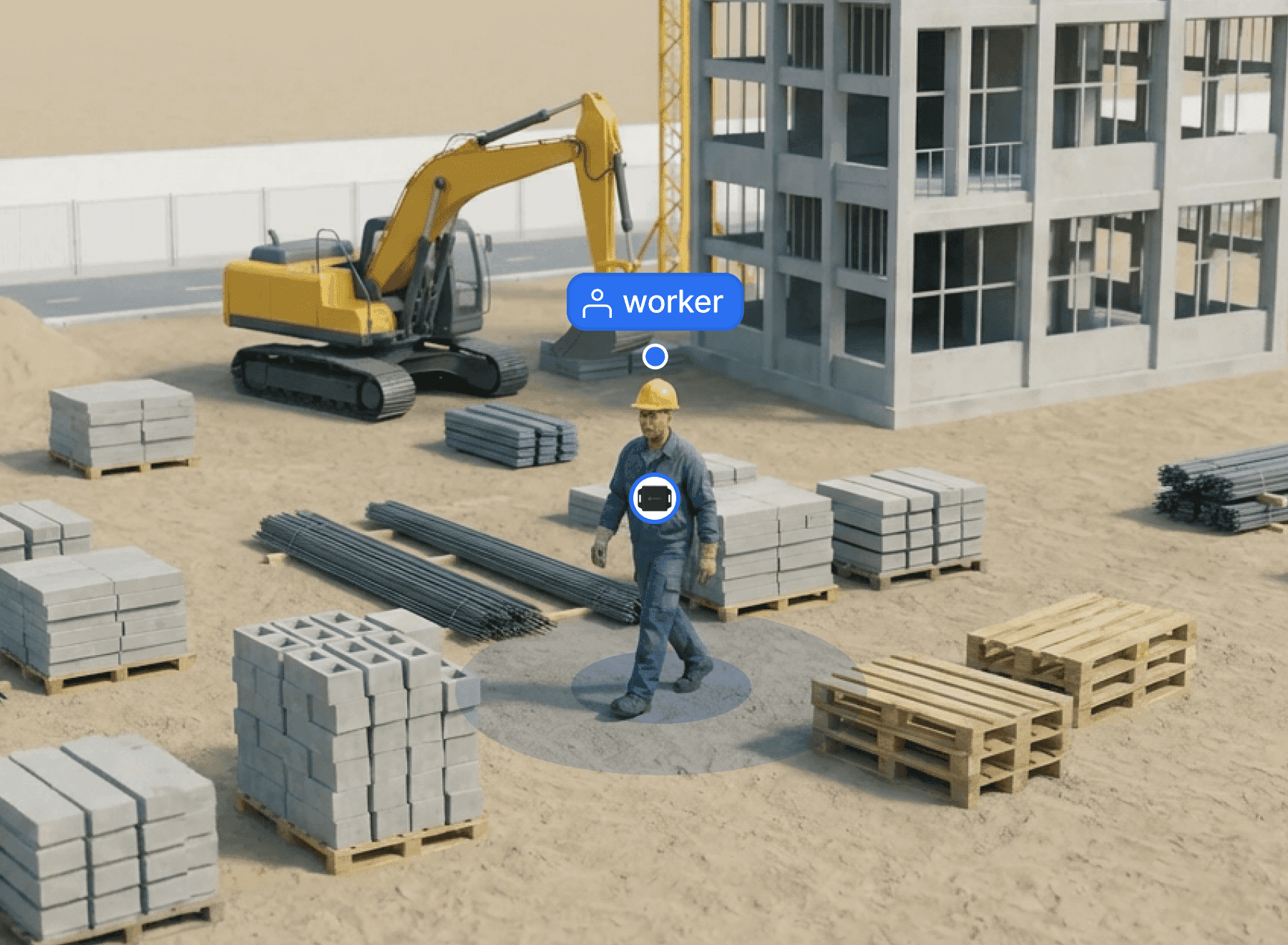
Workers and heavy equipment seen at the same time
Look at worker and equipment positions on the same drawing. Fit a UWB Tag to a safety helmet or a vest and subcontractor and day labor positions appear as well. Tags are registered against the worker using them, and assignment details are managed at each shift change.
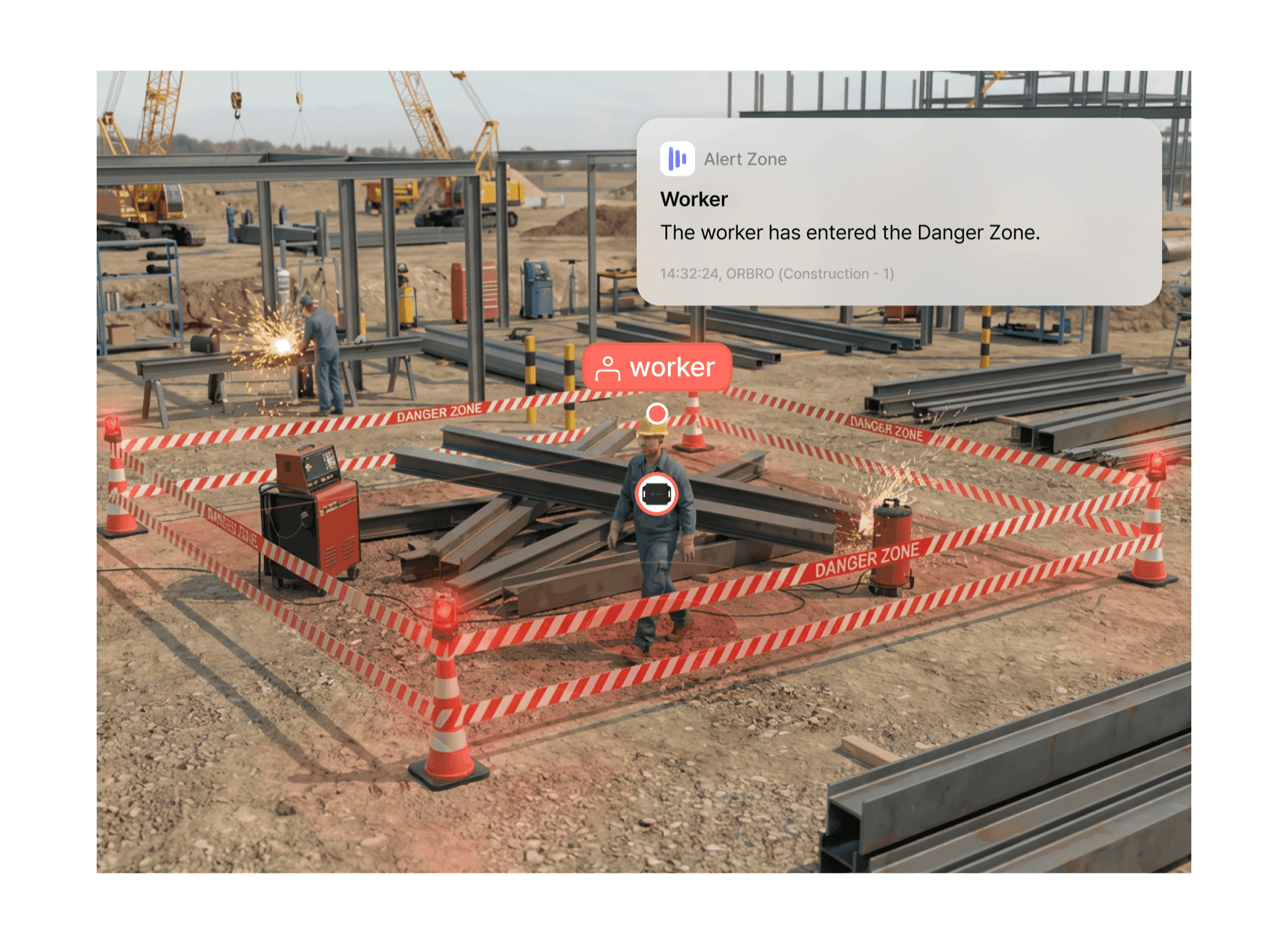
Instant on-site alert when a hazardous zone is entered
Draw Safe Zone and Restricted Zone on the plan and an alert fires the moment someone enters. It goes to the manager dashboard and the worker's wearable device at the same time, so it reaches the site even in hours when the control room is empty. The wearable device mounts on a safety helmet, so workers keep their usual movements.
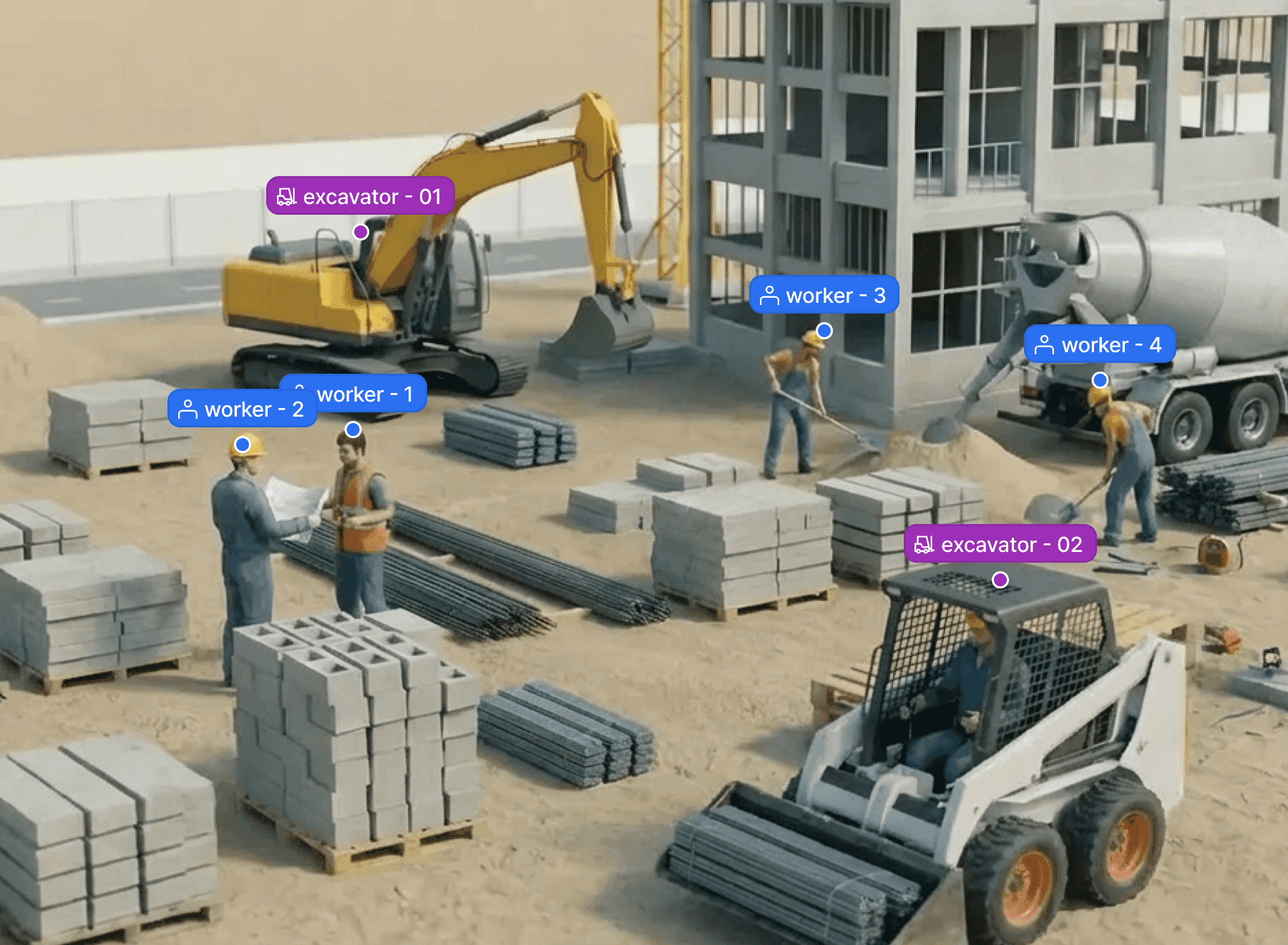
Direct alert to the worker as equipment approaches
When the distance between a worker and heavy equipment falls inside the set value, the tag warns with vibration and a buzzer. The worker recognizes the risk on the spot, and because the equipment's movement path and the alert location are recorded, you can identify the stretches where risk repeats.
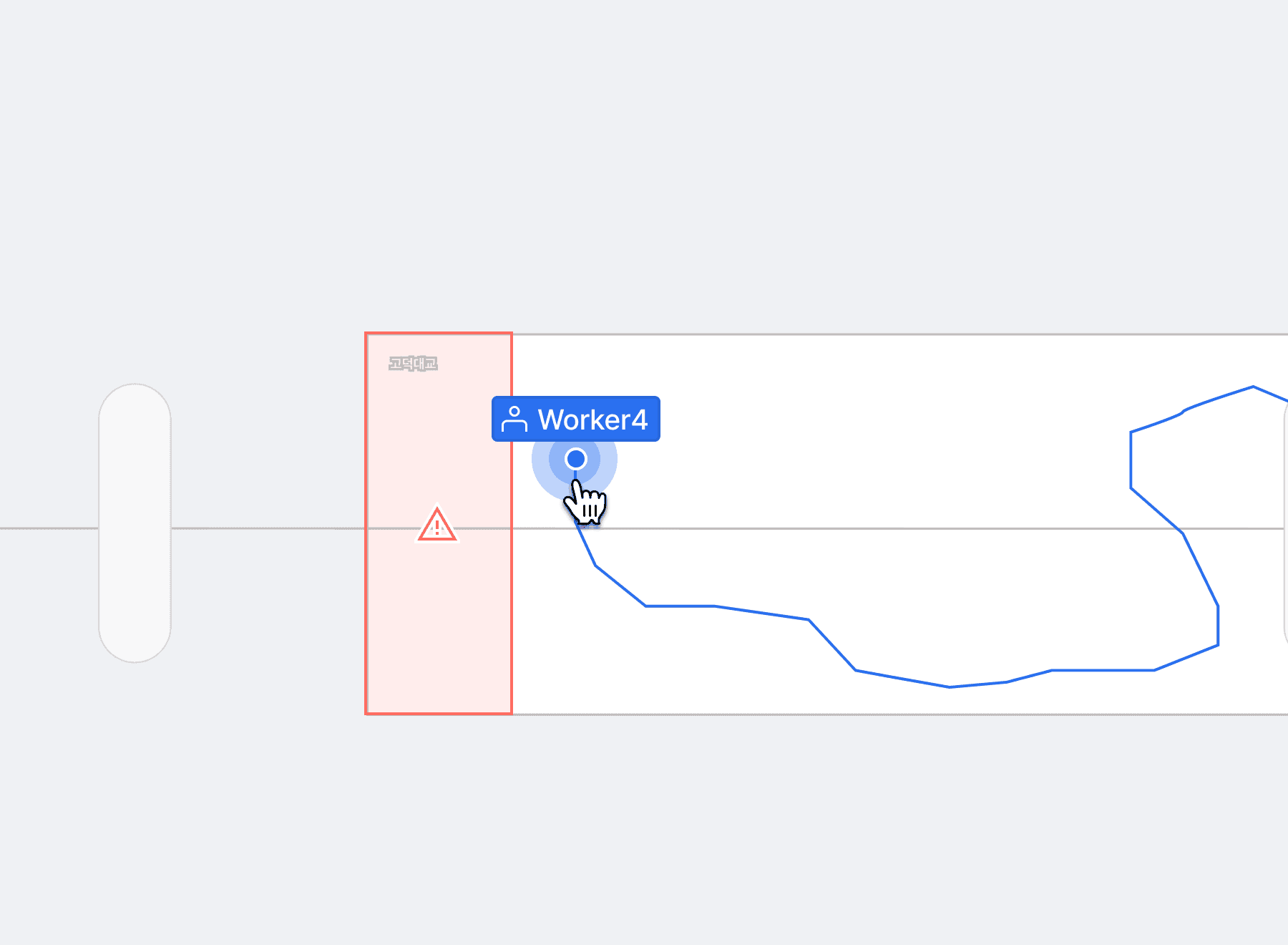
Evacuation headcount totaled at once
Compare the list of people to evacuate against the tags recognized at the assembly zone. Headcount by zone is reviewed from the position and movement path of the UWB Tag assigned to each worker. For anyone not confirmed at assembly, staff check the site and judge whether they remain inside.
Safety Response History
Alert timestamps are looked up together with the acknowledgement and action records the responsible person left. The stored history is compiled into reports and used as response material.
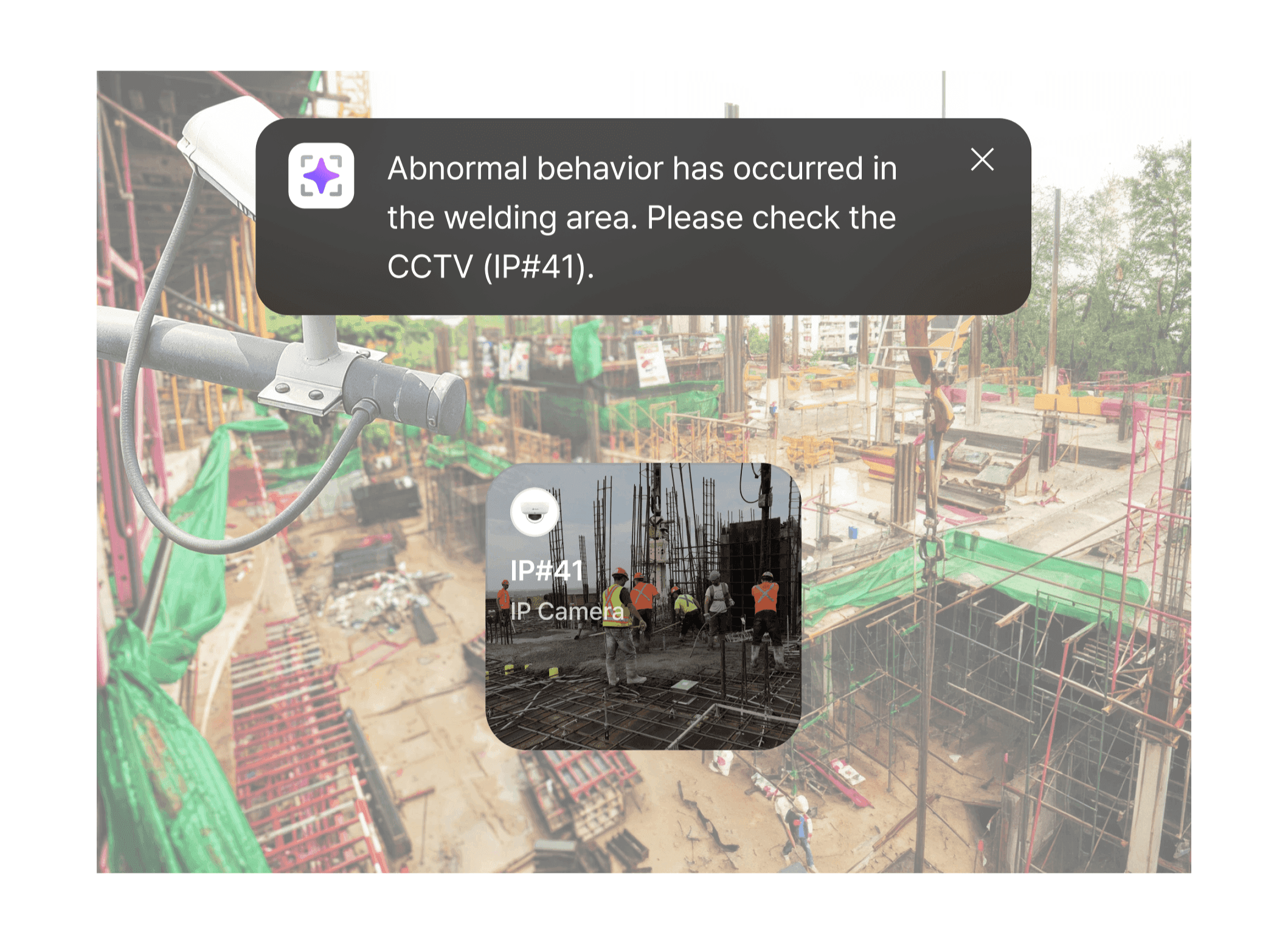
Investigation pairing location with video
The worker's location at the moment risk was detected and the CCTV footage for that zone are viewed side by side. The alert names the camera to check, so no time goes into finding which screen to look at. AI video events and environmental sensor readings such as gas and temperature sit on the same timeline, which reconstructs the moments before an incident in one pass.
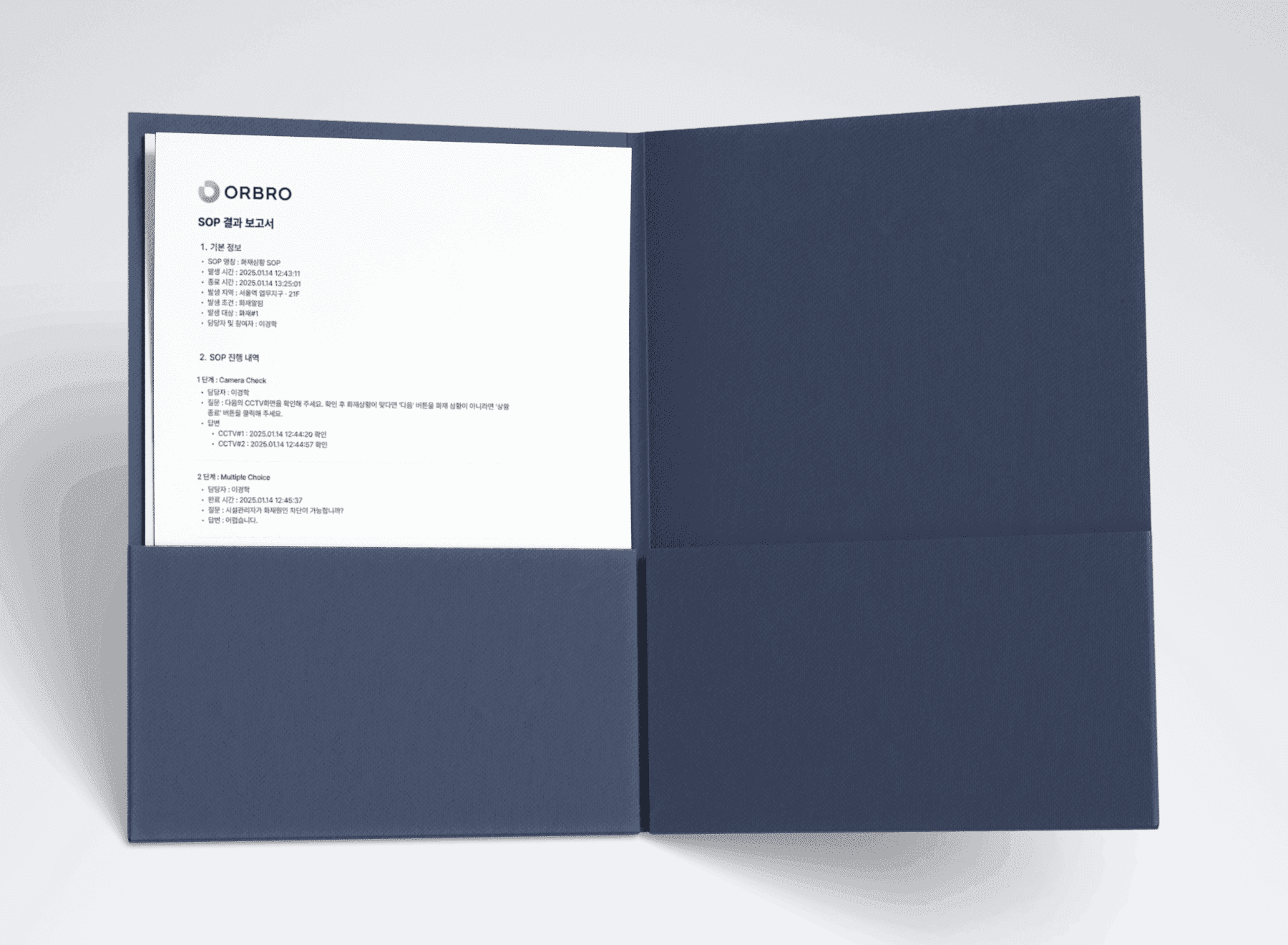
Action history recorded and reports generated automatically
Review the alert record together with the action the responsible person entered. ORBRO OS records the time an alert fired and the acknowledgement and action times left in the system. The stored items are compiled into daily and weekly reports and used to review how the response went.
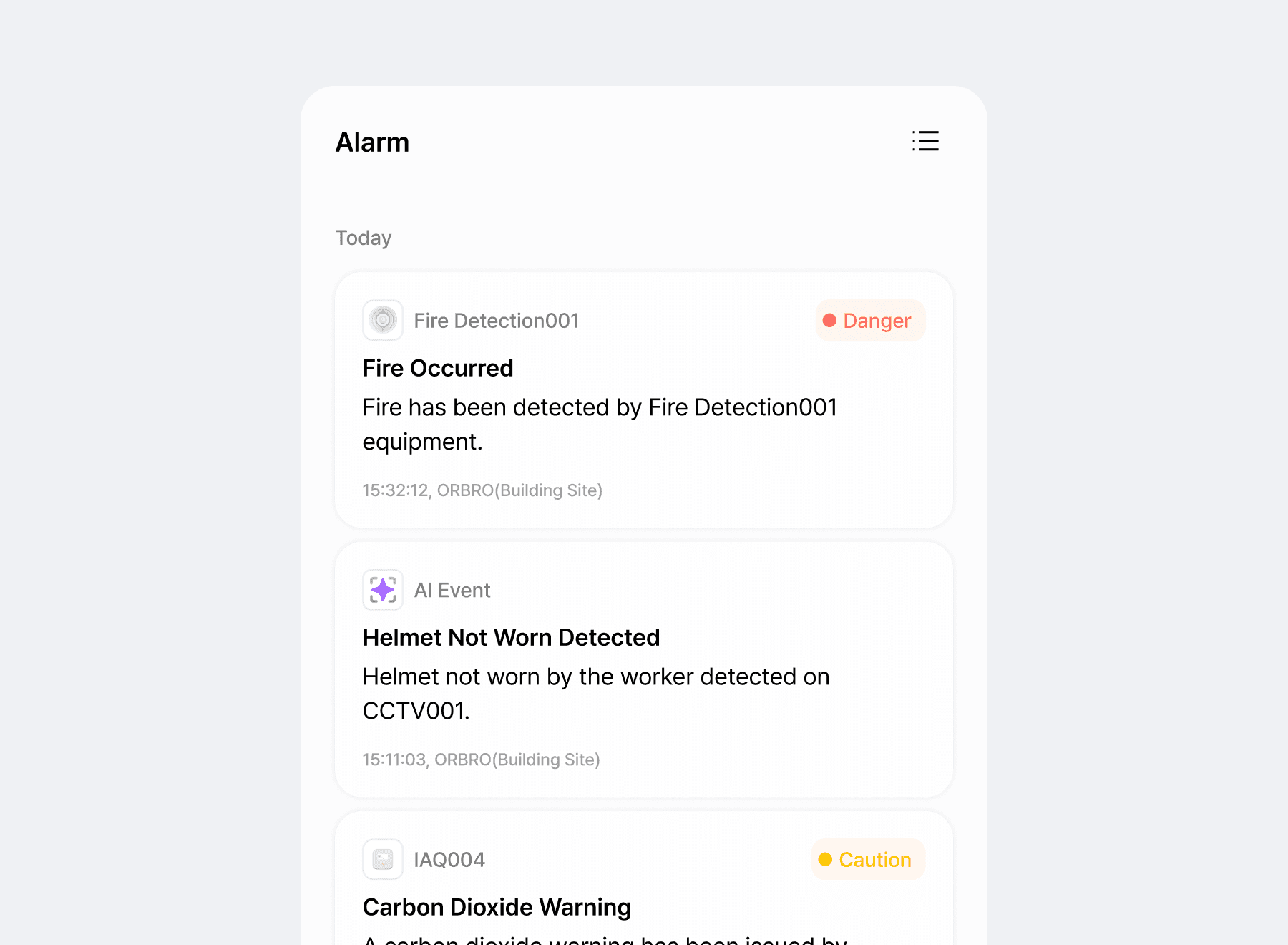
Fire, helmet and gas alerts received together
Different kinds of risk, such as a safety helmet not being worn, a fire, or gas concentration, collect into one alert list. When video analysis, environmental sensors and location data each sit on a separate screen, it is hard to decide which one to look at first. Every alert keeps the time and the detection point, and recipients are assigned separately for each type.
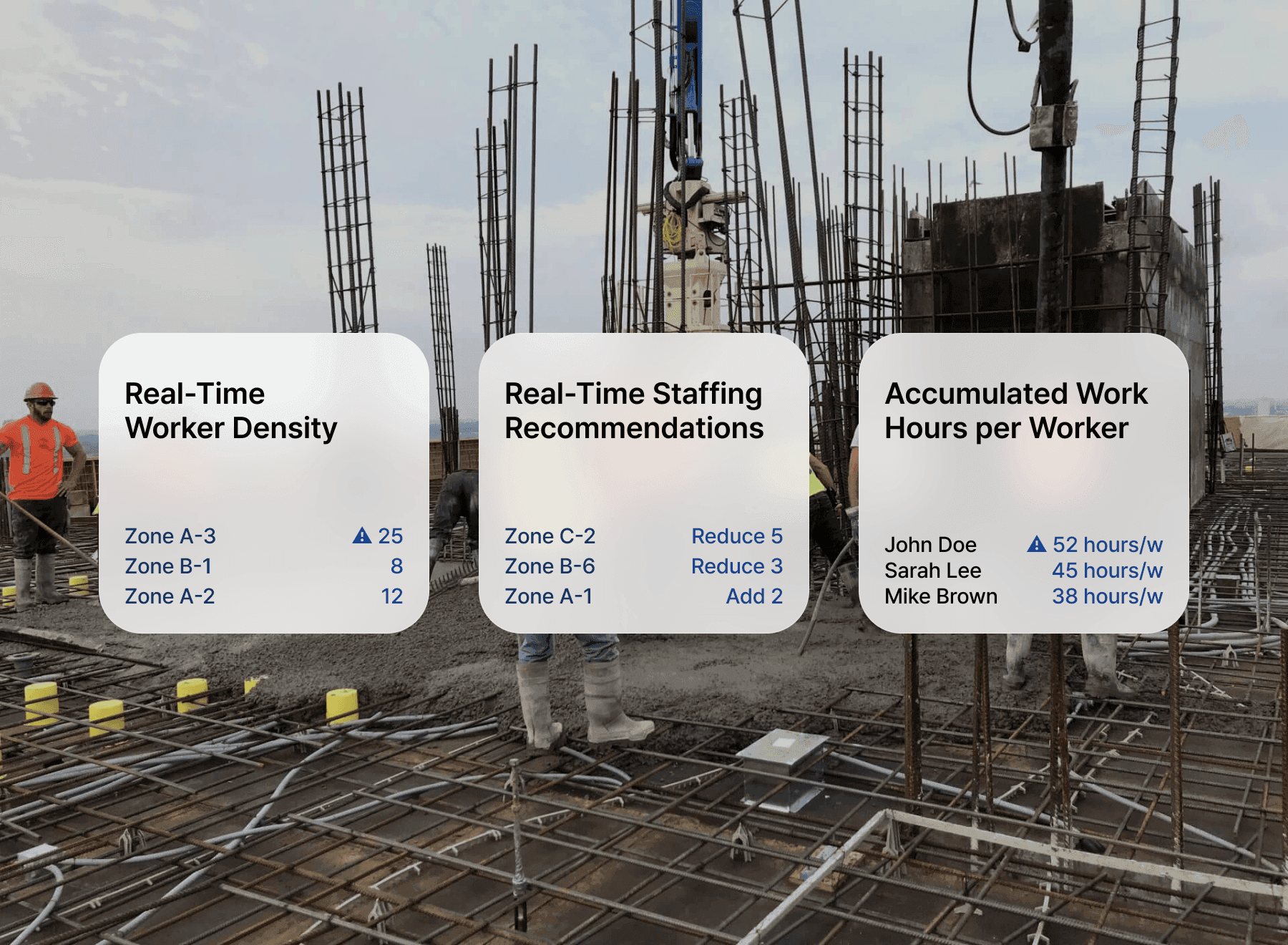
Density by zone and working time management
Pick out crowded zones before they overlap with equipment movement paths. How many people are in each zone right now is totaled in real time, which builds the grounds for adjusting work assignments. For work with a limit on continuous exposure, such as high heat or confined sections, accumulated time sets when to rotate crews.
Recommended Products
Components Based on ORBRO OS
Each solution operates with various products connected on top of ORBRO OS. Configurations can be flexibly adjusted depending on the scope of application and on-site conditions.
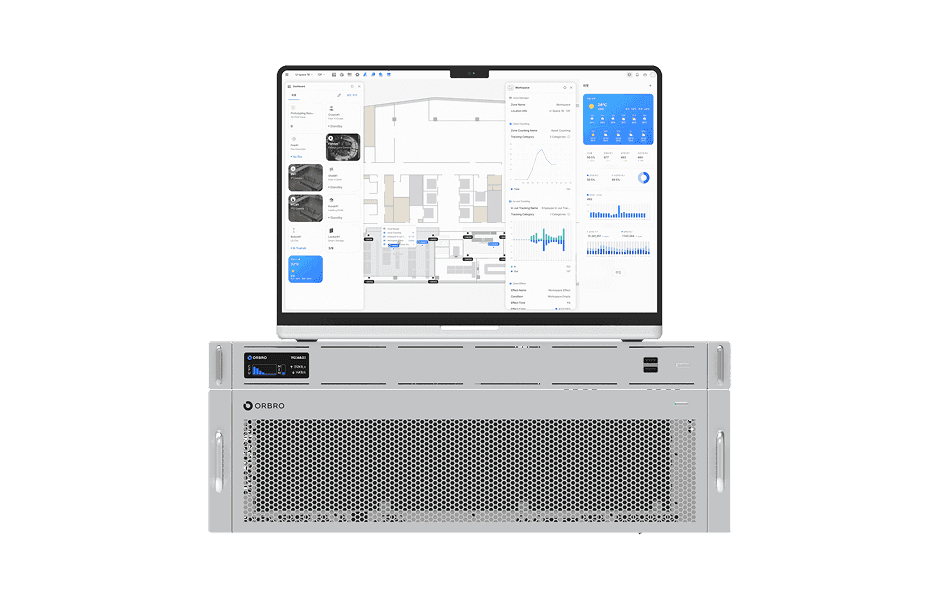
ORBRO OS2
ORBRO OS2
Align location, video, and sensor data on a spatial layer to turn all on-site situations into a single operational workflow.
Learn More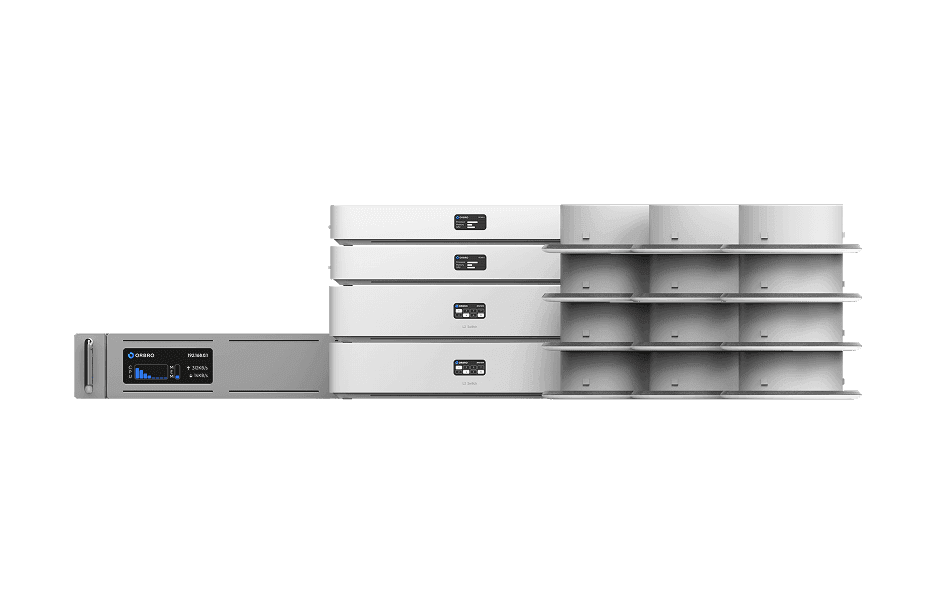
UWB Location Tracking
UWB Location Tracking
Enhance worker safety and precisely manage the movement of assets and equipment through real-time tracking, improving productivity and operational efficiency at the same time.
Learn More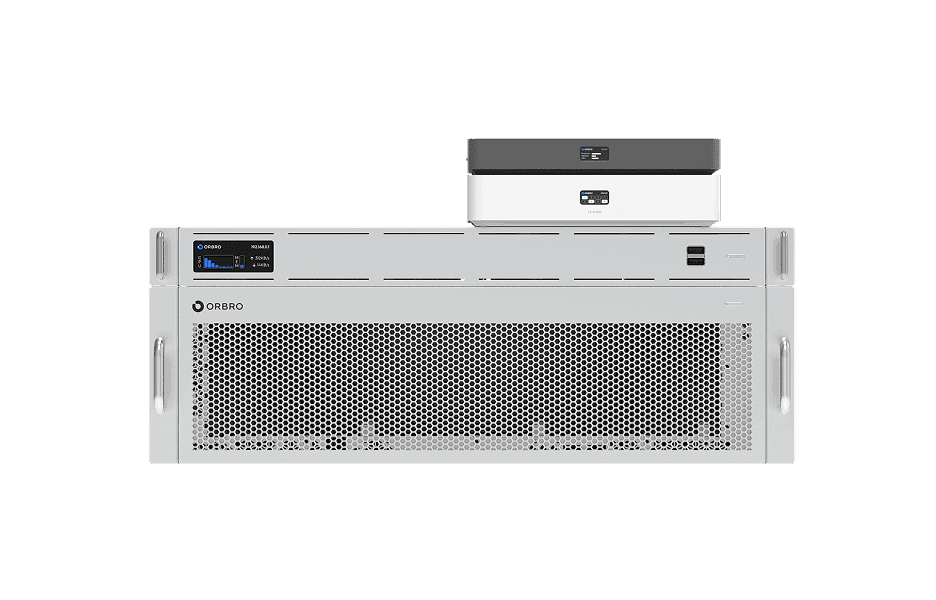
Video-based Location Tracking
Video-based Location Tracking
Analyze camera footage to convert movements of people and vehicles into coordinates, providing map-based real-time tracking along with path and dwell-time analysis.
Learn More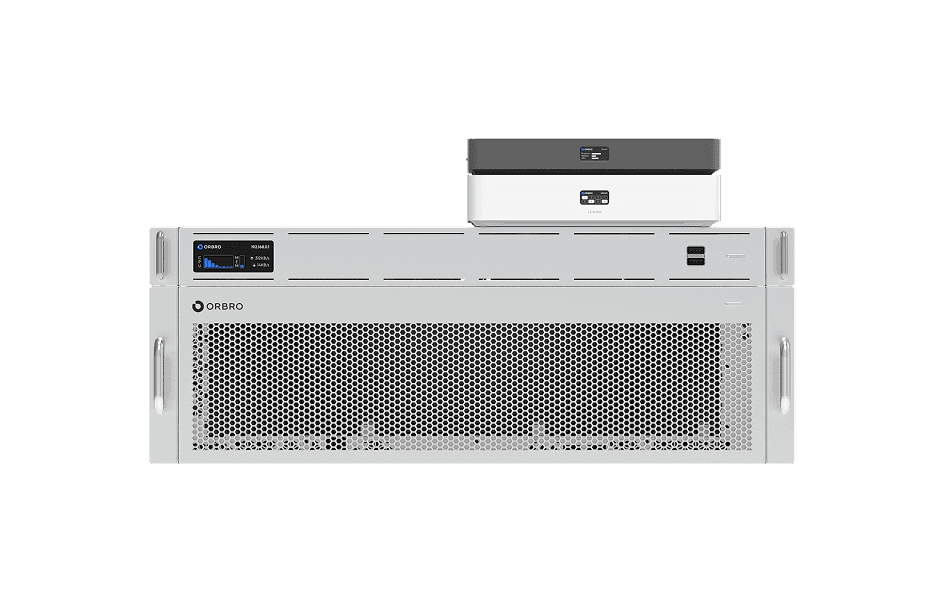
Worker Safety Management
Worker Safety Management
Automatically detect events such as falls, collapses, and intrusions. Alerts are sent immediately and situations are recorded to strengthen site safety and support rapid response.
Learn More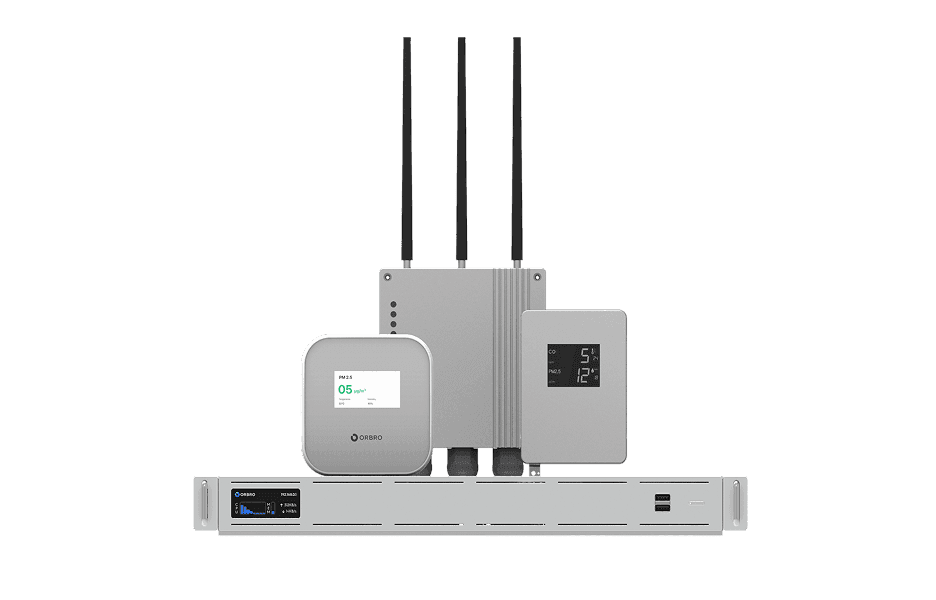
Sensor Monitoring
Sensor Monitoring
Provide a wide range of monitoring solutions required on site, from LoRa communication sensors to CO₂ detectors and air quality monitors.
Learn More