AI Agent for Enterprises: The Digital Workforce Reshaping the Future of Operations
2025-11-02
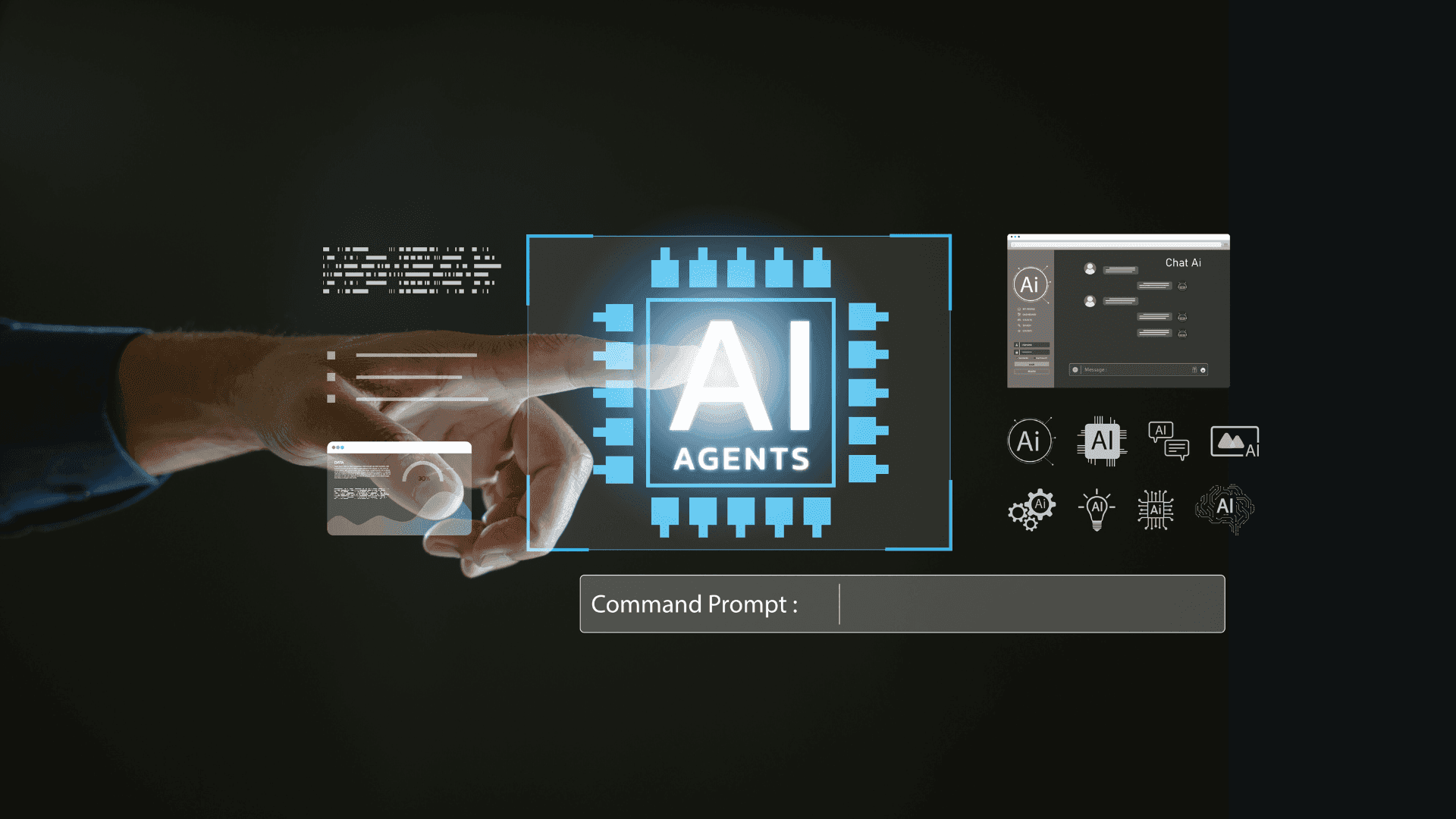
The artificial intelligence revolution is entering a new chapter. While recent years have impressed us with the writing and question-answering capabilities of large language models (LLMs), today’s B2B market is witnessing the rise of a far more execution-driven concept: AI Agents for enterprises.
No longer limited to passively providing information, AI Agents function like diligent “digital employees.” They can independently analyze situations, create action plans, and directly interact with enterprise management systems to achieve specific business objectives. So how exactly is this technology redefining the rules of the game?
1. Breaking the Misconception: How Are AI Agents for Enterprises Different from Traditional Chatbots?
Many executives still assume that an AI Agent is simply a more advanced chatbot. However, the fundamental difference lies in autonomous action.
Traditional Chatbots (or basic LLMs):
Operate on a Question–Answer model. You ask a question; they provide a response. They cannot independently execute operational tasks without explicit human commands.
AI Agents for Enterprises:
Operate on a Goal–Action model. You assign a goal (for example: “Resolve the shortage of Component A in Warehouse B”). The AI Agent will automatically analyze inventory data, send quotation requests to approved suppliers, compare pricing, and generate a draft purchase order in the ERP system—ready for managerial approval.
This shift from “information assistant” to “action-oriented agent” is the key to fully liberating human labor from complex operational workflows.
2. How an AI “Virtual Employee” Works
For an AI Agent for enterprises to function like a real employee, it is built upon three foundational pillars:
Perception
The AI Agent continuously collects and interprets data from its environment via API connections to CRM, ERP, email platforms, or IoT sensor data within factories.
Reasoning & Planning
When assigned a goal, the Agent’s “brain” (often powered by advanced LLMs) breaks down the objective into smaller tasks, prioritizes them, and formulates multiple execution scenarios.
Action
The Agent leverages authorized tools to directly interact with digital and physical systems. It can click through software interfaces, complete forms, send messages, update databases, and even control machinery when integrated with operational technologies.
3. The Ultimate Synergy: AI Agents Integrated with Digital Twin and RTLS
An AI Agent for enterprises unlocks its full potential when it is given the ability to “see” and “hear” the physical world. In modern industrial parks and logistics hubs, the combination of AI Agents, Digital Twin models, and Real-Time Location Systems (RTLS) is creating transformative operational breakthroughs.
Autonomous Logistics Orchestration
In a large-scale warehouse, an RTLS system continuously tracks the real-time location of hundreds of forklifts and personnel. The AI Agent acts as a digital conductor. When it detects congestion risks in a specific zone through location data, it does not wait for managerial instructions. Instead, it recalculates optimal routes and automatically pushes rerouting notifications to affected forklift operators, resolving traffic bottlenecks instantly.
Maintenance Agent Powered by Digital Twin
When a Digital Twin mirrors the real-time condition of a production line in a virtual environment, the AI Agent serves as a 24/7 monitoring supervisor. If the digital replica reports that motor temperature exceeds safety thresholds, the Agent automatically reviews maintenance schedules, temporarily disables the equipment to prevent hazards, and dispatches the nearest available engineer based on RTLS coordinates.
4. Diversifying the Workforce: Common Types of AI Agents Today
Organizations are not deploying just one Agent—they are building Multi-Agent Systems, where specialized AI Agents collaborate across departments:
Data Analyst Agent
Automatically extracts business data, generates visual dashboards, and delivers cause–effect analytical reports every Monday morning—without reminders.
Supply Chain Agent
Continuously monitors market prices, weather conditions, and global logistics developments to proactively recommend contingency procurement strategies, minimizing supply chain disruptions.
B2B Customer Support Agent
Capable of retrieving complex technical documentation (SOPs, ISO standards) to directly guide partners in resolving system issues, rather than merely creating support tickets.

5. Economic Benefits of Deploying AI Agents in Enterprise Operations
Adopting AI Agents for enterprises provides mission-critical competitive advantages in today’s aggressive market landscape:
Resource Optimization
Tasks that previously required three employees working for a week—such as auditing records and reconciling documentation—can now be completed by an AI Agent within minutes, with near-perfect accuracy.
Unlimited Scalability
When revenue and workload double, companies do not need to double their back-office staff. Instead, they simply scale computational resources to empower their AI Agents.
Real-Time Execution
Machines do not sleep. Digital agents operate 24/7, eliminating delays in mission-critical operational decisions.
Conclusion
The concept of AI Agents for enterprises is redefining the very structure of modern organizations. Humans will increasingly focus on strategic direction and innovation, while digital workforces take over analysis, execution, and operational monitoring.
The synergy between the sharp reasoning capabilities of AI Agents and the physical-world visibility enabled by technologies like Digital Twin and RTLS forms a winning formula for Industry 4.0. Don’t wait until competitors successfully deploy them. It is time for your enterprise to proactively onboard these elite digital employees into your core operational ecosystem.
Recommended Blogs

Is That Location Still Current? Checking RTLS Data Freshness
2026-10-14

AI-generated illustration of the selected local environment; not a photograph of a customer site.
2026-10-13
Asset Tracking Across the Warehouse Door: Joining Indoor and Yard Records
2026-10-12
Forklifts Queue at Dispatch. Look at Dwell Time.
2026-10-08