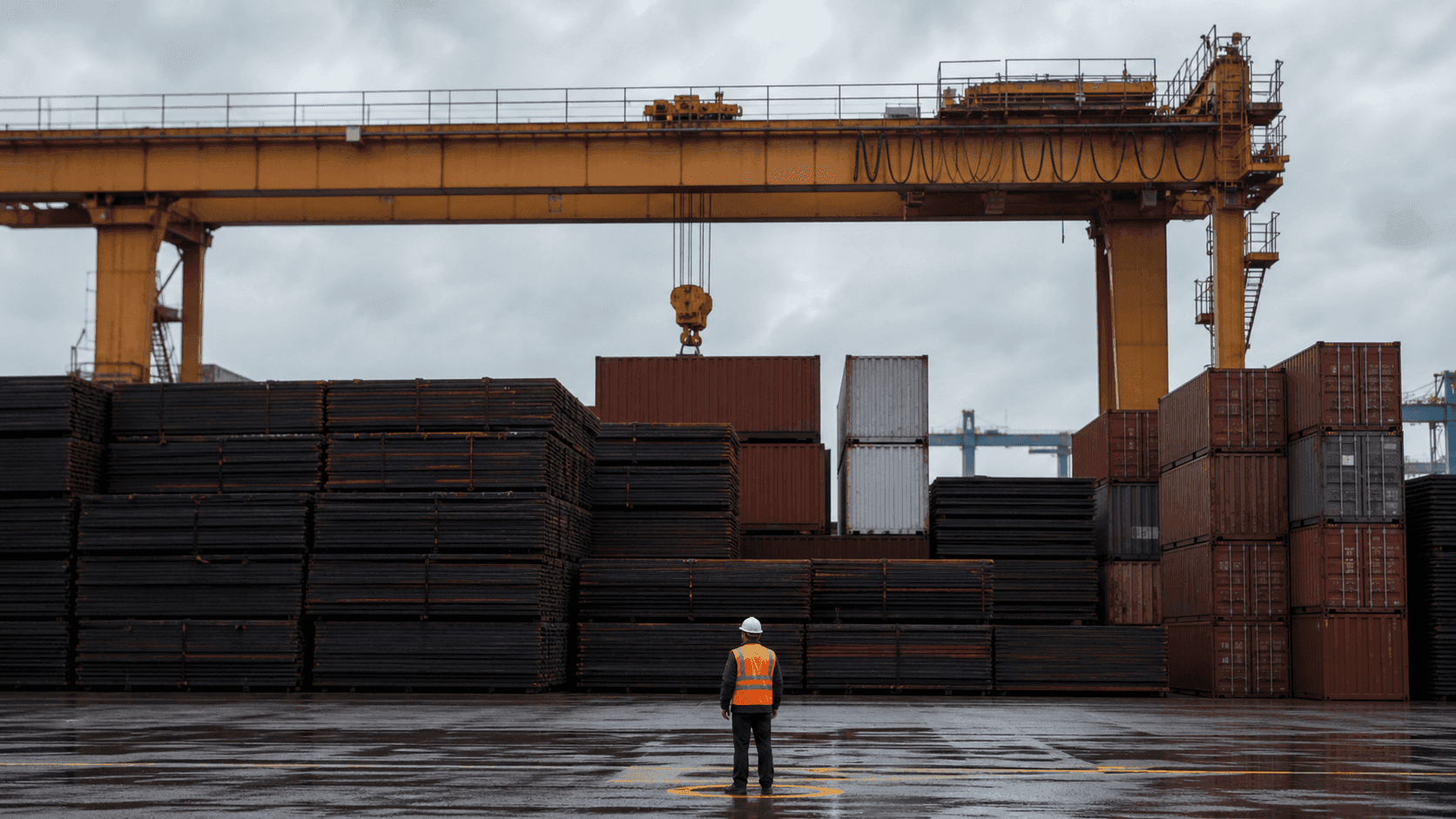
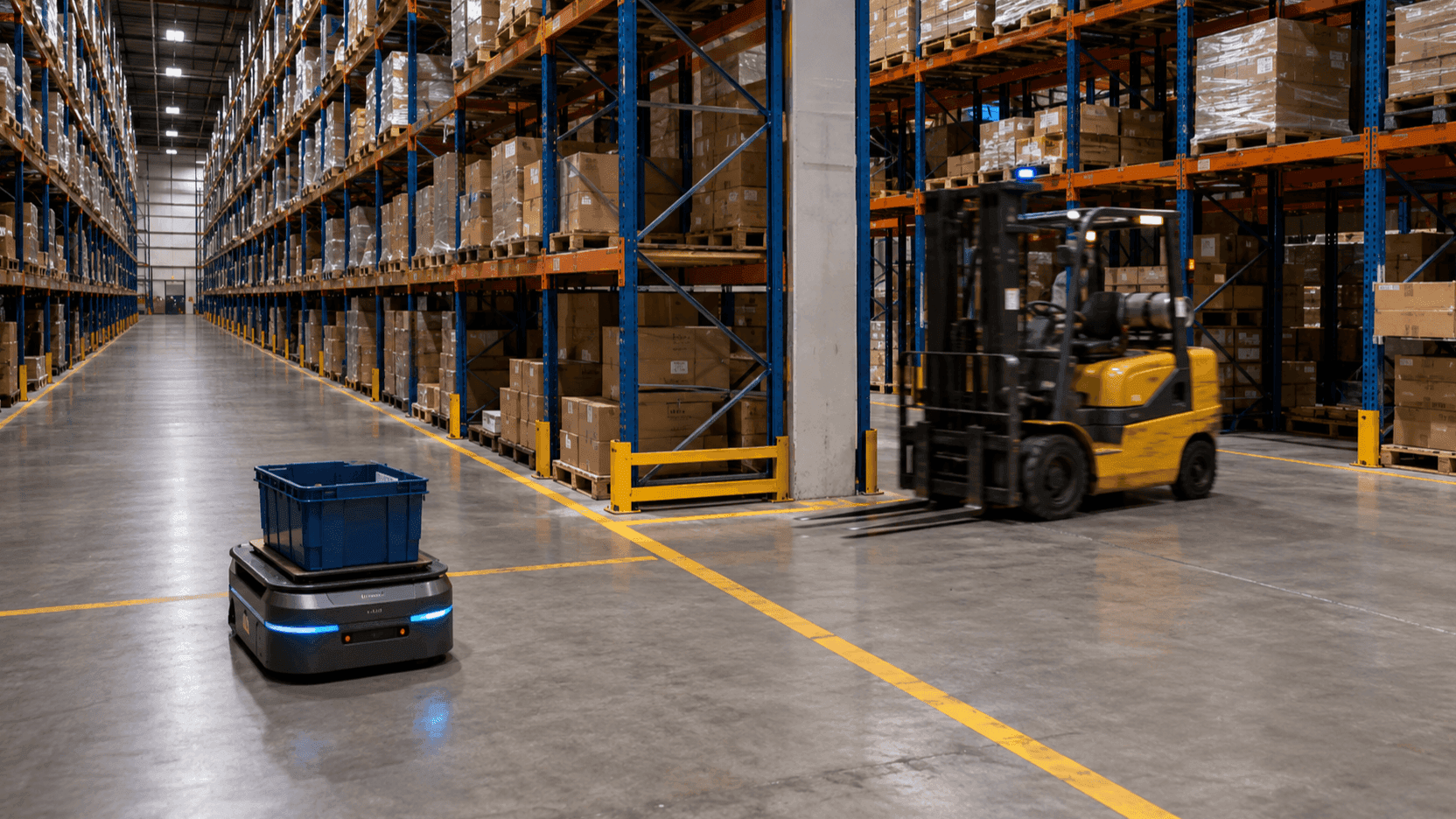
Stopping Forklift Accidents Before They Happen: AI-Powered Collision and Danger Zone Detection
2026-07-09
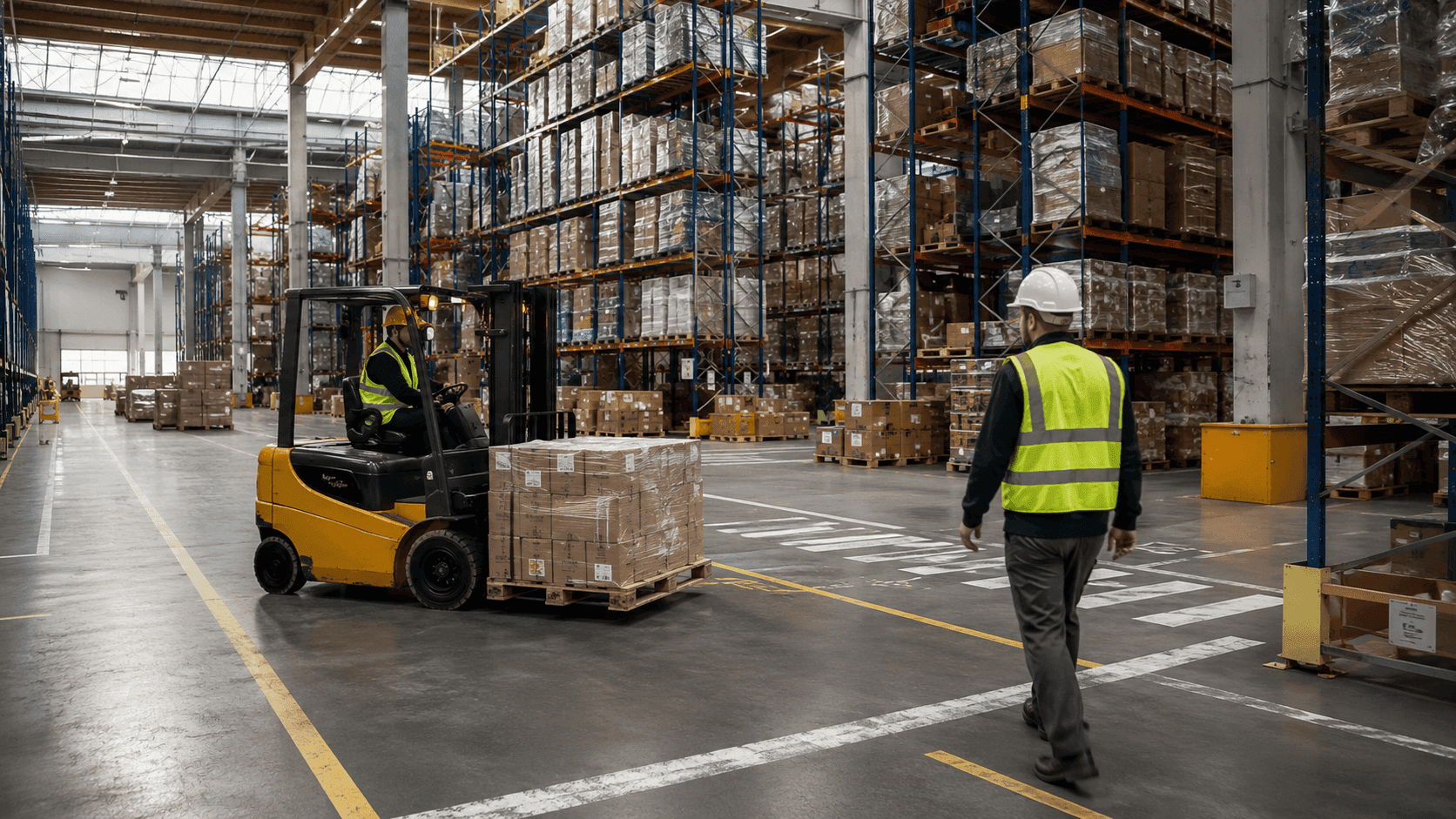
When it comes to serious industrial accidents in manufacturing plants and logistics centers, collisions between forklifts and pedestrians are never far from the top of the list. Forklifts carrying loads of several tons repeatedly reverse and turn as they navigate narrow aisles, while workers move on foot between pallets and racks. At the intersections, doorways, and loading zones where these two paths overlap, accidents strike without warning. It is the first scene that comes to mind for any industrial safety manager. And the cost of a single accident does not end with a worker's injury. Line stoppages, accident investigations, and a chilling effect across the entire site — the costs always spread far beyond the accident itself.
The unfortunate part is that most sites already have cameras. CCTV is installed everywhere, yet its role remains that of a recording device for finding out what went wrong after an accident. The reason is simple: no human can watch dozens of screens with full attention all day long. Even with dozens of video feeds up on the control room monitors, there is no eye anywhere that catches the three seconds when a forklift closes in on a person.
Vision AI–based video event detection changes exactly this. AI is a watcher that never blinks. Human attention is finite, but computation does not tire. It watches every camera feed simultaneously and without rest, and the moment a forklift and a person come within a dangerous distance — or the moment someone steps into a zone they should not enter — it raises an alert in real time. This article explains how AI collision detection and danger zone detection actually work, and what to weigh when adopting them.
I. From CCTV That Records to AI That Detects
The difference between conventional CCTV and AI video event detection lies not in camera performance but in who watches the screen. With a person behind it, the same camera is a recording device; with AI behind it, it becomes a detection system.
| Category | Conventional CCTV | AI Video Event Detection |
|---|---|---|
| Role | Recording for post-accident investigation | Real-time hazard detection before accidents |
| Who watches | Humans (control room operators) | AI (24/7 continuous analysis) |
| Response timing | After the fact | Proactive and immediate |
| Coverage | The few screens a person can focus on | Simultaneous analysis of every connected channel |
| Output | Recorded footage | Event alerts + supporting video clips |
What matters is that this transition is not a construction project requiring new cameras. The typical approach layers AI analysis on top of the video streams from already-installed CCTV, so much of the existing infrastructure can be reused as is. In other words, the question changes from "how many more cameras should we buy" to "what kind of brain should we attach to the cameras we already have."
II. How AI Collision Detection Works
AI collision detection and danger zone detection are built from five key elements. Rather than separate features, they form a single pipeline that translates pixels on a screen into real hazards on the floor.
1. Object Recognition — Telling Apart the "Who" and "What" on Site
An AI model identifies and distinguishes the object types found on industrial sites — people, forklifts, pallets, trucks, AGVs, and cranes — within the video. Because it recognizes a forklift and a person as distinct entities rather than merely noting that "something moved," you can build target-specific rules such as "alert only when a forklift and a person get close to each other."
2. View Calibration — Turning Pixels into Meters
Camera images have perspective: the same pixel distance on screen corresponds to different real-world distances depending on location. So a calibration step is performed by marking four reference points on the image and entering the actual distances between them, converting pixel distances into real distances. Once this calibration is done, the camera is no longer just an eye — it becomes something closer to a measuring instrument.
3. Real-Distance Collision Detection — The 100 cm Line
With view calibration in place, you can set collision detection rules based on real distance, such as "alert when a forklift and a person come within 100 cm of each other." Because judgments are made in actual meters rather than on-screen overlap, the same standard applies even at locations far from the camera.
4. Restricted Areas — Virtual Fences Drawn on the Screen
Draw a polygon on the camera view, and the area inside becomes a restricted zone. This creates virtual boundaries in places where physical fencing is impractical — beneath cranes, at loading docks, around equipment — and triggers an immediate alert when entry is detected. Zones can also be activated only at night or during specific work hours, adapting flexibly to the operational rhythm of the site.
5. False Alarm Suppression — Rule Engine + Secondary AI Verification
Even the most accurate detection will eventually be ignored if false alarms are frequent. That is why an approach is spreading across the industry: on top of the rule engine's initial judgment, a Vision Language Model (VLM) reads the scene once more as a secondary verification, filtering out scenes that are not actual hazards. ORBRO's AI Event Manager adopts this architecture as well, issuing only the alerts in which the VLM has confirmed the rule engine's judgment. What determines the lifespan of a safety system is not the number of alerts, but their credibility.
III. Cameras and RTLS — Two Senses That Cover Each Other's Blind Spots
Vision AI is not a cure-all. Cameras have blind spots, and lighting conditions such as nighttime and backlight impose limits. Filling these gaps is tag-based real-time location tracking — RTLS. Tags attached to workers and equipment report their positions regardless of lighting conditions, even through walls.
Conversely, RTLS has gaps of its own. Outside visitors, contractor vehicles, and incoming materials that cannot be issued tags are invisible to a tag-based system. Cameras are what catch them. Overlay these two senses — vision (vision AI) and location (RTLS) — on a single monitoring screen, and hazards that either one alone would miss come into view. For example, a tagged worker who moves into a camera blind spot is still tracked by location, while an untagged outside vehicle entering the loading dock is caught by the camera. If you are curious how RTLS works under the hood, you can learn more on the ORBRO RTLS overview page.
IV. Key Considerations for Deployment
1. Camera Field of View, Mounting Height, and Lighting
Detection quality starts with what the camera sees and how well it sees it. First verify that the field of view and mounting height sufficiently cover the zones to be monitored, and that adequate lighting is available at night and during backlit hours.
2. Accuracy of View Calibration
The accuracy of the calibration that converts pixels into real distance is the quality of the distance calculation itself. If the reference-point measurements are done carelessly, a "100 cm proximity alert" will actually fire at a different distance. This is the part that deserves the most care during initial setup.
3. Managing Alert Fatigue
If every event is announced with the same intensity, the site will soon switch the notifications off. You need a design that applies different rules per zone and per object type, separating events that are merely displayed on screen from events that send an immediate notification. Even if the number of alerts drops, safety actually becomes stronger when every remaining alert is a meaningful one.
4. Reusing Existing CCTV Infrastructure
Whether the video streams of already-installed cameras can be used directly for analysis makes a major difference in deployment cost and construction scope. It is best to plan by dividing the site into zones where reuse is possible and zones that require new installation.
In Closing
Intervening before the forklift and the person meet — the purpose of AI collision detection comes down to this one sentence. Give the cameras already on site an eye that never rests, and keep only trustworthy alerts through real-distance rules and secondary verification. That is how CCTV, once a recording device, becomes an industrial safety system. It is less about adding new safety equipment and more about making the equipment you already have do its job properly.
ORBRO delivers this approach as a combination of two products. AI Event Manager performs the object recognition, view calibration, real-distance collision detection, and VLM secondary verification described in this article as a single product at the edge, and detected events are displayed in an integrated view on ORBRO OS, a digital twin monitoring platform. Seeing the hazards caught by cameras and the positions tracked by RTLS together on one screen — this capability to unify RTLS and vision AI is how ORBRO approaches industrial safety. If you are wondering how far your site's cameras can go, get in touch with ORBRO.