UWB Positioning and Collision Avoidance System: A Comprehensive Safety Solution for Smart Factories and Logistics Centers
2026-07-14
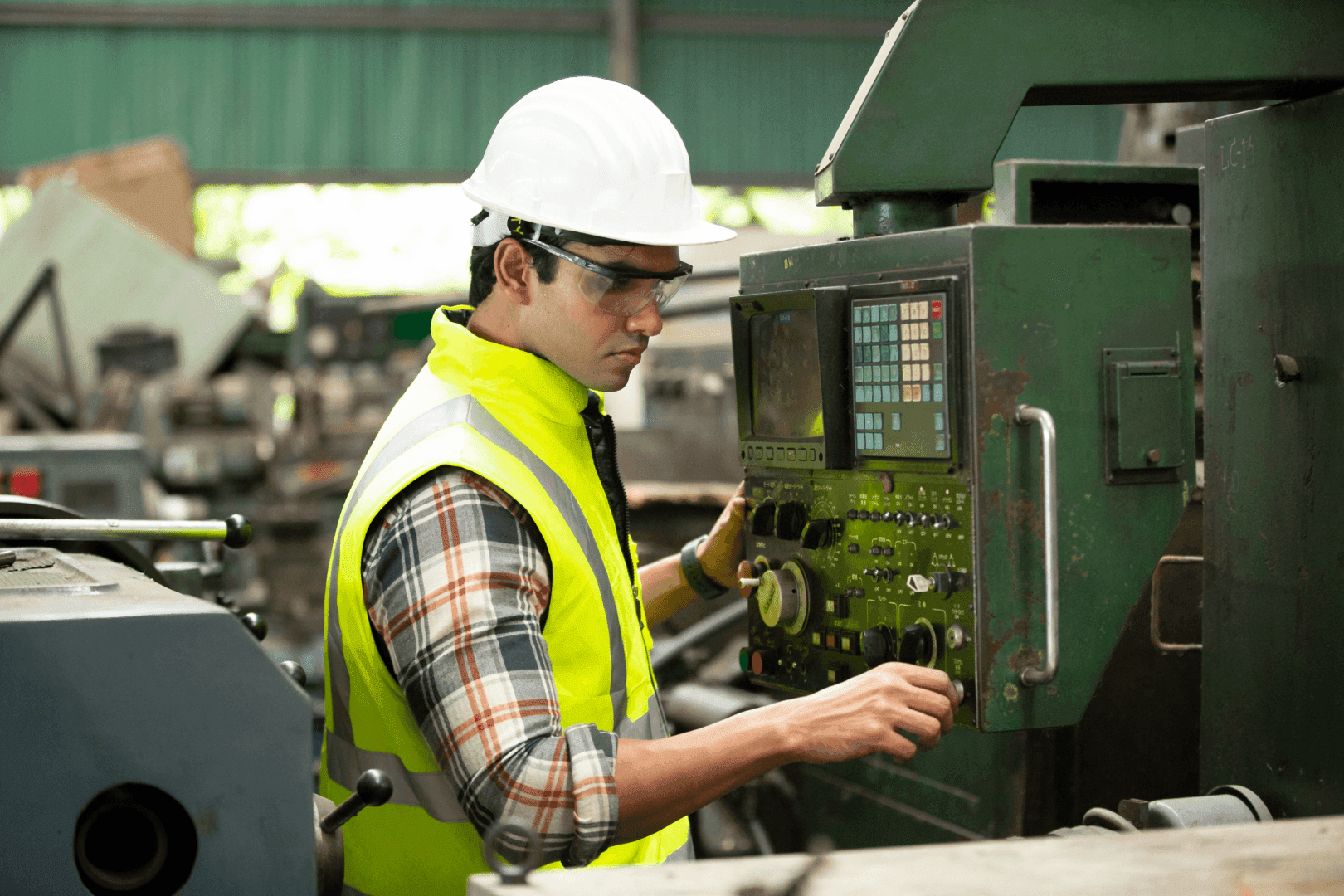
1. The Reality of Safety Risks in Modern Factories and Logistics Centers
Amidst the explosive growth of e-commerce and rapid industrialization, the scale of manufacturing plants and global logistics centers is expanding at an unprecedented rate. Consequently, the operational frequency of internal transport equipment—such as forklifts, tow tractors, Automated Guided Vehicles (AGVs), and Autonomous Mobile Robots (AMRs)—has grown exponentially.
A fast-paced work environment with numerous blind spots, goods stacked to the ceiling, and severe noise levels inherently harbors danger. In such complex settings, the risk of collisions between forklifts and pedestrian workers is an ever-present threat. When an accident occurs, it goes far beyond simple medical expenses; it leads to massive legal liabilities, production line downtime, and devastating damage to corporate reputation.
Traditional analog warning methods, such as sirens, convex mirrors, and reflective floor tape, have proven ineffective. They rely entirely on the momentary concentration and reflexes of human workers. When a driver experiences fatigue or distraction, accidents become unavoidable. To fundamentally resolve this dilemma, forward-thinking enterprises are proactively adopting smart automation solutions, specifically intelligent collision avoidance systems integrated with UWB (Ultra-Wideband) positioning technology.
2. UWB Positioning Technology: Why Has It Become the Industrial Standard?
While various wireless communication technologies exist in the market, why is UWB the definitive choice for harsh and unpredictable industrial environments?
The Limitations of Conventional Technologies: Wi-Fi or BLE (Bluetooth Low Energy), which rely on Received Signal Strength Indicator (RSSI) to measure distance, are highly vulnerable to environmental factors. In warehouses packed with metal racks or large machinery, signal interference and multipath fading can cause error margins of several meters.
The Overwhelming Precision of UWB: In contrast, UWB utilizes a very broad frequency bandwidth to transmit data in the form of short pulses. It precisely calculates the "Time of Flight" (ToF) of the radio waves down to the microsecond. This enables ultra-precise positioning with an error margin narrowed down to 10–30 centimeters (cm), even in complex environments heavily obstructed by physical barriers.
Ultra-Low Latency: In life-or-death situations on the factory floor, latency equals accidents. The high signal stability and near-zero latency of UWB are the core driving forces that activate instantaneous safety alerts within fractions of a second.
3. Core Structure and Operational Mechanism of the UWB Collision Avoidance System
This system is an integration of cutting-edge hardware and software that communicates seamlessly while minimizing on-site interference.
Tag (Positioning Tag): A compact wearable device provided in the form of an ID card, hard hat attachment, or smartwatch. It continuously transmits the real-time location of pedestrians.
Anchor (Fixed Anchor): Installed securely on the forklift body, AGV, or fixed to the walls and ceilings at major blind spots and intersections. It acts as the backbone, receiving signals from the Tags and calculating distances.
Alarm Device: Delivers audiovisual warnings to both drivers and pedestrians upon detecting danger (e.g., high-decibel sirens, high-intensity flashing LEDs, and wearable vibration motors).
Control Engine: A relay controller that interfaces with the forklift’s engine control unit to force deceleration or initiate emergency braking when absolutely necessary.
Virtual Geofencing Mechanism: The system generates an invisible 360-degree defensive shield around the forklift. The radius can be flexibly customized based on warehouse characteristics.
Warning Zone (5m–8m radius): If a person or another forklift enters this zone, a yellow warning light flashes and a mild beep sounds, prompting the driver to check their surroundings.
Danger Zone (2m–3m radius): The moment an object breaches this absolute safety perimeter, the system triggers a maximum-volume alarm and automatically limits the forklift's speed or executes an immediate emergency brake, fundamentally preventing physical impact.
4. Customized Practical Scenarios for Smart Warehouses
Vehicle-to-Pedestrian (V2P) Collision Avoidance: The most critical scenario for preventing fatal on-site accidents. The Anchor attached to the forklift continuously scans for surrounding pedestrian Tags in 360 degrees. Even if a worker suddenly steps out from behind a massive rack that completely obstructs the driver's view, the forklift accurately detects the distance through the barrier and halts in time.
Vehicle-to-Vehicle (V2V) Collision Avoidance: Highly effective in narrow aisles or corners where two forklifts cannot pass simultaneously. The UWB system ensures both vehicles detect each other's approach in advance, directing one to proceed while the other waits at a safe distance.
Blind Spot Warning: Ceiling-mounted Anchors and beam projectors are installed at corner intersections with heavy forklift and foot traffic. When approaching movements are detected from both sides, a large, red warning symbol is projected onto the floor, strictly commanding both parties to wait at the stop line before turning the corner.
5. Integration with Digital Twin and RTLS Platforms: A Paradigm Shift in Management
If the system only sounds alarms on the floor, it is only utilizing half of the data's potential. The true realization of a smart factory is achieved when this system is fully integrated with Digital Twin and RTLS (Real-Time Location Systems) platforms.
The massive influx of data generated multiple times per second by UWB equipment (real-time coordinates, movement trajectories, collision warning frequencies, forklift operating hours, etc.) is synchronized in real-time onto a 3D digital map that identically replicates the physical environment. Managers at the central control center can gain revolutionary insights:
Heatmap and Bottleneck Analysis: Through accumulated data, visual heatmaps identify which areas of the warehouse experience frequent congestion and the highest number of collision alarms. Based on this, material placement and forklift routing layouts can be redesigned for maximum safety and efficiency.
24/7 Total Visibility: There is no need to manually patrol a massive facility. A single monitor allows for flawless tracking and control of hundreds of personnel and all assets without blind spots.
Post-Incident Analysis and History Playback: In the event of a near-miss or a minor scratch accident, managers can rewind the situation second-by-second within the Digital Twin environment to analyze the exact cause and utilize the footage for preventive training.
6. Conclusion: Safety is Not an Expense, It is the Ultimate Investment
Deploying an advanced collision avoidance system equipped with UWB positioning technology is a strategic decision that transcends mere compliance with industrial safety regulations.
Even with initial deployment costs, preventing just one critical accident yields returns—through saved worker compensation, prevention of equipment damage, and reduced insurance premiums—that far exceed the investment. Enterprises can flawlessly protect their most valuable asset, their "people," while simultaneously achieving uninterrupted production and optimized logistics routing. In the era of Smart Industry 4.0, the convergence of UWB-based collision avoidance systems and Digital Twin is the definitive master key to building a safe, continuously growing enterprise.
Recommended Blogs
Asset Tracking Across the Warehouse Door: Joining Indoor and Yard Records
2026-10-12
Forklifts Queue at Dispatch. Look at Dwell Time.
2026-10-08
Found the Medical Equipment. Is It Ready to Use?
2026-10-07
Your Factory Layout Changed. Did Your RTLS Map?
2026-10-06