Maximizing Factory Operations: The Ultimate Guide to UWB Technology
2026-03-26
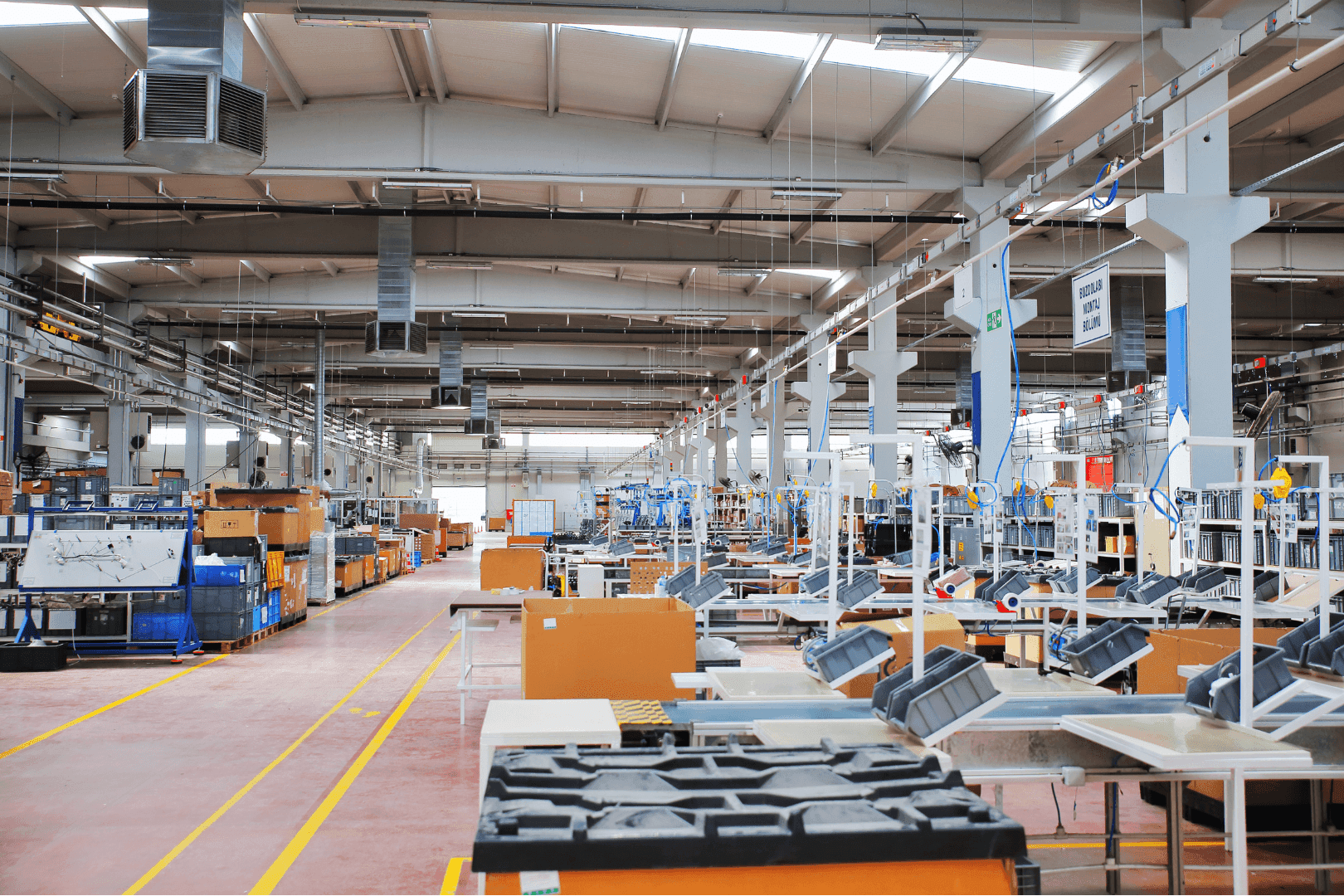
The manufacturing industries across the US and the UK are experiencing a massive paradigm shift, moving from traditional assembly lines to data-driven Smart Factory models. While countless companies are rushing their digital transformation by adopting management software like ERP or MES, facility managers still hit a major roadblock: the inability to perfectly capture the real-time flow of people, equipment, and materials constantly moving on the factory floor.
True digital transformation means going beyond spreadsheets and numbers on a screen; it means connecting every microscopic movement in the physical space to your data ecosystem. This is exactly where Ultra-Wideband (UWB) technology steps in, offering a completely new paradigm for indoor positioning. Going far beyond simple tech adoption, UWB allows manufacturers to catch two birds with one stone: operational optimization and flawless industrial safety. Let us explore exactly how this technology can revolutionize your manufacturing floor.
I. What Exactly is UWB (Ultra-Wideband) Technology?
UWB is a wireless communication protocol that transmits data over a very broad frequency band. While you might be familiar with Bluetooth (BLE) or Wi-Fi being used for indoor location purposes, UWB operates on a fundamentally different principle. Older technologies estimate distance based on signal strength, whereas UWB precisely calculates the Time of Flight (ToF)—the exact time it takes for a radio wave to reach the target and bounce back at the speed of light.
Thanks to this unique measurement method, UWB boasts incredible advantages in industrial settings. First, it enables ultra-precise positioning with an error margin of just a few centimeters (typically under 4 inches). Second, even in complex factory environments packed with massive metal structures and heavy motor noise, UWB signals cut through the interference without bouncing or dropping, delivering astonishingly stable performance.
II. 5 Game-Changing UWB Applications on the Factory Floor
The moment advanced UWB technology is deployed inside a facility, dramatic shifts in productivity and safety follow. Here are the five most effective and widely adopted applications.
Real-Time Positioning of High-Value Assets and Core Equipment Imagine a sprawling manufacturing plant the size of several football fields. When workers need a specific specialized tool, a mobile mold, or an expensive testing device, they often waste hours just wandering around looking for it. By attaching compact UWB tags to these assets and linking them to a Real-Time Location System (RTLS), the story changes completely. Managers and floor workers can instantly check a digital map on their dashboard or smartphone to see exactly which building and zone the asset is currently in. This practically eliminates time wasted on searching and completely prevents asset loss or unauthorized removal.
Route Optimization and Collision Prevention for AGVs and Forklifts In modern warehouses and smart factories, Automated Guided Vehicles (AGVs) and manual forklifts are the veins of the operation. However, when their paths cross or they meet at blind spots, severe bottlenecks occur, potentially leading to catastrophic collisions. With UWB, the central control system captures the exact position, current driving speed, and directional heading of every vehicle down to the second. Using this data, the AI system acts as a traffic controller, redistributing optimal routes. Furthermore, when vehicles approach each other at corners or blind spots, the system automatically triggers deceleration commands, enabling smart traffic control that proactively prevents accidents.
Absolute Industrial Safety via Geofencing Workplace safety is a survival imperative for any modern enterprise that cannot be compromised. UWB takes safety management to the next level through virtual geofencing technology. Workers wear smart UWB tags on their helmets or safety vests, while hazard zones—such as chemical storage areas or the operating radius of heavy machinery—are mapped in the system. If an unauthorized worker steps into a restricted zone, the system instantly alerts the control room and triggers strong vibrations and loud alarms on the worker's tag. Should an emergency occur, pressing the SOS button on the tag allows rescue teams to pinpoint the exact location of the worker within the golden hour, ensuring immediate response.
Full Automation of Smart Warehousing and Supply Chain Linking UWB with your existing Warehouse Management System (WMS) makes the flow of logistics incredibly smooth. Traditionally, workers had to manually scan barcodes every time cargo entered or left, a slow process highly prone to human error. However, the moment a pallet equipped with a UWB tag passes through a warehouse gate, the system instantly recognizes what items are moving and in what quantity, automatically updating the database. Eliminating manual labor dramatically speeds up logistics processing and brings inventory accuracy to near 100%.
Building a Space-Defying Digital Twin Model The Digital Twin is the most evolved form a Smart Factory can achieve. The precise, real-time positioning data constantly generated by UWB acts as the critical skeleton for cloning the factory into a 3D virtual space. Managers no longer need to physically walk the expansive floor. Sitting in front of large screens in a central control room, they can monitor the real-time flow of workforce, machinery, and materials exactly as they move in the virtual space. Moreover, before introducing a new process, they can run simulations in the virtual model to identify bottlenecks and innovatively improve the production line without real-world risks.
III. UWB vs. Legacy Positioning Technologies (BLE, Wi-Fi, RFID): Why Must it be UWB?
With so many positioning technologies available, why is UWB the necessary choice for the factory floor? A quick comparison with legacy tech makes the answer clear.
Bluetooth (BLE) and Wi-Fi: While these technologies are cheaper to implement, their location error margins span 1 to 3 meters, making them entirely unsuitable for precise operational control. More importantly, they are highly vulnerable to interference. In factories full of steel frameworks and metal equipment, signals bounce around causing "multipath interference," leading to erratic and jumping location data.
Passive RFID: Primarily used for inventory counting, RFID only recognizes an item when it passes directly through a reader. It is excellent for "chokepoint" verification, but absolutely impossible for tracking the real-time continuous trajectory of where a target is moving inside the facility.
The Overwhelming Superiority of UWB: UWB perfectly overcomes all the limitations mentioned above. Because its frequency band is exceptionally wide, the pulses are extremely short, allowing the receiver to clearly distinguish between a signal bouncing off metal and the actual direct signal. This guarantees uninterrupted, real-time tracking with sub-10cm accuracy even in the harshest industrial environments.
IV. 3 Core Considerations for a Successful UWB Implementation
No matter how brilliant UWB technology is, simply installing hardware in a factory will not magically create a Smart Factory. For a successful rollout, decision-makers must carefully address the following three elements.
Comprehensive Site Survey and RF Analysis: Every factory has a different ceiling height, metal equipment layout, and wall material. Therefore, a precise Radio Frequency (RF) environment analysis by experts is mandatory to determine exactly where and how many UWB anchors (receivers) must be installed to ensure 100% coverage with zero blind spots.
Flexible Integration with Existing Systems (MES, ERP, WMS): Location data is valuable on its own, but its true synergy explodes when combined with the factory's existing operational software. You must ensure that the positioning solution provides standardized APIs to communicate seamlessly with your current databases.
Advanced Data Analytics and Visualization: A UWB system generates tens of thousands of location data points per second. The software's capability to transform this raw data into intuitive insights—like heatmaps, trajectory analysis reports, and bottleneck alerts—is what empowers management to make immediate, impactful decisions.
Conclusion: Secure Transparent Control in the New Industrial Era
In the face of fierce global competition, manufacturing innovation is no longer an option; it is a mandatory survival strategy. Only companies that standardize and intelligentize their processes using cutting-edge technology will dominate the future market.
The adoption of UWB technology on the factory floor will transparently visualize every movement, perfectly control unpredictable variables, and ultimately serve as the most reliable key to unlocking a new era of maximized productivity and safety. Bring precise positioning technology to your facility today, and complete the vision of a truly controlled, intelligent Smart Factory.
Recommended Blogs

Found the Medical Equipment. Is It Ready to Use?
2026-10-07
Your Factory Layout Changed. Did Your RTLS Map?
2026-10-06

Contractor Safety Management, How to Record When Contract Workers Arrived and Where They Worked
2026-10-02

Fixed Asset Physical Inventory, Starting with the Undetected List Instead of the Whole Register
2026-10-01