What is a Smart Home? How Technology is Reshaping Living Spaces Worldwide
2026-01-10

Years ago, the term "Smart Home" conjured up images of expensive, flashy tech toys for the wealthy, or simply the novelty of using voice commands to turn off a lightbulb. Today, that concept is entirely outdated.
The modern Smart Home has evolved into a deep, holistic ecosystem. A house is no longer just a shelter; it is quietly transforming into an "assistant" that understands your daily habits, protects your health, and optimizes your living costs. Furthermore, when thousands of these smart homes are clustered together in a modern urban complex, it requires an entirely different mindset and a robust technological infrastructure to manage them effectively.
1. What Exactly is a Smart Home?
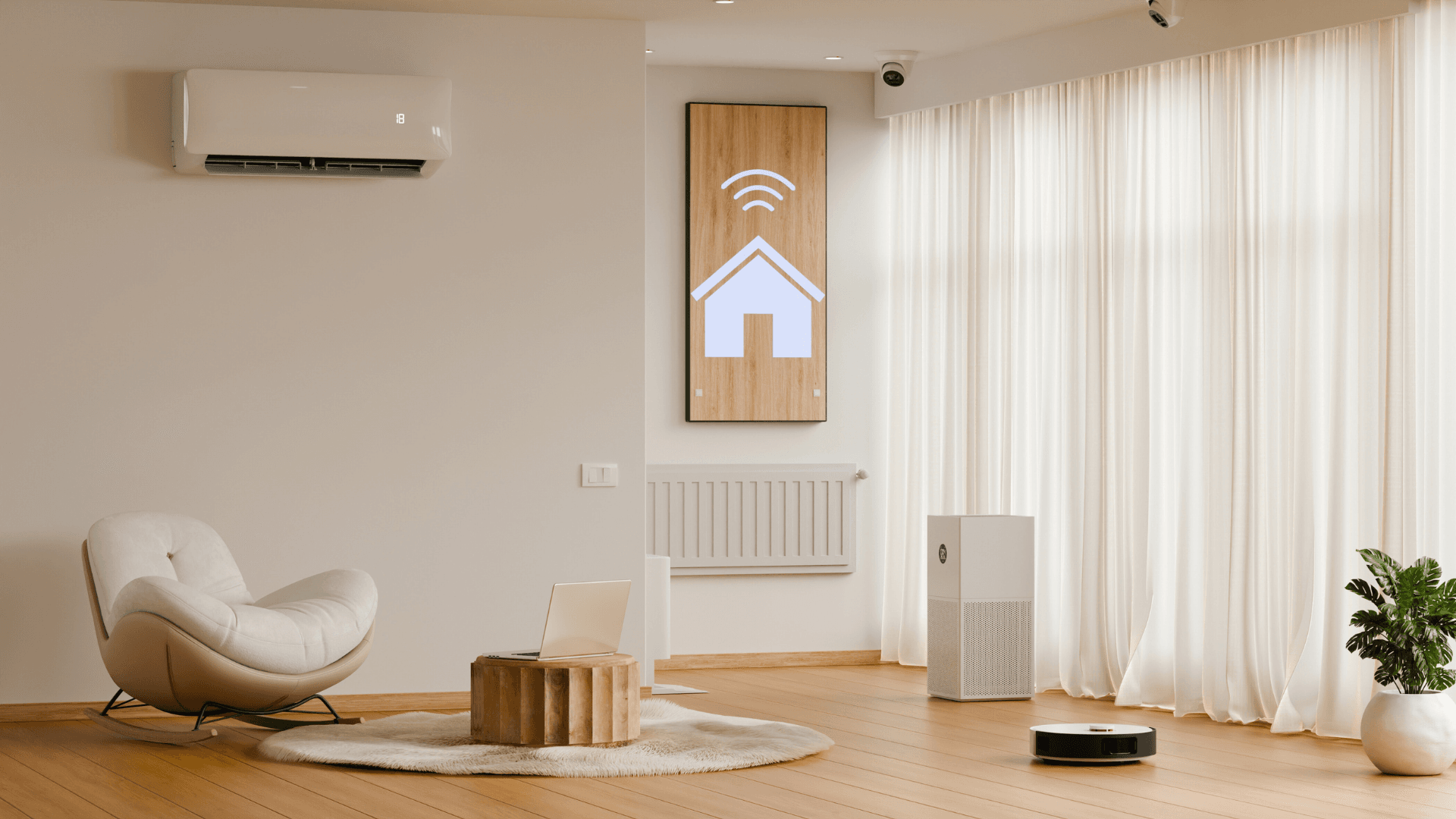
At its core, a Smart Home is a living space equipped with a network of internet-connected devices (IoT). The fundamental difference is that these devices do not operate in isolation—they communicate continuously. They gather data, analyze the homeowner’s routines, and automatically execute response scenarios without requiring any human intervention.
A true smart home will automatically open the blinds and play soft music as the sun rises, adjust the AC based on your body temperature while you sleep, and instantly lock all doors, disable the stove, and activate security cameras the moment you step out the door.
2. A Trip Around the World: How Different Countries Apply Smart Home Tech
The evolution of the Smart Home is not a one-size-fits-all trend. Each country has a unique approach, tailored to solve its specific societal needs:
USA – Personalization and Proactive Security: In the birthplace of Silicon Valley, the Smart Home ecosystem leans heavily on AI assistants (like Alexa or Google Assistant) and advanced security. Cameras here can recognize familiar faces or warn of loitering strangers. Two-way audio smart doorbells and automated locks are standard, designed to give homeowners absolute control and peace of mind.
Japan – Healthcare and an Aging Population: Faced with a rapidly aging society, Japan’s approach is highly practical and human-centric. Floors are equipped with sophisticated sensors to detect a change in a person's gait or a sudden fall, automatically alerting medical centers. Beds monitor breathing patterns, and appliances are highly energy-efficient to suit compact living spaces.
Germany – Sustainability and Strict Privacy: Known for their meticulousness, Germans prioritize energy efficiency (e.g., smart heating systems that automatically power down if a window is opened). They also enforce the strictest data privacy standards, ensuring that hackers cannot infiltrate a family’s camera or door lock network.
Vietnam – The Rise of Mega-Urban Projects: The Smart Home market is booming in Vietnam, particularly within high-end apartment developments. Interestingly, the focus is moving beyond selling individual smart gadgets. Real estate developers are building synchronized "smart living complexes" from the ground up, offering a seamless tech experience from the security gate and parking lot all the way to the bedroom.
3. The Tech "Backbone": From Personal IoT to Macro Digital Twin and RTLS
For a single house to run smoothly, it needs IoT and AI. But to manage thousands of smart homes within a residential complex, operators need far more powerful, macroscopic technologies:
Digital Twin: As the Smart Home scales up into a Smart Building, Digital Twin becomes an indispensable tool. By creating a 3D virtual replica of the entire building on a computer system, property managers can simultaneously monitor the electrical, water, and elevator systems of thousands of units. They can spot a failing pipe on the virtual model and perform maintenance before a real-world leak ever occurs.
RTLS (Real-Time Location System): This is a critical puzzle piece for ensuring the security and operational efficiency of the entire property. RTLS allows management to precisely track the location of security personnel, monitor the movement of maintenance technicians, or pinpoint valuable shared assets in real-time.
4. The Big Picture: Connecting Smart Homes into a Seamless Ecosystem
The Smart Home experience falls short if, the moment residents step out of their apartments, they are met with a slow, manual, and cumbersome building management system. The current challenge for real estate developers is how to synchronize that effortless experience across the entire lifecycle of a project.
When a massive influx of data pours in from tens of thousands of IoT devices, the management system needs clear visibility and instant reaction capabilities. This is exactly where ORBRO steps in. By digitizing physical spaces and utilizing cutting-edge location tracking technology, ORBRO’s systems give facility operators a precise, real-time overview of everything happening within the building. From automatically dispatching the nearest technician to fix an issue, to optimizing internal traffic flow, every process is smoothly automated. The ultimate goal isn't just to sell an apartment with fancy features, but to create a living environment that is truly secure, responsive, and deeply connected.
5. Conclusion
The Smart Home has moved past its experimental phase to become an essential living standard. And as these intelligent homes are woven together by powerful tech infrastructures like Digital Twin and RTLS, we are not just changing how a family lives—we are redefining how the cities of the future will operate and thrive.
Recommended Blogs

Warehouse Labor Tracking: Why the Shift Plan and the Actual Headcount at Each Process Differ
2026-09-17

Forklift Collision Avoidance When AMRs Share the Aisle: Pass UWB Coordinates, Let the Robot Decide
2026-09-16

RTLS Pilot Project: What Your Proof of Concept Should Verify
2026-09-15

Semiconductor Fab Personnel Tracking: Why Location Is Stored Only by Floor and Zone
2026-09-14