If you follow the tech news, you know the world is buzzing every day about the latest generative AI models like GPT-6. However, for most people, the application of this technology still stops at writing well-crafted emails or generating images.
But for Supply Chain Management (SCM) directors and managers running massive, million-square-foot fulfillment centers, a much more practical and ambitious question is being asked: "How can we bring this brilliant AI onto the warehouse floor to 100% automate the spatial data generated by our forklifts and tens of thousands of pallets?"
The good news is that managing a warehouse with hyper-scale AI like GPT-6 is already a fully realizable reality. The moment this powerful language model integrates directly with a UWB (Ultra-Wideband) positioning system, warehouse management completely transforms. It shifts from a passive system where humans manually reconcile numbers to an active ecosystem where AI autonomously analyzes the floor and predicts the future.
Let’s take a deep dive into how this powerful combination is solving the biggest headaches in the logistics industry today.
1. The Frustrating Limits of a Scan-Dependent WMS
Currently, the vast majority of large-scale fulfillment centers operate on a combination of WMS (Warehouse Management System) software and workers using PDA barcode scanners. While a WMS is absolutely essential, it has a fatal, inherent flaw: it is a deeply passive system. It knows absolutely nothing unless a human physically scans a barcode and "reports" it to the system.
Imagine the chaotic warehouse floor as the 6:00 PM cut-off time for next-day delivery approaches. A forklift driver, trying to clear a narrow aisle for a passing colleague, temporarily drops a pallet in the wrong zone. In the rush to get back to work, they forget to scan it. What happens? That cargo instantly evaporates from the digital grid. Inevitably, dispatch is delayed. To find the root cause, the manager has to interrogate the workers and spend half an hour rewinding CCTV footage. In today's era of hyper-speed logistics, relying on this outdated, after-the-fact troubleshooting is simply unsustainable.
2. The Perfect Match: UWB Positioning Meets AI
For a brilliant AI like GPT-6 to function properly in the "real, physical space" rather than a virtual one, it needs a continuous supply of 100% factual, real-time data. The most perfect answer to this requirement is UWB positioning technology.
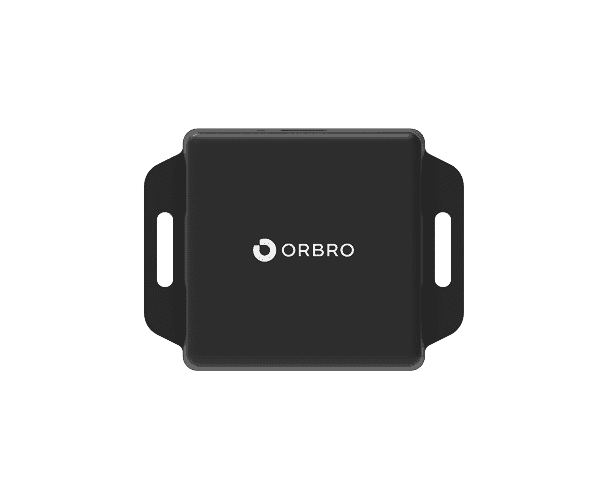
You simply attach a thumb-sized UWB tag to forklifts, high-value cargo, and the safety vests of your floor workers. These tags relentlessly transmit their real-time coordinates to the system. When the AI receives this massive influx of positioning data, two remarkable transformations happen on the floor:
Auto-Correcting Accuracy: A typical logistics warehouse packed with steel racks causes severe radio wave reflection (multipath interference). While older technologies struggle with massive errors here, the latest AI models filter out this ambient noise in real-time. The AI deduces the forklift's trajectory and instantly overrides errors, maintaining flawless 10 to 30-centimeter accuracy without engineers constantly having to tweak the settings.
Zero-Lag Data Processing at Scale: A mega fulfillment center generates millions of location data points per hour. The overwhelming computing power of GPT-6 comfortably digests this massive information with zero latency, projecting the live floor situation directly onto the manager's dashboard.
3. Chatting with Your Floor Data (The Magic of Natural Language)
The most tangible innovation GPT-6 brings to logistics is transforming complex system operations into everyday "natural language." You no longer need to navigate through clunky menus or apply complicated Excel filters.
You simply type or speak to the system just like you are chatting on a messenger app: "Summarize the top 3 reasons picking speed in Zone B dropped 15% yesterday compared to the average." "Where is Forklift 4 right now, and what is its empty-travel (idle) rate since its shift started this morning?" "Pull a list of the exact number of dead-stock pallets across the entire warehouse that haven't moved a single inch in the last 30 days."
The moment your question ends, the AI sweeps through the vast positioning data network and serves up a clean text summary or an intuitive graph in a matter of seconds. Data compilation tasks that used to take half a day are now completed in the time it takes to take a sip of coffee.

4. Proactive Control: Breaking Bottlenecks and Preventing Accidents
You no longer have to wait for the end-of-day Excel report and sigh in regret. The AI continuously monitors the positioning data 24/7 and proactively intervenes before a bottleneck fully forms.
For example, by analyzing the trajectories of forklifts, the AI notices traffic building up at the intersection between Zone A and Zone B. It instantly sends an alert to the center manager's tablet: "Severe bottleneck expected at A-B intersection within 10 minutes. Recommend rerouting Forklift 2 to the auxiliary aisle and staging popular fast-moving consumer goods closer to Outbound Dock 1."
It goes beyond just efficiency; the AI also manages "floor safety," the most sensitive issue for modern enterprises. The positioning system records every "near-miss" where a forklift and a worker get dangerously close in a blind spot. Based on this, the AI automatically submits a weekly safety report: "Collision risks occurred over 50 times this week in Aisle 3 of Building C. Install a convex mirror or change this segment to one-way traffic immediately."
5. Risk-Free Simulation Using Digital Twins
When you connect this powerful AI to a Digital Twin (a 3D virtual replica of the warehouse) platform, managers gain the superpower to look into the future using past data.
Imagine facing a massive surge in volume—triple the usual amount—ahead of the holiday season, Black Friday, or Cyber Monday. Instead of hoping for the best and relying on grueling overtime, you can have the AI take a "mock exam" in the virtual space. The system calculates expected forklift routes, figures out the optimal layout for temporary staging areas, and finds solutions on its own. Because you experience and resolve the logistics paralysis inside the software first, you can process outbound orders smoothly and peacefully during the actual peak season.
Conclusion
Introducing AI and large language models into logistics operations is no longer a distant fantasy, nor is it exclusive to global Big Tech giants like Google or Amazon. It is the most realistic and razor-sharp weapon available to modern logistics companies whose profits depend on tomorrow's efficiency.
However, there is one crucial fact you must not forget: no matter how brilliant the AI is, it is completely useless if it is fed garbage data. The very first step to true smart logistics is laying down the UWB positioning infrastructure that reads every movement inside the warehouse exactly as it happens. Only the enterprises that build this robust skeleton of spatial data today will complete a logistics empire that remains unshaken by the terrifying speed of tomorrow's technological evolution.