6 Effective Warehouse Management Methods: From Space Planning to UWB Positioning Automation
2026-08-28

If you have ever worked in logistics or supply chain management, you will definitely relate to this: there are days when your warehouse feels like a giant black hole or an inescapable maze.
A massive influx of incoming goods, forklifts constantly getting tangled in narrow aisles, workers running around sweating as they try to find an item that needs to be shipped immediately... And then comes the logistics manager's worst nightmare: the end-of-month inventory audit. On the computer (WMS), it clearly states that a high-value pallet is in stock, but when you actually search the racks, it is nowhere to be found. The items weren't stolen; someone was just too busy and dropped them in the wrong spot. But finding them means spending hours wandering through a massive warehouse, covered in dust.
This chaotic situation is never because your floor workers are lazy. It happens because your outdated management methods and tools simply cannot handle the explosive volume of moving goods. To put an end to this exhausting game of hide-and-seek, we have detailed the 6 most effective warehouse management methods you can start implementing today—ranging from foundational space planning to the latest IT technologies used by mega fulfillment centers.
1. Optimize Locations and Reduce Travel Time with ABC Analysis
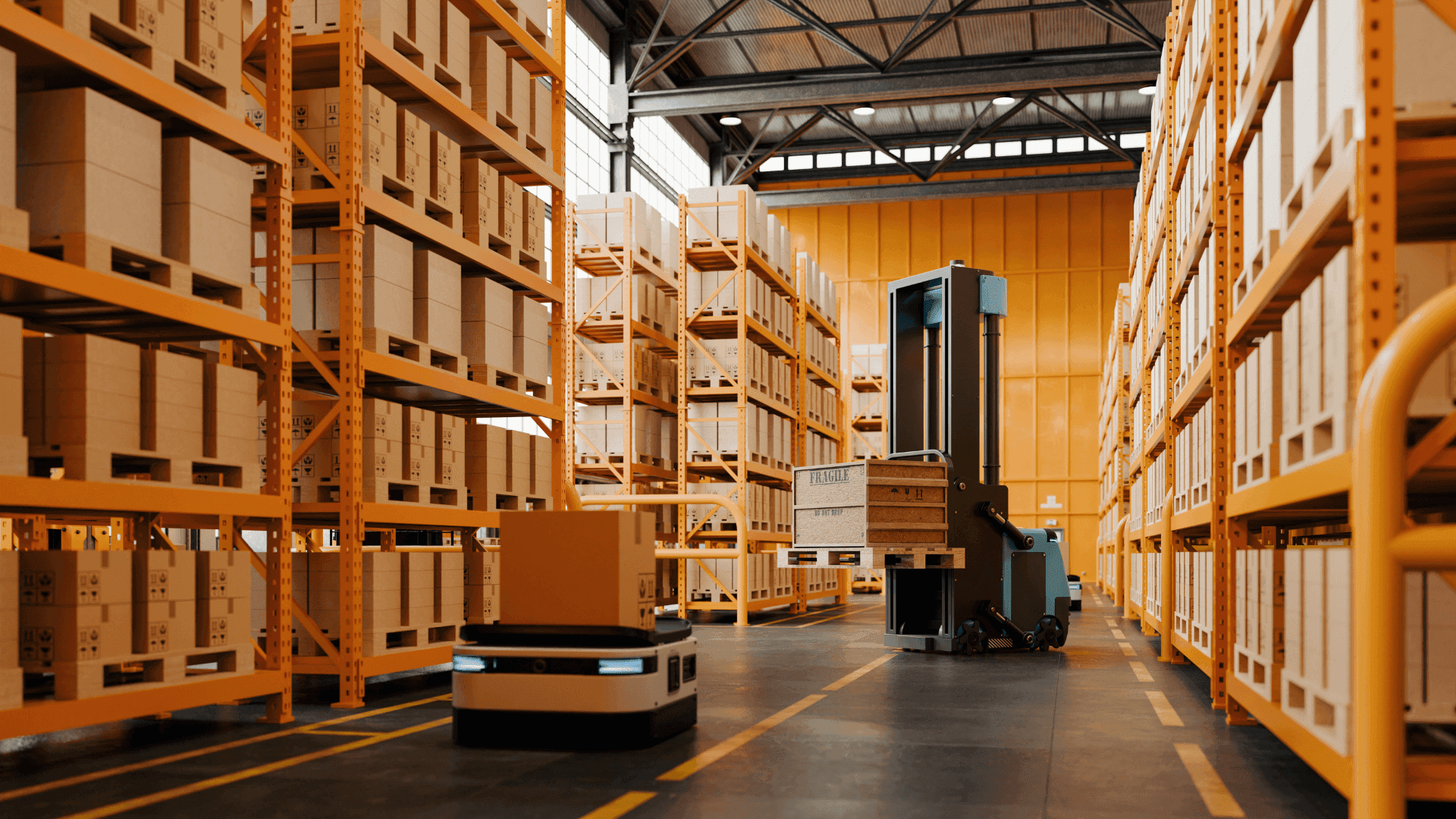
When improving warehouse management, the first and most crucial step is physically rearranging your space. You cannot just stuff items into any empty slot you see; that is a recipe for disaster. The best fulfillment centers in Korea typically design their locations based on turnover rates, applying the Pareto Principle (the 80/20 rule).
Group A (High Turnover): These are next-day delivery staples that move every single day—like bottled water, wet wipes, and popular daily necessities. While they make up 80% of the volume, the number of SKUs is small. These items must absolutely be placed in the "golden real estate" right next to the entrance and loading docks. Don't even waste time calling a forklift; the key is to place them on the 1st or 2nd tiers where pickers can grab them by hand.
Group B (Medium Turnover): These account for about 15% of total volume. Place them slightly further inside or on the middle tiers of your racks with ample space.
Group C (Low Turnover): Think of space heaters that won't sell in the summer, or bulky, dead inventory that only moves during specific seasons. Boldly push these to the deepest corners of the warehouse or up to the highest tiers where a forklift has to fully extend to reach them. Just by setting these standards and designing your routes accordingly, you can cut the unnecessary 10+ kilometers your workers walk every day by nearly half.
2. Create an At-a-Glance Floor with Floor Marking and Standardization
We've all been there: you do a massive warehouse clean-up over the weekend, but after one massive inbound shipment on Monday, it miraculously returns to its original messy state. This happens because you only "cleaned" instead of implementing "location standardization." Because fulfillment centers frequently cycle through short-term part-timers and outsourced labor, "Visual Management"—making the floor intuitive for anyone who walks in—is a matter of life and death.
Color-Coded Guide Lines: Just like the colored lanes on a highway, you need to paint clear paths on your warehouse floor. Set yellow lines strictly for forklifts, green for outbound staging, and red for returns or quarantine areas. With just a glance at the colors, you can tell in one second if an item is where it belongs.
Unified Barcode System: Stop relying on your workers' intuition or memory. Attach large, uniform labels to every shelf in a strict sequence (e.g., Zone-Aisle-Tier-Bin).
Ceiling Signage: Hang large, highly visible zone signs from the ceiling. This ensures that a temp worker on their first day or an external delivery driver won't get lost wandering around.
3. Break Free from the Limits of a Manual WMS
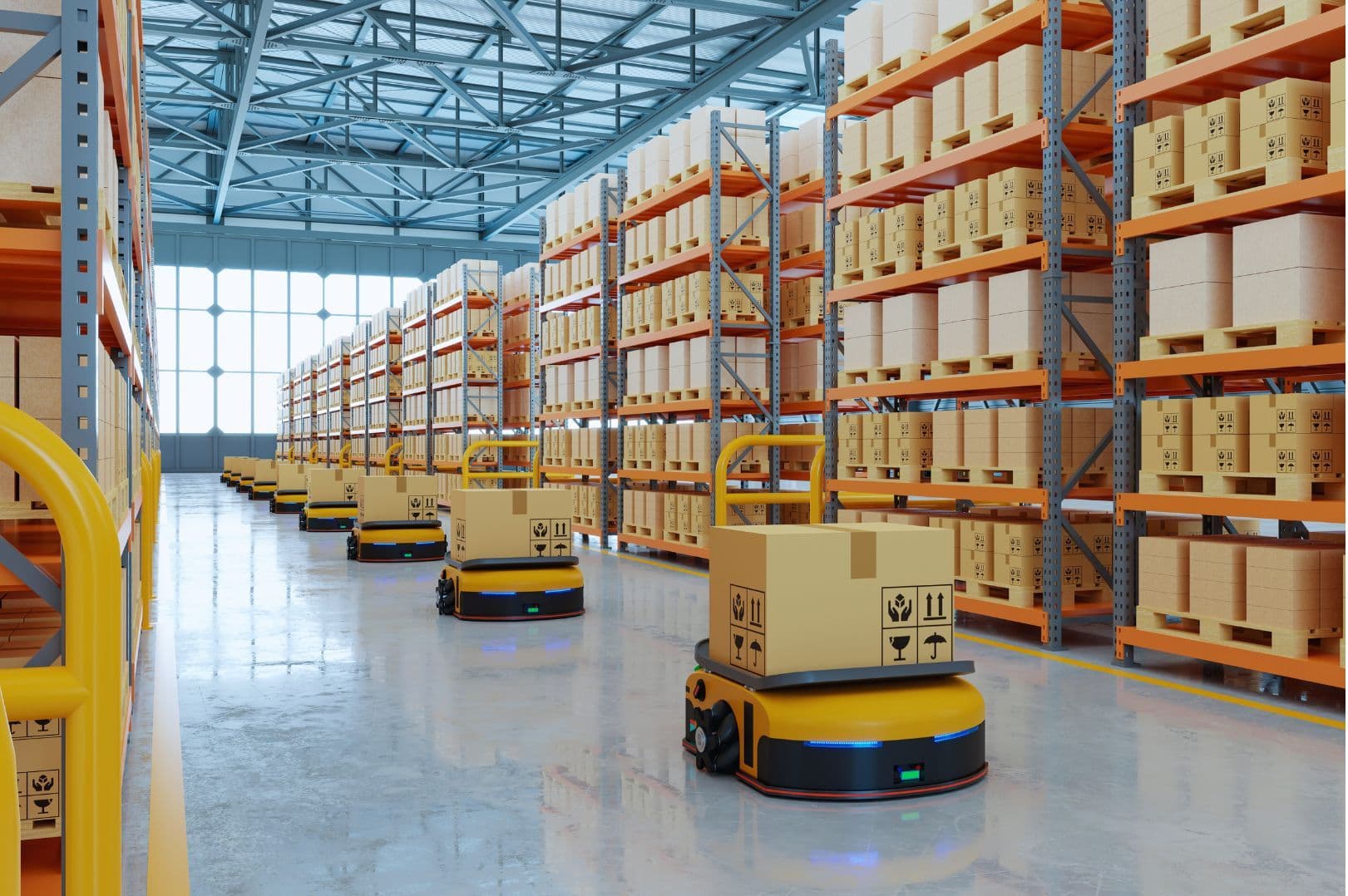
If your company is growing but you are still managing the warehouse with Excel or handwritten ledgers, a single typo by a manager can cause your entire supply chain to collapse. That is why introducing a proper Warehouse Management System (WMS) is essential. For industries where expiration dates are everything—like food or cosmetics—the system automatically enforces FEFO (First-Expired, First-Out). When orders flood in from Naver SmartStore, Coupang, or your own website, the physical inventory is deducted instantly, preventing out-of-stock complaints. However, even an expensive WMS leaves you with a fatal flaw: the system is strictly passive. Ultimately, a worker must physically point a PDA barcode scanner and "beep" an item for the system to know what is happening.
What if, on a busy floor, a forklift driver is about to place a pallet in Aisle C but gets an urgent call? They temporarily drop the pallet in Aisle A to get it out of the way and forget to scan it. The system confidently claims the item is "Pending Putaway" or safely in Aisle C, while in reality, it is blocking traffic in Aisle A. This 100% reliance on human scanning is the real reason "phantom inventory" haunts your warehouse.

4. Eliminate Phantom Inventory and Fully Automate with UWB Positioning
To completely eradicate these fatal human errors, today’s leading smart logistics centers are aggressively adopting UWB positioning technology.
You no longer have to nag or train workers to scan every single barcode. All you have to do is attach a thumb-sized tag to forklifts, tens of thousands of dollars worth of special pallets, and the workers' safety vests. Receivers mounted on the warehouse ceilings and pillars read the locations of these tags with an ultra-precise margin of error of just 10 to 30 centimeters. Now, every asset and person inside the warehouse automatically reports its real-time location to the system. When you want to find Forklift No. 5 or a missing pallet, you just search it on your computer, and a red dot blinks on your warehouse blueprint exactly like a car GPS. The wasted hours of your entire staff running around looking for lost items disappear like magic.
5. Simulate Peak Season Traffic in Advance with Digital Twins and AI
Once you have gathered vast and accurate positioning data via UWB, you layer on a Digital Twin (a 3D virtual warehouse) and Artificial Intelligence. Now, the warehouse manager is no longer someone who just puts out immediate fires; they become a reliable strategist looking days ahead.
Peak Season Stress Testing: Do you normally just rely on overtime to survive the 3x volume spikes before Lunar New Year, Chuseok, or major e-commerce promos like Big Smile Day? Now, you can have the AI run a simulation of this massive volume in your virtual warehouse beforehand. The AI will analyze the data and warn you, "Expect a severe forklift bottleneck near Packing Line 2 around 10:00 AM." Armed with this insight, you can proactively change the route to a one-way street or comfortably reallocate staff days in advance.
Risk-Free Warehouse Remodeling: You think rotating the racks from vertical to horizontal will speed up outbound processing, but you are too scared to start construction? Just drag and drop the virtual racks with your mouse on the screen. The AI calculates the route changes and tells you instantly whether outbound times will drop by 15%, or if the aisles will become too narrow and cause a jam. You only apply the changes to your actual warehouse when they succeed perfectly in the simulation, guaranteeing zero risk.
6. Complete a Safe, Collision-Free Environment with Positioning Technology
No matter how fast you find items or how great your picking speed is, a single forklift safety accident immediately drops your warehouse management score to zero. Especially today, with strict corporate liability laws for major industrial accidents, warehouses with high-stacked goods are full of blind spots, meaning the risk of a pedestrian-forklift collision is always lurking. Here, too, the UWB positioning system plays a stellar role as an invisible safety shield. If a forklift rounding a blind corner and a walking worker get dangerously close, the tag worn by the worker instantly vibrates strongly, prompting them to step back. Simultaneously, the forklift sounds a sharp siren and, integrated with its control system, automatically hits the brakes. Flawless logistics efficiency can only operate on the foundation of an accident-free, safe working environment.
Effective warehouse management starts with the most basic steps: painting straight lines on the floor and organizing your racks neatly. However, if you want to push past human limitations, decisively cut off invisible wasted costs, and survive the upcoming hyper-speed logistics competition, adopting advanced IT technology is ultimately an unavoidable choice.
The powerful combination of UWB positioning technology and Digital Twins is already the new operational standard practiced by fast-moving leading logistics companies. Break away from outdated Excel sheets and endless games of hide-and-seek, and start true smart logistics that dominates your space 100% with data.
What is the biggest headache you are currently facing while running your warehouse? Let us know in the comments below!
Related Products
 NEW
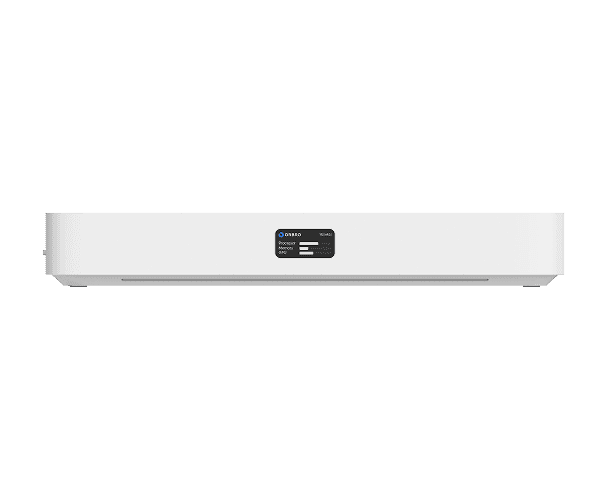
NEWORBRO Edge(UWB)
EO-S1102
Device health monitoring and control supported, Supports ORBRO UWB Tag Tracking
Contact us

TwinTracker UWB
TT-U4240
High-accuracy positioning for real-time applications, Optimized for indoor ultra-wideband (UWB) environments
Contact us

UWB Tag
RU-O3405
Ultra-Wideband (UWB) communication based on IEEE 802.15.4, High-precision ranging for RTLS (Real-Time Location System)
Contact us