Lone Worker Safety and OSHA Requirements, Closing the Gap Between Check-Ins
2026-09-03
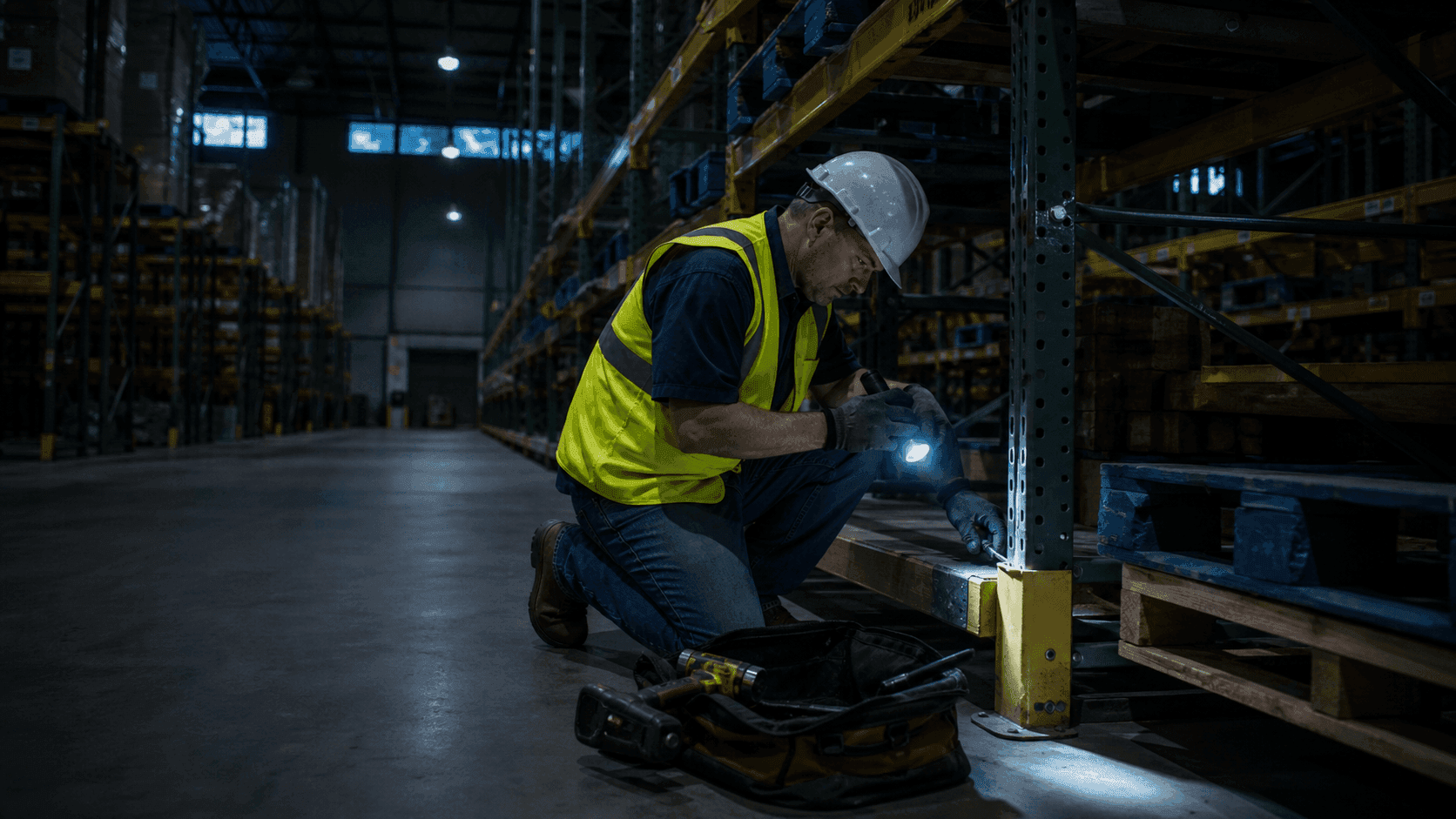
If you run EHS at a US site, you have probably searched for lone worker OSHA requirements and come away unsatisfied. There is no federal standard called lone worker safety, and no section of 29 CFR sets a check-in interval for general industry or defines a man down alarm. The duty is real anyway.
That duty is assembled rather than written, and every piece says the same thing: somebody has to know the worker is still okay, often enough to matter. Most programs do the first part and struggle with "often enough" and with "where." A check-in at the top of the hour tells you a worker was fine at 2:00, not at 2:07. For your own site, read the standards and check with your counsel or your state plan office.
I. There is no lone worker standard, and the duty exists anyway
1. The General Duty Clause carries the weight
Section 5(a)(1) of the OSH Act requires every employer to furnish employment free from recognized hazards that are causing or are likely to cause death or serious physical harm. OSHA reaches for it when a hazard is understood but has no dedicated standard, and working alone where help is far away qualifies.
Nothing in 5(a)(1) prescribes a device or an interval, so a case turns on what your written procedures say and whether you followed them. For 2026 OSHA lists $16,550 per serious or other-than-serious violation and $165,514 per willful or repeated violation, unchanged from 2025 because the government shutdown left BLS without an October 2025 CPI-U and the statute allows no substitute index (OSHA memorandum, May 21, 2026).
2. One OSHA standard says "working alone" out loud
29 CFR 1915.84, in the shipyard employment standards, is titled "Working alone." The employer must account for each employee working alone, such as in a confined space or isolated location, at regular intervals appropriate to the job assignment throughout the shift, and again at the end of the assignment or shift, whichever comes first. Paragraph (b) sets the method: by sight or verbal communication.
That covers shipyards, not your warehouse. But it is the only OSHA standard that writes out a periodic check-in duty for a lone worker, and its shape is instructive: a deliberate interval, a check that confirms the person, a close-out at shift end.
3. Several standards already require someone to be watching
Permit-required confined spaces (29 CFR 1910.146) requires an attendant outside the space for the duration of entry who must continuously maintain an accurate count of authorized entrants, keep communication with them, and order evacuation when conditions call for it. Construction has its analog in 29 CFR part 1926 Subpart AA. HAZWOPER (1910.120) makes the buddy system an element of site control and requires hazardous-area operations to run in groups of two or more, with back-up personnel ready to assist or rescue.
None is labeled a lone worker rule, yet all say the same thing: in this hazard class, one worker unobserved is not acceptable.
4. State rules name the observation methods, and they are in force
California's outdoor heat standard, Title 8 section 3395, requires that at 95°F and above, in the industries its high-heat provisions cover, employees be observed by one of four means: supervisor or designee observation of 20 or fewer employees, a mandatory buddy system, regular communication with a sole employee by radio or cell phone, or other effective means of observation. Washington's WAC 296-62-09547 requires close observation at 90°F and above through three of those: regular communication with employees working alone, a mandatory buddy system, or other effective means.
Seven states run their own occupational heat standards, per the appendix to OSHA's heat emphasis program: California, Colorado, Maryland, Minnesota, Nevada, Oregon, Washington. Their scope varies: Washington's are outdoor only, Minnesota's indoor only, Colorado's agricultural only.
5. The federal heat rule is a proposal, not a duty
OSHA's heat rule, published as an NPRM on August 30, 2024 (89 FR 70698), would at its high heat trigger require observation through a mandatory buddy system, supervisor observation capped at 20 employees per observer, or, for employees alone at a work site, two-way communication at least every two hours. Read that as a signal, not an obligation: it is not final, it binds nobody today, and OSHA's Unified Agenda entry targets a supplemental proposal in December 2026 and final action in October 2027. If it is ever finalized in anything like this form, it shows how the agency writes the requirement out: a named method, a named ratio, a named interval.
Enforcement without a standard is not hypothetical, though. OSHA reissued its heat National Emphasis Program effective April 10, 2026 for up to five years across 55 target industries. An emphasis program directs where inspectors go and creates no rule of its own, so heat gets cited under the General Duty Clause: one published tabulation counts roughly 7,000 heat inspections from April 2022 to December 2024 and about sixty such citations.
II. The hazard is not the incident, it is the delay
A worker who is alone does not face different physics. A fall from a mezzanine, an arc flash, an ammonia leak in cold storage: the event is the same whether or not somebody else is standing there. What changes is the response curve. With a witness, response starts in seconds. Alone, it starts when someone notices an absence: a missed call, an unanswered radio, the end of a shift. OSHA treats this as a clock problem elsewhere. Under 29 CFR 1904.39 a fatality must be reported within eight hours, and a hospitalization, amputation, or loss of an eye within 24. Those clocks start at the event, not at discovery, and every hour unfound is an hour a survivable injury spends becoming a recordable.
The scale is genuinely hard to state. BLS counted 5,070 fatal work injuries in 2024, a rate of 3.3 per 100,000 full-time equivalent workers, down from 5,283 and 3.5 in 2023 (Census of Fatal Occupational Injuries, released February 19, 2026). Those tables classify a death by industry, occupation, and event; none records whether anyone else was there, so any precise lone worker fatality count is an estimate. The narrower claim carries the weight: unobserved work is recognized, repeatedly, as a hazard of its own.
III. What lone worker monitoring looks like today, and where it goes quiet
1. Check-ins, by timer or by voice
The worker calls in, texts, or taps an app timer at a set interval. It is cheap and maps onto the 1915.84 model, but the interval is the exposure: a 60-minute cadence leaves up to 59 minutes undiscovered by design. A supervisor's call is better: Cal/OSHA names it as one acceptable method for a sole employee, and a voice confirms consciousness where a timer does not. It still depends on the worker being able to answer, which is the case the program exists for.
2. Panic buttons, man down, and physiological wearables
An SOS button covers the case where the worker knows something is wrong; no-motion and fall detection the case where they cannot press anything; heart rate and core temperature sensors warn ahead of collapse, and are the most sensitive data an employer can collect. The gap is what the alert contains. "No motion detected, badge 4417" starts a search rather than a rescue. Two blind spots run through all of these methods: the interval of silence, and position, because none of them tells a responder which floor, which aisle, which room.
IV. What changes when location is part of the signal
1. Continuous position, and an SOS that carries one
A UWB tag on a badge or hard hat reports position continuously, not at a cadence a person has to remember. Add no-motion logic and the system stops asking the worker to prove they are fine and notices when they stop moving. The same tag turns a panic press into a dispatchable event: the control room gets a point on the floor plan and the track that led there, which is the difference between a search and a route.
2. Why GPS stops at the door
Satellite positioning needs line of sight to the sky. Roofs, steel decking, racking, and below-grade levels attenuate the signal until a fix is unusable or wrong by an entire building. So cellular and GPS apps serve utility crews in the field well and the night technician in cold storage badly. Indoors, position must come from infrastructure in the building, which is what UWB anchors provide. Our comparison of UWB and BLE for indoor positioning covers where each fits.
3. Covering the people who are not carrying a tag
Tags only see tagged people. Contractors, delivery drivers, and visitors are often the ones working alone in an unfamiliar building, and the least likely to wear your badge. Camera-based detection through AI Event Manager watches the space rather than the device, flagging a person down whatever they carry. Neither layer is complete alone: cameras stop at the lens, anchors at the edge of coverage.
4. From alert to procedure to record
An alert that lands in a group chat is not a program. In ORBRO OS, a no-motion or SOS event opens the procedure you have already written: who is notified, in what order, what happens if nobody acknowledges, what gets logged. The platform makes no determination about any standard. It carries out the documented procedure you built and leaves an auditable record.
V. Privacy, consent, and whether people will actually wear it
Employee monitoring is a live argument in the US, and a system that reads as surveillance gets defeated by the people it protects. Tags get left in lockers. Four principles hold up, and they belong in the policy, not the vendor contract. Limit the purpose: the system detects an unresponsive worker and routes help, and the policy should say so. Limit the window: reporting runs during working hours in defined areas and stops at clock-out. Collect the minimum: zone-level position is usually enough to send a responder. Tell people in writing before the first tag is issued. State privacy laws differ, so have counsel read the policy first.
VI. What to evaluate
1. Start from the written procedure, not the hardware
Decide what interval and what response your working alone policy requires for each task and location, then pick technology to carry out that plan, not define it.
2. Test where the signal actually dies
Walk the worst places on your site with the tag: the electrical vault, the freezer, the elevator machine room. Coverage claims made in a conference room are not evidence.
3. Ask what the alert contains
Compare vendors on the payload, not the trigger. Name, time, floor, zone, and last track is a dispatchable alert; name and time is a search. Ask what it looks like for a contractor with no badge.
4. Rehearse the failure
Run a drill in which a tag stops moving in a remote area and time the full response. That number is your real exposure, it usually runs long, and the log it leaves is what you show an inspector.
VII. Closing thoughts
Lone worker safety in the US does not fail at the level of intent. Almost every site with people working alone has a policy, an interval, and a phone number. It fails between the check-ins, and in the minutes after an alarm when nobody can say where to go. That gap is a measurement problem before it is a compliance problem.
ORBRO builds toward one operating picture of the site: UWB RTLS for continuous indoor position and no-motion detection, AI Event Manager for the space and the people no tag is on, and ORBRO OS to run the alert into the procedure you wrote and keep the record. If your lone worker monitoring stops at the door, we will walk the building with you. Talk to our team about UWB RTLS for worker safety or ORBRO OS.
Recommended Blogs
Returned but Not Ready: Tracking Returnable Container Recovery
2026-10-16
Replacing an RTLS Tag Without Losing the Asset's History
2026-10-15
Is That Location Still Current? Checking RTLS Data Freshness
2026-10-14
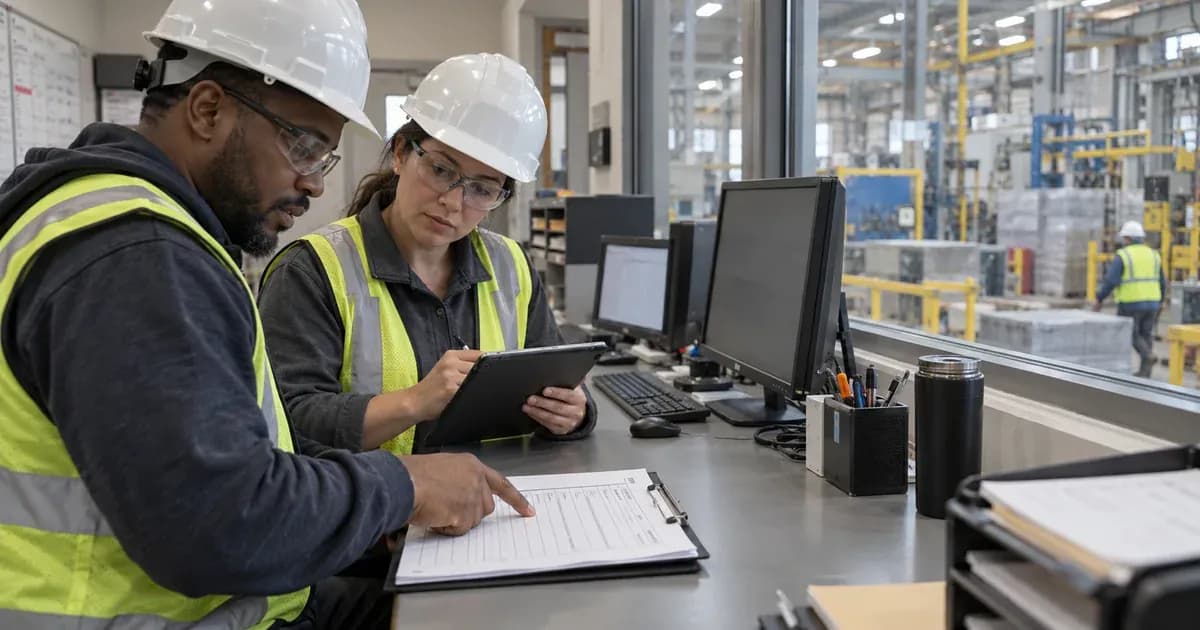
AI-generated illustration of the selected local environment; not a photograph of a customer site.
2026-10-13