Returned but Not Ready: Tracking Returnable Container Recovery
2026-10-16
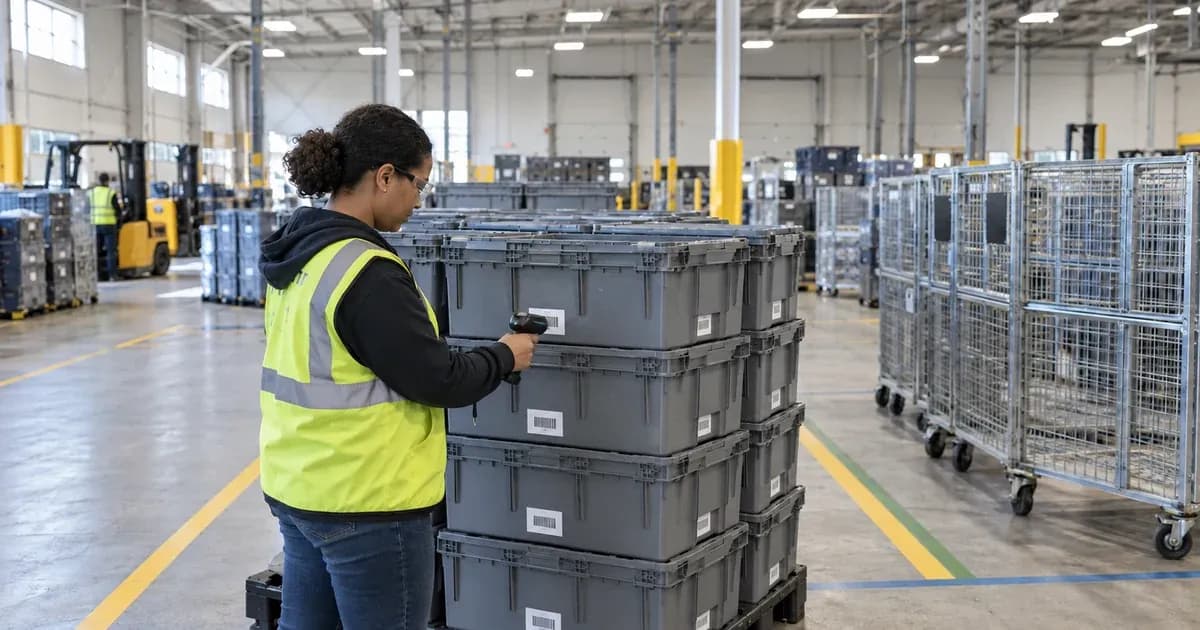
Dispatch needs more empty containers, yet the map shows several in the returns area. They may have arrived without being emptied or inspected. The number at a location and the number ready to use answer different questions.
Returnable-container management combines location with the circulation stage. The approach below concerns reusable totes and roll cages. It does not prescribe cleaning or release standards for regulated food or medical containers.
1. Decide what the tracked unit represents
Choose whether to track individual containers, bundles or the carrying cart. A tag on a roll cage does not establish the identity of every tote inside. Splitting bundles or moving containers requires a separate membership-confirmation process.
Reconcile asset identifiers, types, responsible owners and physical labels. Explain the counting unit. Unless a verified conversion rule exists, do not present the tag count as the number of individual containers.
2. Keep location and circulation status separate
An illustrative status sequence might include awaiting dispatch, in use, awaiting return, awaiting inspection, ready for reuse and awaiting repair. These are design options, not a universal standard. Define who changes each status and which check supports it.
Arrival in a returns lane does not establish readiness. Link the site's empty-container and condition checks where needed. Automatic status determination requires verified functionality or an agreed integration, rather than an assumption that location supplies the answer.
3. Reconcile the physical return
Compare the asset number, return time, quantity and verifier against the dispatch record. Where containers arrive nested or bundled, document discrepancies between tag observations and physical counts. A missing signal alone does not prove a missing return.
At a US distribution center using trailer-based returns, distinguish unloading confirmation from receipt into the inspection area. If the asset is at another site, verify that site's tracking coverage. A tracking tag does not supply visibility everywhere it travels.
4. Investigate long dwell by stage
A container still in use and one waiting for inspection need different actions. Review elapsed time within the relevant stage, not just its time at the last known location. If the stage's start is unrecorded, do not label the interval as an exact stage duration.
Set review limits around the agreed circulation and transport schedule. Separate asset types and check the freshness of location records. An old observation should be treated as an unconfirmed position, not unquestioned evidence of prolonged dwell.
5. Define the return-rate population
Specify the dispatch population and the return cutoff. Dividing this week's returns by this week's dispatches can mix assets sent in earlier weeks. Linking asset identifiers to dispatch batches makes the calculation easier to explain.
Separate returns not yet due, assets under repair and unconfirmed assets. An undetected tag is not automatically a financial loss. Calculate savings only from verified operating and cost records; an illustrative process does not establish a savings percentage.
6. Test a complete circulation
Follow the same unit through dispatch, use, return, inspection and release. Include bundle splitting, tag replacement and quantity discrepancies. Check whether staff can separately identify overdue returns and uninspected returns.
When considering ORBRO warehouse asset tracking, distinguish coverage from status integration. Share the tracked unit, circulation route and current return register with ORBRO to define the required scope.
Recommended Blogs
Replacing an RTLS Tag Without Losing the Asset's History
2026-10-15

Is That Location Still Current? Checking RTLS Data Freshness
2026-10-14

AI-generated illustration of the selected local environment; not a photograph of a customer site.
2026-10-13

Asset Tracking Across the Warehouse Door: Joining Indoor and Yard Records
2026-10-12