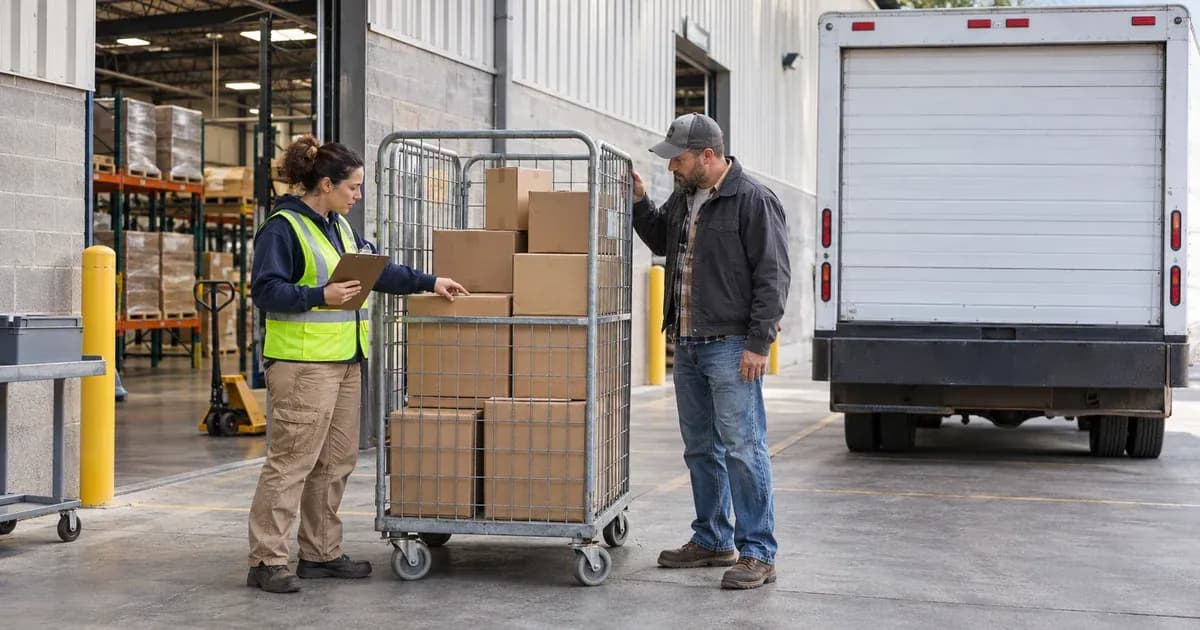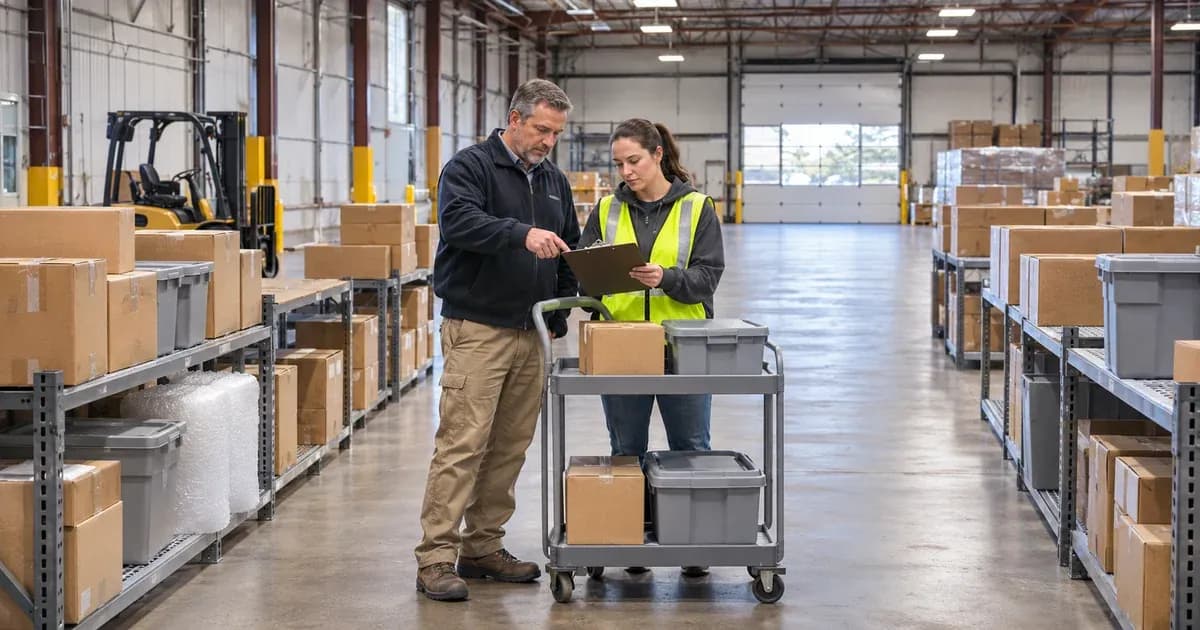
A quality lead at a US fulfillment center needs a repaired order tote before the next wave. The tote is visible beside a workbench, but nobody can tell whether it is waiting for repair, waiting for inspection, or ready to return to service. A supervisor sends someone to collect it, only to send it back. Rework tracking must answer both where the item is and which checks still stand between it and release.
The October 2026 US holiday forecast provides a timely reason to review exception handling before peak operations. A forecast is not a measured result for an individual warehouse. This imagined US operation illustrates how location records can support repair and reinspection without becoming a substitute for quality approval.
I. Give the rework job an identity that survives the detour
Normal tote circulation has a familiar route. A damaged tote may instead pass through assessment, repair, cleaning, inspection and storage, sometimes returning to the same station twice. A location point cannot identify which repair attempt took place. Connect the asset number, repair job, tag and job revision, and keep the relationship valid for the period being investigated.
Tracking a carrier is different from tracking its contents. If a cart holds several damaged totes and only some pass inspection, the cart tag cannot represent a common release status. Separate the accepted and outstanding items, record the new carrier relationships and retain the earlier history. Otherwise, one movement can appear to release an entire batch.
II. Compare the evidence each method provides
| Method | Useful evidence | Additional confirmation |
|---|---|---|
| Paper repair traveler | Instructions and signed checks | Whether traveler and item stayed together |
| Barcode station scan | Identified asset and registered step | Temporary moves between scans |
| RTLS location history | Observed tag route and timing | Repair quality and release authorization |
Use quality records to establish what was repaired and approved. Use location history when the practical problem is finding an item or reconstructing its movements. Combining the two under the same job identity makes an exception easier to investigate. A gap in observations must remain an unknown interval, rather than being interpreted as evidence that the item stayed still.
III. Connect ORBRO locations to the repair workflow
ORBRO OS Zone Manager and Record support defining operational spaces and reviewing recorded movements. Create distinct assessment, repair, reinspection and released-storage areas. Test their boundaries against actual parking positions so a cart passing the bench does not become indistinguishable from one left there.
An operator can identify the relevant tag, check its last observation time and review the recorded route before confirming the repair result in the quality record. RTLS Manager supports device preparation, map alignment and live location monitoring. Test tag placement with loaded carts and stacked containers, because a convenient mounting point may perform differently under working conditions.
Showing repair status beside location requires an agreed connection to the system that owns the job. Define asset identifiers, update timing and the response to missing or conflicting records. ORBRO location visibility does not by itself create a repair order, approve the work or release equipment to operations. Those actions require their own workflow and, where needed, separately scoped integration.
IV. Resolve partial release and repeat work explicitly
Suppose three totes on one cart are repaired and a fourth needs another inspection. Move the accepted items under a new relationship or identify them individually. Do not close the entire repair job merely because the cart reaches released storage. Keep quantities and decisions consistent with the physical items.
If an asset returns to the same bench, add a new work attempt rather than overwriting the previous result. The route can support a timeline, but it does not explain the defect. A supervisor must check the repair notes and inspection evidence. Similarly, an urgent request does not turn an unapproved asset into an available one.
During a network interruption, retain the last observation as historical information and use a defined physical check. On recovery, reconcile any moves, carrier changes and approvals recorded during the gap. A fresh location observation should not silently restore an authorization that was withdrawn while the connection was unavailable.
V. Measure finding time and repair outcome separately
Pilot the workflow across representative shifts. Record time to identify the asset, find it physically, complete repair and obtain reinspection approval. Compare similar repair types rather than averaging minor cleaning with substantial mechanical work. Include missing observations and manual checks in the results.
Test carrier exchange, partial approval, repeat repair, detached tags and cancelled release. At each handoff, compare the physical asset with both the location record and the job record. A faster retrieval that leads to another failed inspection is not an improvement in completed repair. The useful result is a clearer account of which delay belongs to searching, workmanship or approval.
Closing thoughts
Finding a reworked item and releasing it for use are separate decisions. A durable asset-to-job relationship, recorded route and explicit inspection result let the next operator see what remains to be done. Location records explain movement; the quality workflow establishes whether the repair is acceptable.
To discuss ORBRO, prepare sample repair travelers, asset and carrier lists, a floor plan and examples of partial release. Contact the team to define the tracking scope and the information that must remain connected to the repair system.