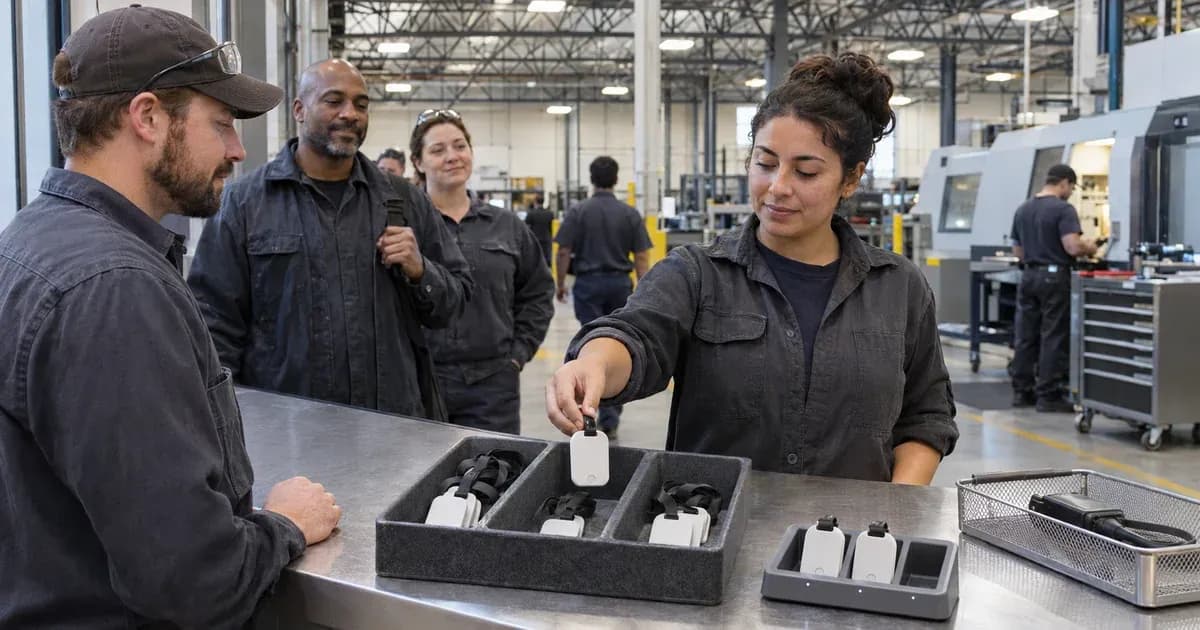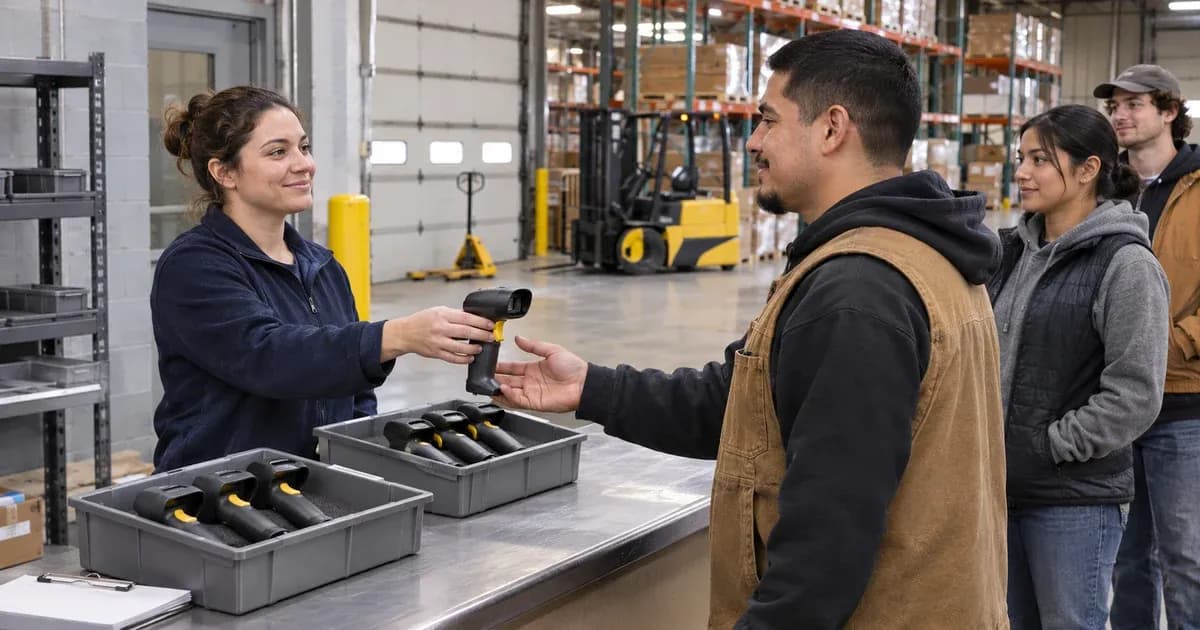
A seasonal associate starts work without a scanner while another station has two. The equipment list says every device was issued correctly at shift start. What it missed was the informal transfer during a break and the scanner left on a cart that moved across the building.
The October US holiday outlook includes seasonal staffing expectations. In this hypothetical warehouse, shared scanner tracking focuses on equipment circulation. It should not become an unsupported measure of individual productivity.
I. Track equipment assignments as time periods
A scanner’s inventory identifier, its location tag and its current user or station are separate relationships. Record when an assignment begins and ends. If a scanner passes to another station, a shift-start issue record is no longer enough.
| Evidence | Useful purpose | Limit |
|---|---|---|
| Issue and return | Establish custody | Misses an unrecorded mid-shift transfer |
| Location observation | Narrow the equipment search | Does not establish who used it |
| Functional check | Confirm readiness for the task | Does not establish continued location |
A tag attached to a scanner needs a suitable mounting method and device compatibility check. It should not obstruct controls, charging contacts or the worker’s normal grip. Confirm the real equipment conditions rather than assuming one attachment fits all models.
II. Put issue, service and work areas on the map
Zone Manager can define the equipment counter, service holding and work areas. Keep “returned,” “awaiting check” and “ready to issue” distinct in the operating list. Location in the return area cannot certify that the scanner works.
For UWB and AoA tracking, Record replay can support a search for a scanner that moved with a cart. Compare the observed period with known equipment transfers. Scanner transaction logs or work assignments are separate data sources and require defined integration if they are to be combined.
III. Make a quick transfer procedure practical
Define a short way to record a transfer between stations, including the equipment identifier, time and accepting station. The procedure should work during breaks and urgent replacements. Avoid treating the old user as responsible simply because the association was never closed.
If the tag is detached or observations become stale, mark the equipment location unconfirmed and use physical verification. The tag-to-asset history principles help keep a replacement tag from splitting or misattributing the equipment record.
IV. Keep the purpose clear to seasonal teams
Explain that the tracked unit is shared equipment and identify who can access its location history. Define the operational retention and access arrangements before collecting more detailed records. Do not infer task completion, worker presence or work quality from a scanner position.
An equipment exchange may reflect a fault, a depleted device battery or a station change. Record the confirmed reason and the new assignment. Do not assume that ORBRO supplies scanner diagnostics or access to its operating system by default.
V. Trial the transfers that the issue sheet misses
Test a break-time handover, a scanner left on a moving cart, a faulty return, a detached tag and a replacement device. At each point compare the assignment, physical device and last observation.
Review search time, unclosed assignments and unnecessary spare-device requests under comparable staffing and work conditions. Count the physical checks needed to resolve exceptions. A successful location search is useful evidence, but it is not proof that overall picking productivity increased.
Closing thoughts
Shared scanner tracking is most useful when issue records remain accurate after the shift begins. Location helps recover the equipment; transfer and functional checks explain who should receive it next.
For an ORBRO discussion, prepare scanner models, station locations and common transfer cases. Those details support sensible attachment trials, observation areas and equipment-management connections.