Making Warehouse Management Easy: How to Apply UWB Location Tracking in Logistics
2026-08-06
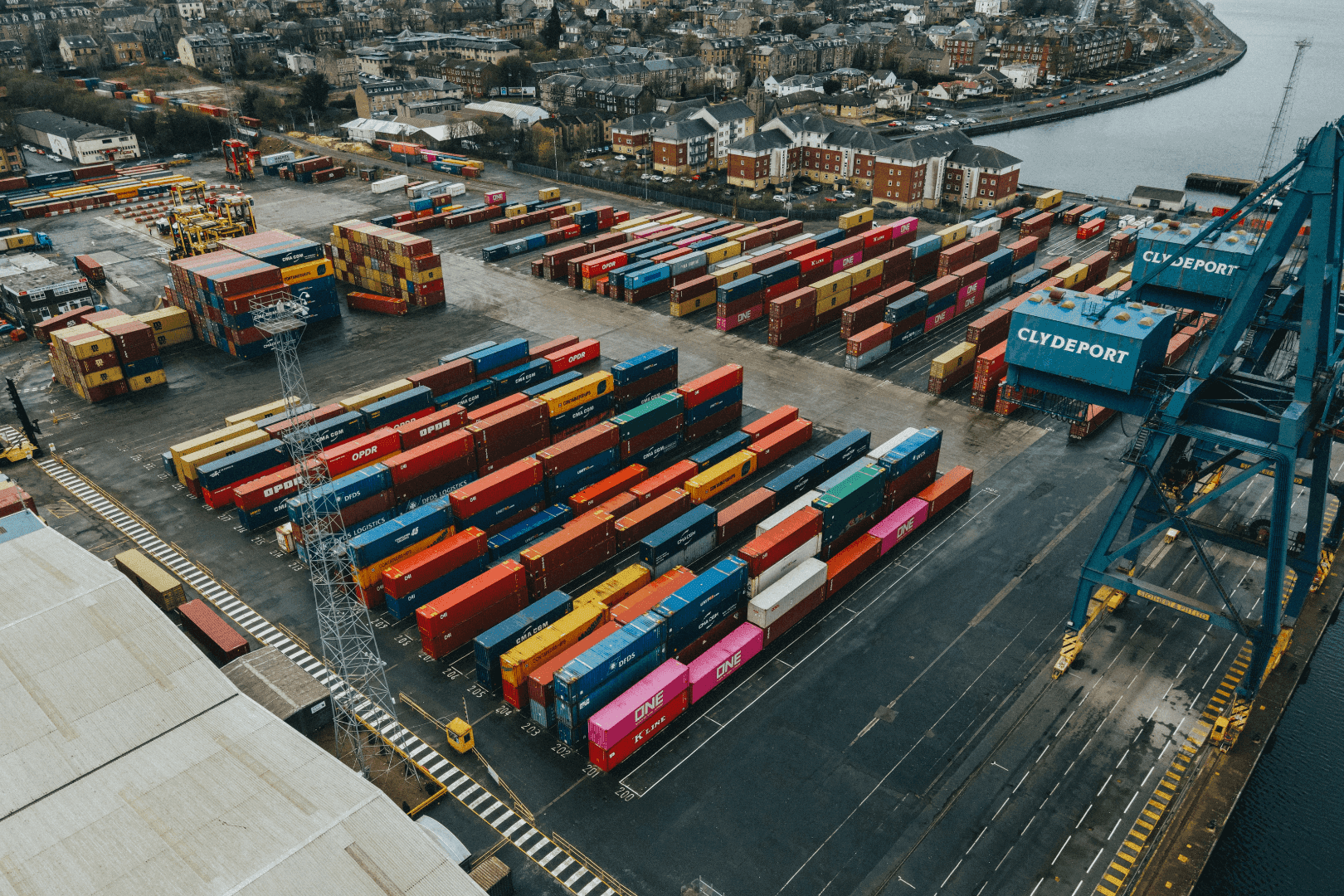
Have you ever stepped into a mega fulfillment center in Dongtan or Pyeongtaek and witnessed this exact scene? A 25-ton trailer is idling at the loading dock, and the driver is constantly rushing the staff to meet the dispatch schedule. Meanwhile, deep inside the warehouse, two workers are frantically driving a forklift through towering racks, desperately searching for a single pallet that was placed in the wrong slot during the previous shift.
Fifteen minutes pass in the blink of an eye. A delay in just one process causes a ripple effect, bottlenecking the entire supply chain. Particularly in the Korean logistics industry—where "dawn delivery" and "same-day delivery" are the standard—a delay of even a minute directly translates to massive operational losses and customer dissatisfaction. These "needle in a haystack" situations on the warehouse floor are critical loopholes silently devouring your company's profits.
Many Warehouse Managers simply sigh and accept it: "The warehouse is massive; it's natural for workers to miss a barcode scan occasionally." However, the world has already moved far beyond barcodes and manual labor. The introduction of UWB (Ultra-Wideband) location tracking technology in logistics is completely redefining the concepts of "spatial control" and "visibility."
1. The Indoor Tracking Crisis: Why Do Legacy Technologies Fall Short?
Before discussing the magic of UWB, it is worth examining why the traditional solutions we rely on are constantly causing headaches for site managers.
GPS - The Giant That Goes Blind Indoors: GPS is fantastic for tracking whether your cargo truck has passed the Seoul tollgate and is heading to Busan. But the moment that truck backs into the loading dock and the cargo moves beneath the thick steel roof of a warehouse, the GPS signal vanishes completely.
Barcodes, QR Codes, and RFID - The Tragedy of Being "Passive": These technologies are incredibly popular because they are cheap to implement. However, their fatal flaw is that they require "human intervention." A worker must physically point a scanner at a barcode, or a pallet must be driven through a specific RFID reader gate for data to be recorded. If a rushed worker moves a pallet to a new rack but forgets to scan it, that inventory simply evaporates from the system. It becomes "phantom stock"—you know it is somewhere in the building, but nobody knows exactly which aisle or shelf it is sitting on.
Wi-Fi and Bluetooth (BLE) - The Nearsighted Glasses: These were hailed as the first generation of indoor tracking technologies. The problem? Their margin of error is a massive 3 to 5 meters. Imagine the layout of a modern Korean logistics center, where aisles between racks are narrowed down to just 2 meters to maximize space efficiency. If your system is off by 3 meters, you won't even know if the cargo is in Aisle A or Aisle B.
2. UWB (Ultra-Wideband): The Ultra-Precise Radar Down to the Span of a Hand
To put it simply, UWB technology acts like a hyper-sensitive, miniaturized radar for your indoor facilities. It fires billions of incredibly short radio pulses per second to measure the distance between devices at the speed of light.
What makes a UWB-based Real-Time Location System (RTLS) so fundamentally different from existing tech comes down to two overwhelming advantages:
Centimeter-Level Accuracy: UWB's margin of error is a mere 10 to 30 centimeters. It doesn't just tell you the "general zone" of a pallet; it is precise enough to tell you whether that pallet is sitting on the 2nd or 3rd tier of a specific rack.
100% Real-Time Visibility: You never have to wait for a manual scan again. Every movement of a forklift or a worker is displayed instantly and smoothly on the manager's monitor, just like watching a vehicle move on a navigation app like T Map or KakaoNavi. It is complete, seamless automation.
3. Four Practical Scenarios of UWB Location Tracking Revolutionizing Logistics
How exactly does possessing a centimeter-accurate indoor map change your warehouse operations? Let's look at real-world scenarios happening on the floor:
Scenario 1: Rescuing the "Feet" of Order Pickers
In a fulfillment center, the physical movement required for workers to pick individual items accounts for over 50% of total labor time. Typically, workers hold a paper pick-list or PDA, check the rack numbers, and try to figure out the best route in their heads. Often, they miss an item and have to backtrack. When UWB is applied, the system knows the worker's exact location within a 10cm margin. Just as a delivery app calculates the best route for a driver, the worker's tablet displays the absolute shortest, most optimal 3D picking route. The result? Warehouses often see an explosive 30% increase in picking productivity within the very first month of implementation.
Scenario 2: High-Value Asset Tracking in 1 Second
Industrial forklifts, high-value plastic pallets, and wireless barcode scanners are frequently left in random places after a shift ends. Instead of mobilizing a whole team to search for a missing scanner, a manager simply types "Forklift 05" into the system. Instantly, a blinking red dot appears on the digital floor plan, showing it parked in a blind spot near the waste disposal area. This eliminates wasted time, ends managerial frustration, and ensures equipment is always ready when needed.
Scenario 3: Forklift Anti-Collision - Technology That Saves Lives
With the enforcement of the Serious Accidents Punishment Act in Korea, safety has become the paramount concern for industrial sites. In a noisy warehouse full of blind corners, collisions between forklifts and pedestrian workers are the ultimate nightmare for Health, Safety, and Environment (HSE) managers. By installing UWB location tags on forklifts and having workers wear smart vests, you create an "invisible safety shield." If a forklift and a worker come within a dangerous radius (e.g., under 3 meters) at a blind intersection, the worker's vest immediately vibrates violently, while the forklift's warning lights and sirens activate. Furthermore, the system can integrate directly with the forklift's controls to automatically reduce speed or engage the brakes, proactively preventing accidents before they happen.
Scenario 4: Spaghetti Diagrams and Data-Driven Optimization
If you overlay the movement tracks of a specific forklift over the course of a week using a UWB system, you get a tangled web of lines known as a "Spaghetti Diagram." Through this highly visual data, managers gain incredible insights: "Why is Forklift 3 constantly driving in circles around Zone B? Ah, the dead stock piled at the entrance of Zone B is causing a severe bottleneck." Instead of relying on subjective gut feelings or employee surveys, you can completely overhaul and optimize your warehouse layout based on 100% factual, real-time movement data.
4. Looking to the Future: The Convergence of UWB, AI, and Digital Twins
The ultimate goal of a powerful location tracking system is not just to watch small dots move on a screen. Leading global logistics companies are already combining UWB with AI and 3D modeling to build phenomenal, integrated management machines.
Imagine this: You are sipping coffee in a comfortable corporate office in Gangnam, Seoul. But on the large monitor in front of you, a Digital Twin (a live 3D digital replica) of a massive mega-warehouse in Busan is running in real time. Thanks to the continuous stream of UWB tracking data, the virtual forklifts moving on your screen are 100% synchronized with the actual, physical forklifts hundreds of kilometers away.
Taking it a step further, Artificial Intelligence (AI) analyzes millions of these coordinate data points in real time to predict the future. "Warning: In 15 minutes, three heavy transport vehicles will enter the Zone C packing line simultaneously. A severe bottleneck is predicted. The system recommends opening Auxiliary Line 2." This is the highest pinnacle of predictable, controllable logistics automation.
Conclusion: It's Time to Say Goodbye to the Old Ways
Upgrading to a comprehensive UWB location tracking system is not comparable to the cheap cost of printing a few barcode stickers. It is a revolutionary investment that fundamentally alters a company's IT infrastructure and logistical competitiveness.
However, when you calculate the "invisible opportunity costs"—the delivery penalties caused by delayed searches, the massive legal and financial losses from a forklift accident, and the labor wasted on inefficient routing—implementing UWB in your logistics operations is no longer optional. It is an absolute necessity to survive and leap forward in today's era of high-speed supply chains.
It is time to let your warehouse space tell you the true operational secrets that, until now, have remained invisible to the human eye!
Recommended Blogs

RTLS for Senior Living: Filling the Daily Care Log with Resident Location Data
2026-09-18
Warehouse Labor Tracking: Why the Shift Plan and the Actual Headcount at Each Process Differ
2026-09-17
Forklift Collision Avoidance When AMRs Share the Aisle: Pass UWB Coordinates, Let the Robot Decide
2026-09-16
RTLS Pilot Project: What Your Proof of Concept Should Verify
2026-09-15