Application of UWB and AI in Logistics: The Ultimate Solution to Smart Warehouse Challenges
2026-07-23
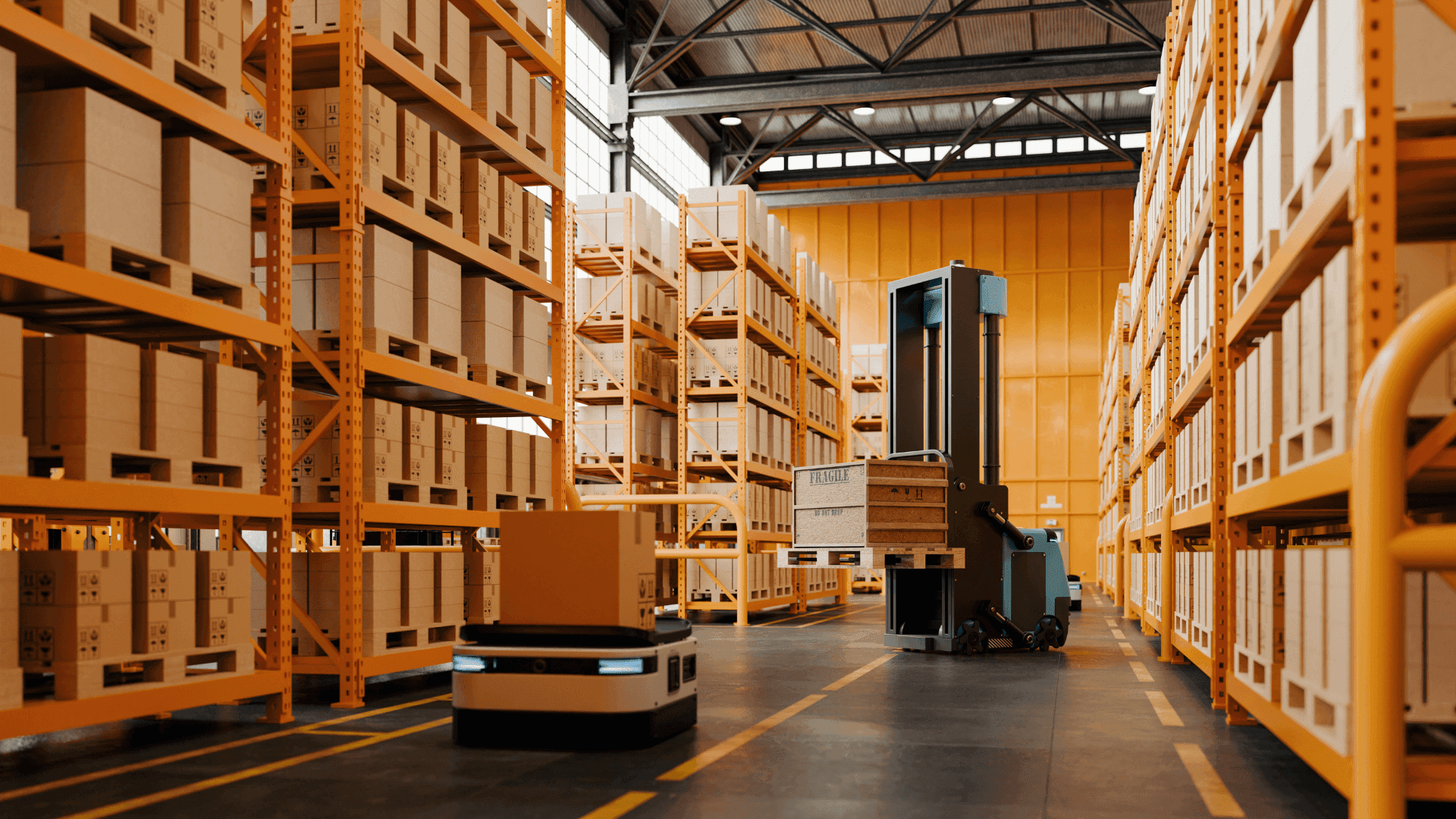
The logistics market has moved past "dawn delivery" and "next-day delivery," entering the era of "same-day delivery" and "sub-minute dispatch." The explosive growth of e-commerce and the increasing complexity of the global supply chain are putting unprecedented pressure on the logistics industry. In Mega Fulfillment Centers spanning tens of thousands of square meters, where millions of orders must be processed relentlessly every day, operational speed and data accuracy are no longer mere competitive advantages. They have become the most critical factors determining a company's survival in a fiercely competitive market.
However, behind the seemingly high-tech facade of many modern warehouses lie persistent headaches. Amid chronic labor shortages, workers waste precious time wandering like in a maze through massive racks just to find a specific pallet, while heavy forklifts get entangled in narrow intersections, causing severe bottlenecks. Furthermore, human errors during picking and inventory processes inevitably lead to misdeliveries, resulting in massive return costs and customer dissatisfaction.
To fundamentally solve these issues—rather than just applying partial, band-aid fixes—the logistics industry is undergoing a massive technological transformation driven by a powerful duo: high-precision UWB positioning technology and Artificial Intelligence (AI).
1. The Limitations of Traditional Warehouses and Existing Technologies
In a standard warehouse, goods are constantly moving and being relocated. Relying on traditional Warehouse Management Systems (WMS) and manual barcode scanners requires workers to frequently dismount forklifts or physically interact with cargo, significantly increasing their physical fatigue.
Many companies have attempted to overcome this and automate operations by introducing Wi-Fi or Bluetooth Low Energy (BLE) technologies. However, the dense steel racks and numerous metal obstacles commonly found in large-scale fulfillment centers cause severe wireless signal interference (multipath interference). This results in positioning errors of several meters.
In a fast-paced logistics environment where every second counts, a 3-meter error is fatal. It can mislead a worker into the wrong aisle or cause them to pull the incorrect pallet from a different tier of the rack. Ultimately, managers lose faith in the system and fall back into the vicious cycle of manual labor. We urgently need a new, highly accurate, and automated standard capable of overcoming metal interference.
2. UWB: The 3D Miniature Map with Absolute Precision
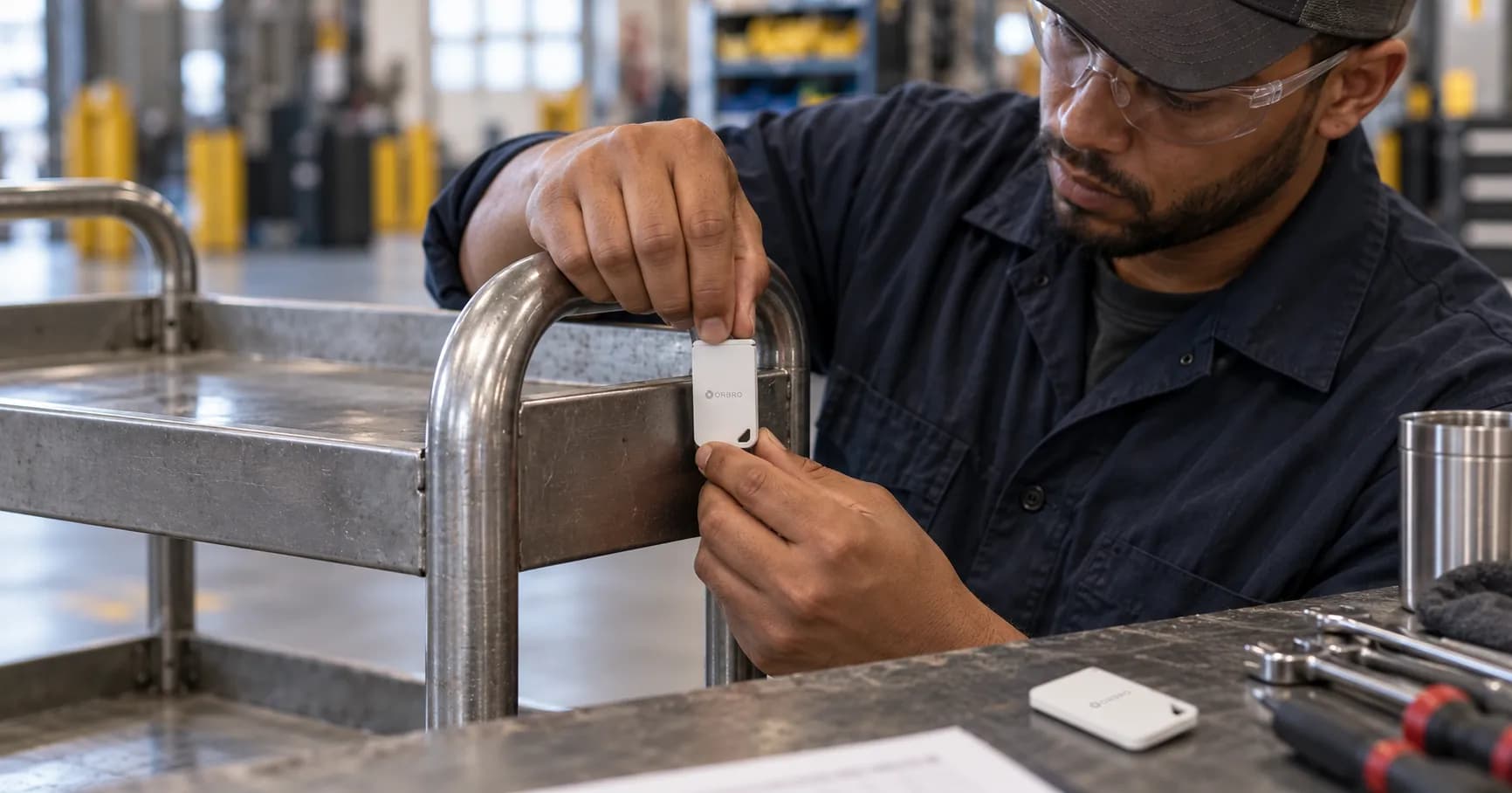
UWB (Ultra-Wideband) technology has brought a quantum leap to the field of RTLS (Real-Time Location Systems). Instead of manually scanning barcodes, compact UWB tags are simply attached to all cargo pallets, forklifts, scanning devices, and workers' safety helmets. Anchors installed on the warehouse ceiling and walls continuously exchange radio waves with these tags using short pulses over a broad frequency band.
Centimeter-level 3D Accuracy: Unlike legacy technologies, UWB's radio characteristics make it virtually immune to metal obstacles and signal reflection. This system provides extremely precise positioning with an error margin of under 10 to 30 cm across all three dimensions—not just the flat X and Y axes, but also the Z-axis (height). This means that even in a high-density, 5-tier rack, the system perfectly identifies exactly which aisle and which specific slot the target cargo is located in.
Real-Time Data Synchronization: The movement data of cargo and forklifts is updated to the server in milliseconds. This guarantees that the virtual inventory data on the software system is 100% synchronized with the actual physical situation on the floor without any delay.
3. AI: The Maestro Orchestrating Warehouse Traffic and Resources
While the high-quality positioning data provided by UWB forms an excellent foundation, translating this vast array of data points into actual logistics optimization requires the intelligence of AI. By learning and analyzing the massive data streams from the UWB system, AI orchestrates the entire logistics operation.
Intelligent Picking Route Optimization (Smart Routing): Gone are the days when new workers had to navigate blindly or rely on the intuition of veterans. AI analyzes the worker's real-time positioning data, the 3D location of target goods, and the dynamic warehouse map to plot the absolute shortest route. Especially when processing multi-order batches, it calculates the most efficient sequence for picking. This drastically reduces empty travel distance, lowers worker fatigue, and maximizes daily order processing capacity.
Smart Forklift and Resource Allocation: When a new heavy pallet movement task is registered, the AI scans the Digital Twin platform. Through this real-time virtual replica of the warehouse, it automatically locates the nearest idle forklift and assigns the task. This eliminates the inefficiency of calling a forklift from hundreds of meters away, thereby saving battery life, reducing fuel consumption, and maximizing equipment utilization rates.
Traffic Management and Proactive Bottleneck Prevention: AI continuously analyzes the traffic across the entire warehouse to generate live heatmaps. If the system predicts that AGVs (Automated Guided Vehicles) or manual forklifts are about to congest a specific intersection or highly-demanded product zone, it proactively reroutes other vehicles to alternative paths, ensuring the complex flow of logistics remains uninterrupted even for a single second.
4. Elevating Industrial Safety and Risk Management
Equally as important as productivity and efficiency, "safety" is a top priority that can never be compromised. In modern industrial environments where corporate responsibility for occupational safety is strictly enforced, the mix of heavy forklifts and pedestrians in narrow, restricted-visibility aisles poses an extreme collision risk.
The real-time positioning system combining UWB and AI creates an invisible "Geofencing" safety net to protect workers. The AI continuously calculates the distance, moving speed, and directional vectors of all objects in the space. If a potential collision is predicted in a blind spot where high stacks of goods obscure the view, the system immediately triggers a strong vibration and auditory alarm on the worker's wearable device. Furthermore, when integrated with modern forklift control systems, it can establish an active safety network capable of forcibly decelerating or halting the vehicle within the danger zone.
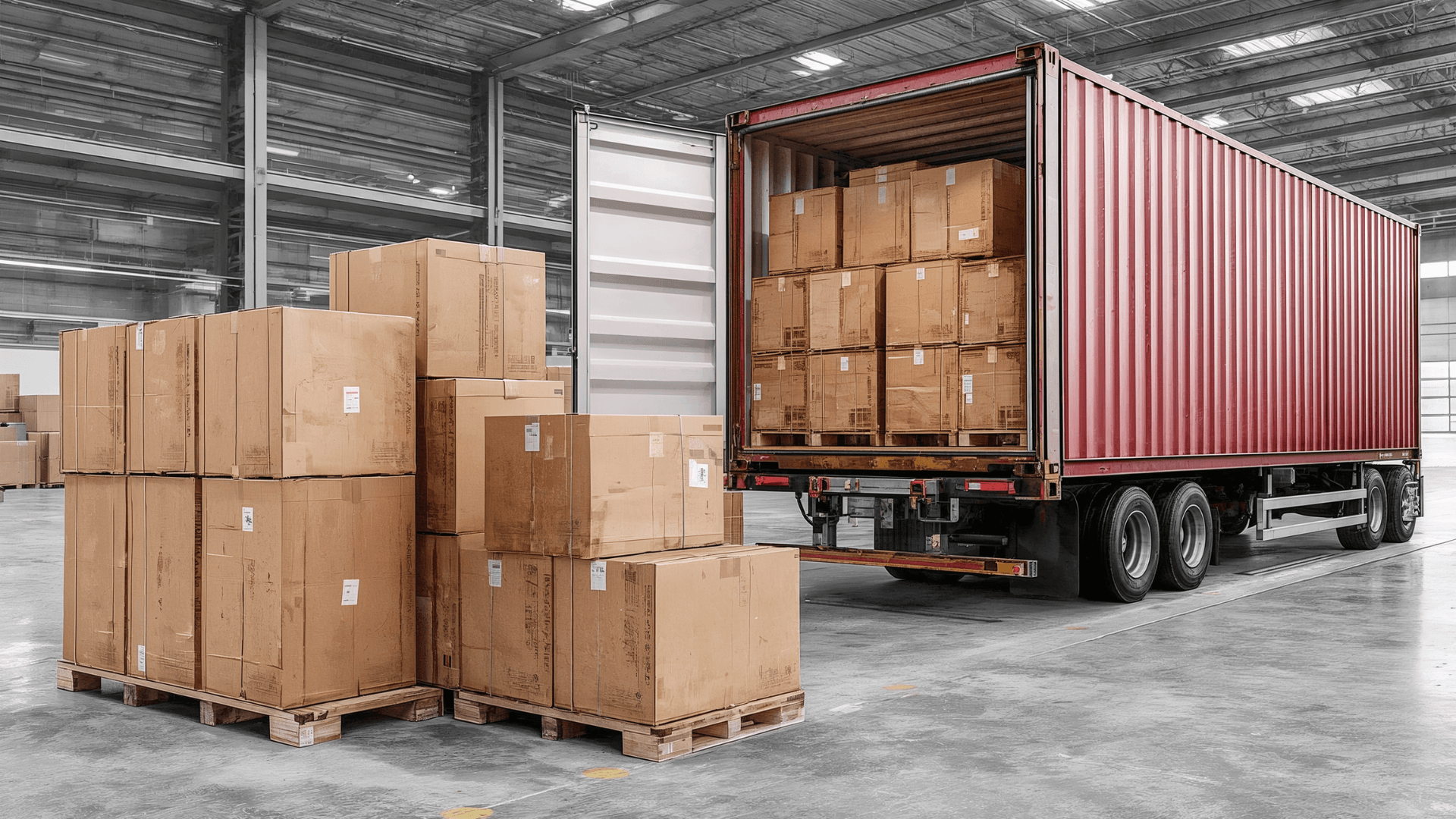
5. Conclusion: Essential Infrastructure Investment for Future Growth
True Digital Transformation (DX) in the logistics industry must go beyond simply adopting the latest WMS software. To genuinely master a high-speed supply chain where millions of inventory items move ceaselessly, enterprises must have absolute control over not just their data, but the "physical space and movement routes" themselves.
The convergence of UWB and AI provides a flawless positioning ecosystem where every asset, piece of equipment, and person is connected, monitored, and autonomously optimized in real-time. In the short term, this brings a drastic reduction in operational costs and human errors; in the long term, it serves as robust infrastructure capable of sustaining the explosive expansion of future logistics demands. Only those enterprises that pioneer the adoption of these core technologies will secure an overwhelming competitive advantage in the next generation of logistics.
Recommended Blogs
The RTLS Pilot Worked. Is Every Shift Ready to Use It?
2026-10-20
Right Coordinates, Wrong Floor? Validating Multi-Floor RTLS
2026-10-19
Returned but Not Ready: Tracking Returnable Container Recovery
2026-10-16
Replacing an RTLS Tag Without Losing the Asset's History
2026-10-15