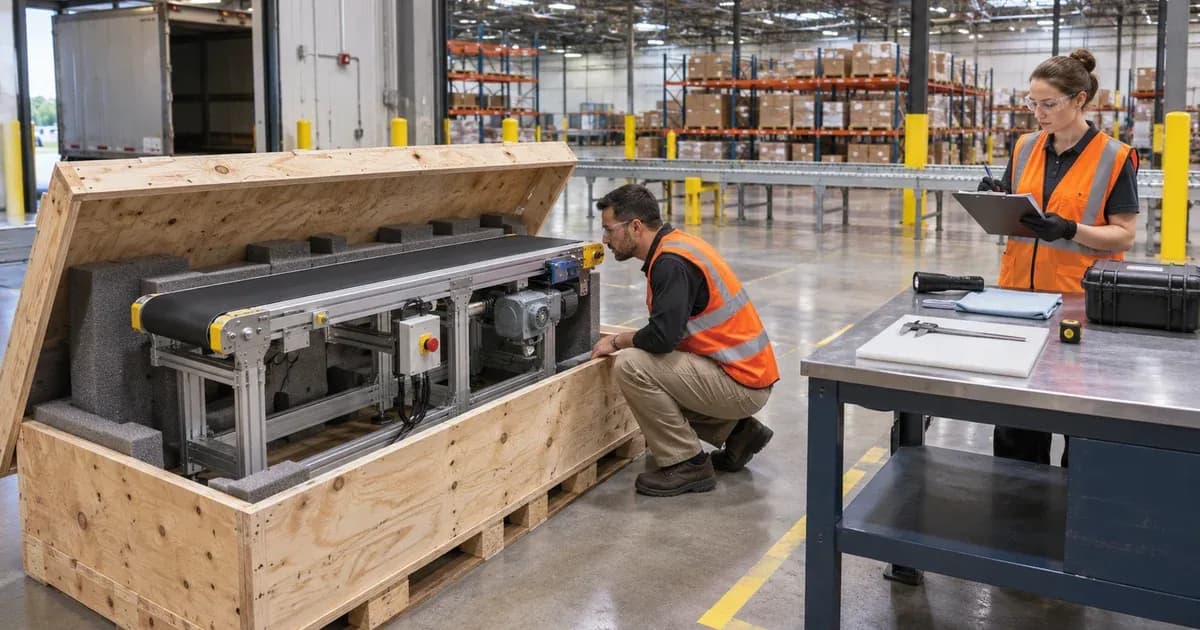
A removable inspection fixture returns to a US fulfillment center after outside servicing. Receiving marks the delivery complete, but maintenance cannot find the fixture for the next equipment check. It is in an incoming-inspection bay, still inside a transport case. The shipment has returned; the asset is not yet ready for use. Vendor repair tracking needs both milestones.
The 2026 US holiday forecast is a planning context for reviewing equipment readiness, not evidence of an individual site's demand. This imagined warehouse example follows a service fixture from dispatch authorization through outside custody and internal acceptance. It does not assume continuous tracking on public roads or automatic synchronization with a vendor's system.
I. Keep dispatch, receipt and acceptance separate
A tag observed near the outbound doorway supports an internal location record. It does not prove that the carrier accepted the correct asset, that the vendor received every accessory or that the service was completed. Connect the asset number with a dispatch request, contents list, expected return date and receiving owner.
A reusable case may contain several fixtures or detachable parts. Decide whether the case tag represents the package only or remains linked to its listed contents until handoff. Record the relationship and the time it changes. If the fixture leaves the case after return, a case location cannot continue to represent the fixture without a new physical check.
II. Compare the evidence across custody boundaries
| Record | What it establishes | What remains open |
|---|---|---|
| Internal exit observation | A tag observed at the site boundary | Carrier receipt and outside route |
| Carrier or vendor handoff | Recorded identity, quantity and recipient | Later internal staging location |
| Return location history | Observed movement after arrival | Service quality and acceptance |
Treat the outside interval as outside the internal observation scope unless additional coverage has been explicitly provided. Leaving the last indoor point displayed as though it were current can mislead an operator. Show the outside-custody status and the age of the last internal observation alongside the handoff evidence.
III. Make the return route visible with ORBRO
ORBRO OS Zone Manager can distinguish outbound staging, receiving, cleaning, incoming inspection and serviceable storage. Record supports reviewing recorded movements after return. The operator uses the asset-to-tag relationship and observation time to narrow the search, then checks the physical identity and acceptance record.
Prepare the map and device connections in RTLS Manager. Test the equipment in its actual protective packaging, including cases with metal parts and vehicles parked near the doorway. An observation near a door is not automatically a reliable crossing event. Compare recorded results with real movements through the relevant routes.
Vendor job status, shipping documents and acceptance approval are separate business information. Connecting them to location requires agreed asset and request identifiers, update rules and a clear system of record. Location monitoring does not automatically generate a carrier receipt or validate a service certificate. Any automated reconciliation must be specified and verified in the chosen configuration.
IV. Handle late and partial returns differently
A fixture still at the vendor requires a different response from one already back on site but waiting for inspection. Separate expected return, latest vendor confirmation, internal arrival observation and acceptance approval. This tells the coordinator whether to contact the vendor, receiving or maintenance.
If only part of a package returns, do not close the entire request because the case tag is visible indoors. Compare asset numbers and accessories with the dispatch list and keep the outstanding items open. Packaging exchanges, replacement units and reused tags also require explicit identity changes. Preserve the history of the original unit rather than assigning it to a replacement without explanation.
An urgent operational need may require an authorized exception, but moving a fixture to a work area is not that authorization. Keep the acceptance decision and its evidence visible. Where a calibration or functional check is needed, review the relevant result before release. Location says where to investigate, not whether the instrument is fit for its intended purpose.
V. Measure readiness rather than return alone
A pilot should distinguish dispatch-to-return time, return-to-inspection time and readiness before the planned job. Compare similar service types and include cases with missing observations or manual handoffs. An external repair taking longer is not the same problem as spending an hour searching the receiving area.
Test normal return, partial contents, case exchange, delayed vendor updates and a disconnected tag. At each milestone, check the physical asset against both the custody record and location history. Define who resolves a discrepancy and what evidence closes it. A fresh observation alone should not close an unresolved contents or service-quality issue.
The results can identify whether the next improvement should be internal coverage, better dispatch lists or a clearer vendor confirmation process. More location points will not repair a missing custody agreement, just as a shipping receipt will not explain where the asset was placed after unloading.
Closing thoughts
An asset can be back inside the building and still unavailable for its next job. Separate external custody, internal return, contents verification and acceptance so the team can see which step remains open. ORBRO location records can support the internal route while business records establish handoff and service approval.
Prepare sample dispatch and vendor records, packaging arrangements and the return-inspection route. Contact ORBRO to define the tracking unit, internal coverage and information that requires a separate integration.