The returns trailer has been unloaded and the receiving count is complete. Later, a warehouse coordinator looks for items that might be restocked. Some cartons are behind the inspection bench; others remain beside receiving. One group has been checked but is waiting for a decision. The status “received” does little to explain which work should happen next.
Consider a hypothetical US household goods distribution center. Following returns through receiving, inspection, hold and restocking preparation requires two connected views: where the goods are and what the business has decided about them. Product-specific disposition rules remain part of the warehouse’s approved procedure.
I. Separate receipt from permission to restock
Receipt records the physical handover. Restocking requires the applicable identity, quantity, condition and approval checks. Goods occupying a restock preparation area should not become available inventory simply because their location changed.
| Stage | Useful location evidence | Required business evidence |
|---|---|---|
| Received | Observed location of the return unit | Receipt reference and quantity check |
| Inspection or hold | Movement around the relevant work areas | Findings, hold reason and next owner |
| Restock preparation | Transfer after a decision | Authorization and inventory transaction |
A long stay may reflect missing return information rather than a slow inspection team. Keep those explanations separate. Otherwise the site may add inspection capacity while unresolved references still prevent work from starting.
II. Make the tracked unit match the work
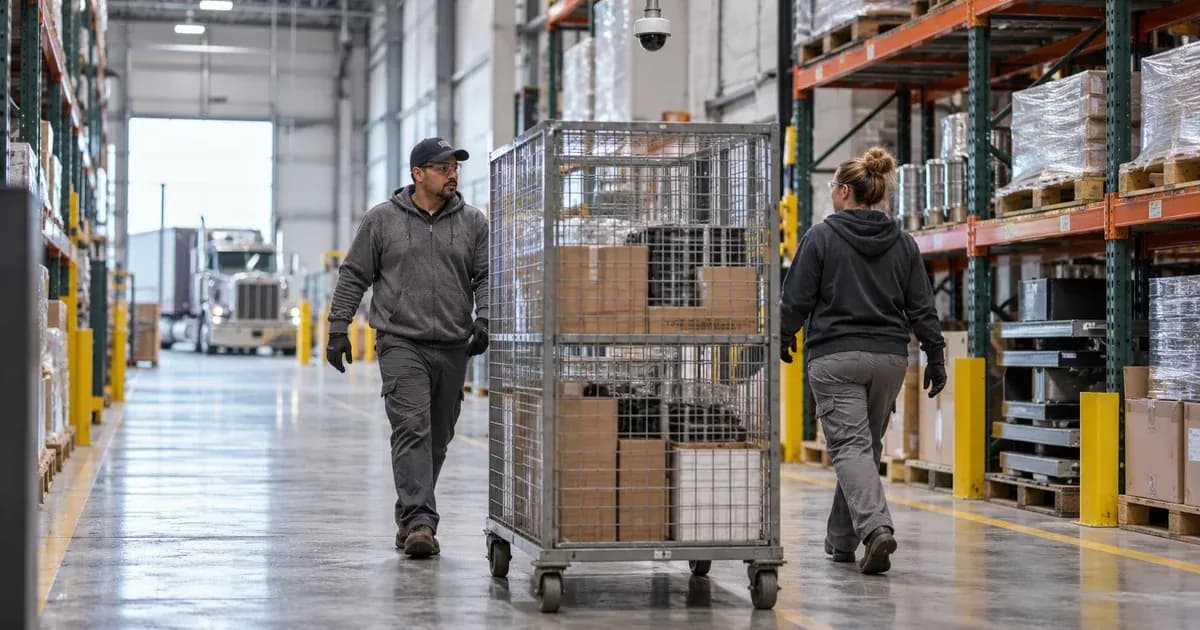
A tagged rolling cage can contain cartons from several return authorizations. Its location cannot show that every carton has passed inspection. Define whether the tracking unit is a carton, tote, cage or pallet, then record its relationship to the receiving references.
Partial inspection changes that relationship. Separate approved items physically and update the associated list when contents move to another container. An empty cage leaving inspection is not proof that all its previous contents were approved. Item-level scanning remains necessary where the process requires item-level identity.
III. Represent the actual queue in ORBRO
Use ORBRO OS Zone Manager to define receiving, inspection waiting, hold and restocking preparation areas. Begin with the actual floor flow rather than drawing several overlapping states in one aisle. Check that marked floor boundaries and map boundaries agree.
Zone Counting provides time-based counts for selected zones and CSV downloads. It can help reveal when an observed queue grows, provided the team understands what each counted object represents and which goods were not observed. In UWB and AoA deployments, Record can replay the movement of a selected container. Automatic matching to returns or inventory software needs separately defined identifiers, interfaces and exception handling.
IV. Give waiting goods a reason and a next owner
A queue of old returns is difficult to act on if it has no reason codes. Missing accessories, a quantity discrepancy and approval pending call for different people. Those reasons come from the inspection workflow; a coordinate does not reveal them.
Condition-based Zone Effect indications can help prioritize a check when suitable conditions are available in the deployed configuration. Define the operational waiting criterion and response owner first, and verify how the required condition will be supplied. Do not assume every dwell-time rule exists by default, or treat a notification as approval to release stock.
An urgent request also needs a recorded decision. Moving the goods closer to dispatch should not bypass inspection. If the team makes an authorized exception, preserve its scope and the person responsible in the business record.
V. Trial the awkward cases
Test a full-container inspection, a partial split, a return from hold, a temporary move and a detached tag. Compare each physical unit, return reference and result. Include missed observations and a container that merely passes beside the restocking area.
Evaluate the time from receipt to inspection start, goods with no hold explanation and mismatches between remaining goods and completed records. Adjust comparisons for changes in return volume and product mix. A lower zone count alone could reflect a move to an untracked corner rather than more completed work.
Closing thoughts
“Received” is a starting event, not a complete returns workflow. Connecting physical queues with inspection decisions and the next responsible person makes waiting goods easier to act on without confusing a container movement with approval.
For an ORBRO review, bring the returns layout, receiving and inspection stages, container units and hold reasons. These provide a basis for defining useful zone observations and the records that need to connect with them.
v