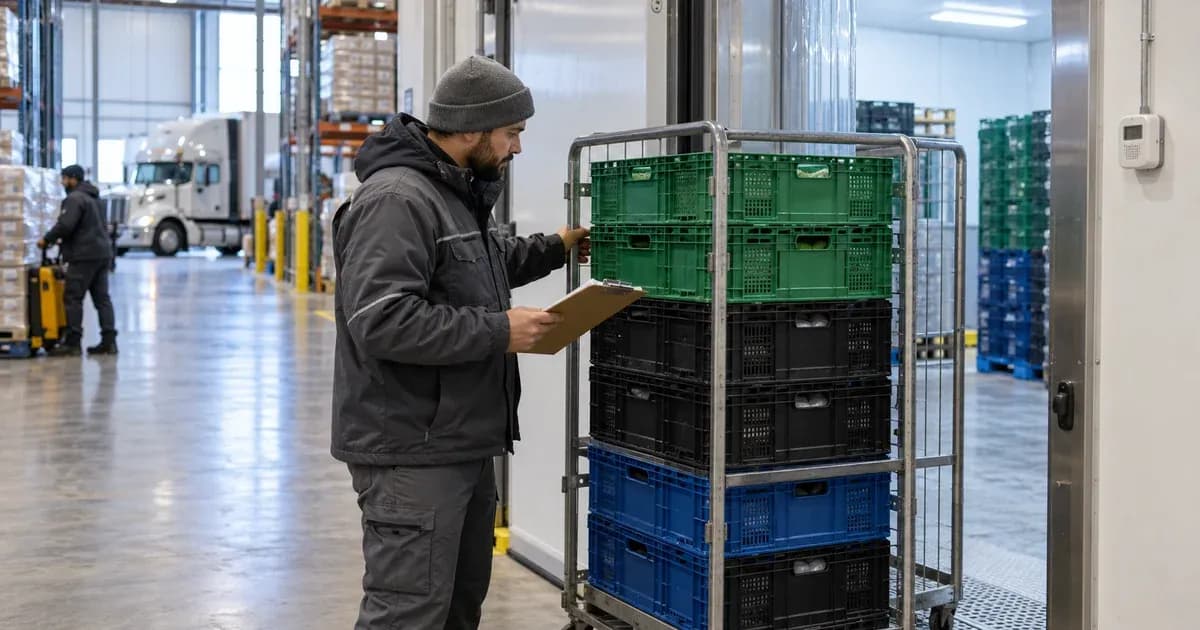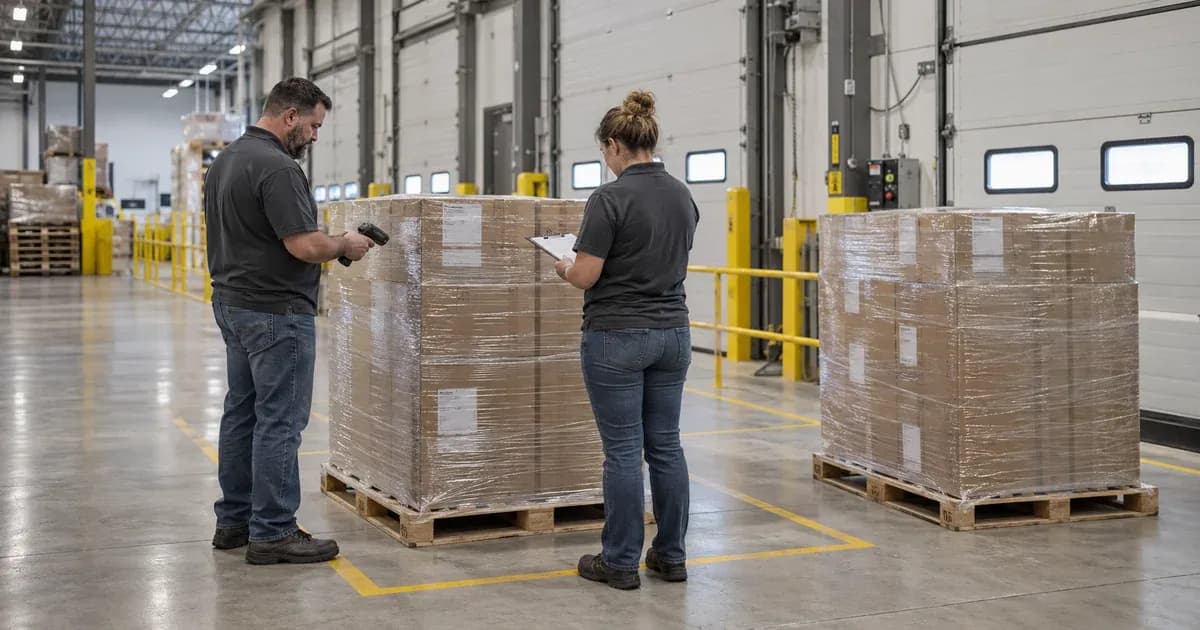
Two workers cross behind a material cage and leave along different aisles. The map keeps drawing two paths, but the team cannot tell whether each path still follows the same movement. A continuously visible marker is not enough to establish continuity through the hidden interval.
A hypothetical US assembly plant wants tag-free movement analysis around shared work areas. The operational question is whether observed paths remain usable through representative crossings, not whether a camera has established a person's name or completed work.
I. Separate detection, positioning and continuity
Detecting an object when it is visible differs from associating it with an earlier observation. An internal track identifier must be checked against the physical movement. It should not be presented as an employee identity.
| Check | Reference evidence | What it does not establish |
|---|---|---|
| Detection | Visible people or vehicles versus detections | Same object after occlusion |
| Map position | Known floor position versus display | Equal performance at every height |
| Track continuity | Actual movement before and after hiding | Personal identity or work completion |
Decide whether the task needs zone counts or individual movement sequences. Those requirements can demand different tests. One combined accuracy figure can hide which outcome failed.
II. Align the viewing area with actual routes
ORBRO AI RTLS converts movement observed in camera feeds into coordinates. AI RTLS Manager connects cameras to maps, configures regions of interest and supports review of recognition and tracking results.
Check the visible floor against the drawing before interpreting paths. Record camera height, angle, illumination, time reference and target type. Tall stock, open doors and bending workers can change visibility. A successful empty-aisle trial does not establish performance after the shelves are loaded.
Explain the analysis boundary to users. An object outside the configured region or hidden behind stock should not be treated as continuously observed simply because the display remains tidy.
III. Test crossings and reappearance as distinct scenes
Include one person briefly hidden by a cage, two people crossing, and similarly dressed people leaving in different directions. An independent observer records the physical movements and expected associations. Use a controlled trial without creating dangerous interactions with operating vehicles.
If the design spans cameras, test the handover separately. Continuity within one view does not establish continuity between views. Include delayed video, missing frames and an object leaving the image before returning. Determine whether the deployed configuration starts a new track or retains an unresolved interval.
IV. Preserve what could not be seen
Keep hidden intervals visible in the review evidence. Check whether an estimated display can be distinguished from an actual observation. A smooth connecting line should not silently prove passage through an aisle or a continuous stay in a zone.
For counting, check both duplicate tracks for one object and merged tracks for two objects. Linking tracks to access permissions, job instructions or named individuals needs a separately supported association. Camera coordinates alone should not approve an individual's attendance or production result.
V. Accept the tested operating conditions
Report the scene types, target population, visibility and unconfirmed movements. Do not raise the apparent success rate by testing only easy passages. Repeat representative scenes after lighting, camera or stock-placement changes.
Depending on the task, a different camera position, clearer sight line or limited use of tags may be appropriate. Combining technologies automatically needs verified identifiers and deployment support. Select the complement that addresses the demonstrated gap, and preserve the limitation in the handover.
Closing thoughts
A line continuing after two workers cross does not prove that it stayed with the same object. Test detection, map position and continuity against the physical scene, and keep uncertainty and identity limits understandable to operators.
Bring camera placements, representative viewing conditions, stock obstructions and the required analysis unit to ORBRO. These inputs help define ROI setup, map alignment, trial scenes and a practical configuration for the actual facility.