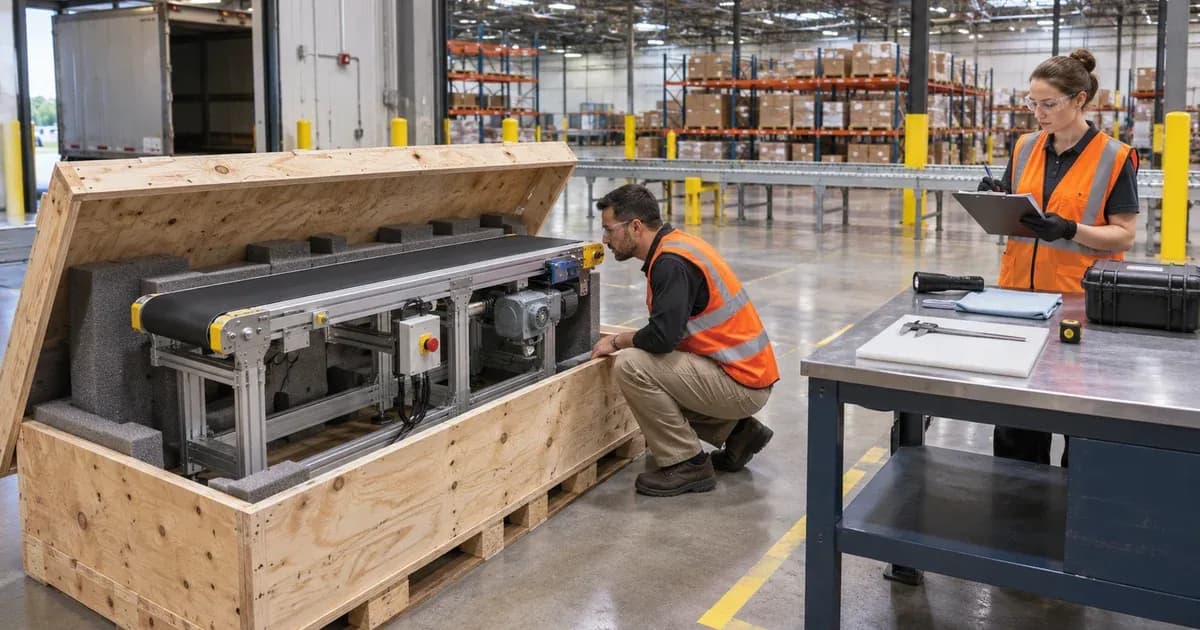
An associate moves a pallet to clear a congested rack aisle at a US warehouse. The cartons arrive at a temporary bay, but the inventory system still points to the original slot. A picker finds the old slot empty and reports a shortage while the same stock sits elsewhere in the building. Warehouse relocation tracking must connect physical movement with the inventory transaction that changes the address.
Seasonal preparation in the 2026 US holiday outlook gives this issue practical relevance, without proving a specific increase in a site's workload. This imagined distribution-center example concerns internal slot transfers. It focuses on unfinished movements and reconciliation while retaining the warehouse management system as the inventory record.
I. Separate the instruction, movement and confirmation
A transfer instruction describes an intended source and destination. A location observation describes where a tag was detected. An inventory confirmation records that identified stock and quantity were placed at the destination. These events can occur at different times, particularly when a task is interrupted or only part of a pallet moves.
Connect the transfer number, handling-unit identity, source slot, intended destination and quantity. If the tag is on a pallet or trolley, record which stock it represents and when that relationship was checked. Replacing the contents without updating the relationship produces a plausible carrier route and an incorrect inventory story.
II. Compare ways to establish the new address
| Method | Strength | Limitation to address |
|---|---|---|
| End-of-shift entry | Groups administrative work | Gap between physical move and update |
| Source and destination scans | Explicit stock and slot confirmation | Missed scans and intermediate staging |
| RTLS comparison | Observed route and unresolved-move investigation | Exact bin, quantity and transaction completion |
Where rack level matters, do not infer a complete slot address from a two-dimensional point. Location can narrow the destination area while a bin scan confirms the shelf. The useful combination depends on the operational decision. Automatically overwriting the inventory address whenever a tag moves can turn temporary staging into a false final putaway.
III. Use ORBRO to investigate open transfers
Zone Manager and Record support defining source storage, intermediate staging and destination areas, then reviewing recorded tag movement. An operator checks the handling-unit relationship and observation time before comparing the route with the transfer instruction. A task still open after the asset reaches the destination area is a candidate for investigation, rather than proof that the inventory transaction should be forced complete.
Building that exception list automatically requires a separately defined connection to the warehouse system. Agree on transfer identifiers, status ownership, expected update delay and cancellation handling. ORBRO location applications should not be assumed to update every warehouse system's stock quantity or slot records out of the box.
Use RTLS Manager to prepare map alignment and device connections. Validate actual paths between loaded racks and temporary bays. Compare a brief passage through a destination area with a genuine final placement. Observation gaps, dense loading and tag orientation belong in the pilot conditions.
IV. Recover when the move changes halfway through
If the intended slot is occupied, record the alternative destination and reason before completing the task under the site's exception process. Do not confirm the original address and rely on someone to remember a later correction. For partial transfers, keep moved and remaining quantities distinct and avoid assigning the whole order to the location of one carrier.
Cycle counting introduces a time boundary. If stock keeps moving, the same handling unit can be counted twice or missed at both addresses. Establish the count reference time and keep in-progress transfers separate. Reconcile departure, arrival and quantity around that time; use location history to narrow the relevant items and intervals, not to replace physical quantity checks.
During an integration outage, delayed movement events can arrive after a task has been cancelled or completed. Specify event time separately from receipt time, and prevent old messages from replaying an inventory action. Recovery should compare current physical stock with the transaction history before closing the exception.
V. Measure transaction delay and inventory error separately
For a pilot area, record source confirmation, physical arrival, destination registration and discrepancy resolution. Distinguish late registration from a wrong address or wrong quantity. Compare similar workloads, and include missing observations and cases resolved through a physical search.
The result may support expanding coverage around temporary staging while leaving stable storage under existing scan controls. Choose the next zone by repeated unresolved transfers and the evidence needed to close them. The number of visible location points is less useful than knowing why the physical stock and inventory address disagree.
Closing thoughts
A slot transfer ends when the stock reaches the right place and the inventory address is correctly confirmed. ORBRO location history can help compare the actual route with the intended move, while scans and inventory records establish the bin and quantity. Keep observations and transaction decisions distinguishable.
Prepare sample transfer tasks, slot codes, temporary-staging rules and partial-move examples. Discuss ORBRO around the intervals where stock becomes difficult to find and the warehouse-system information needed for reconciliation.