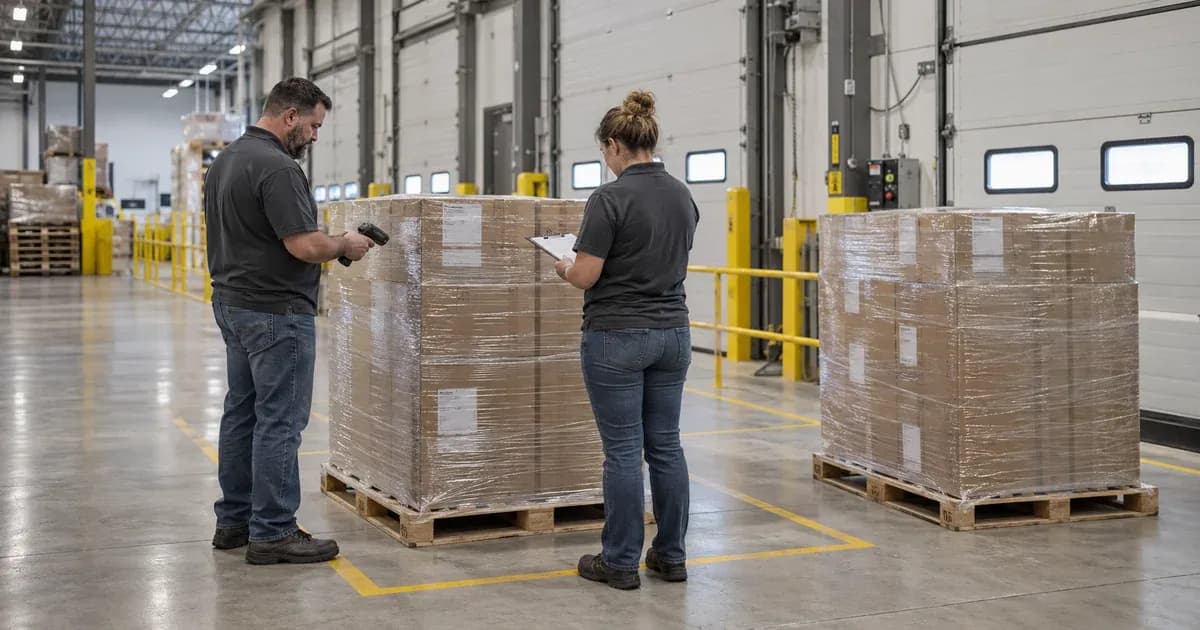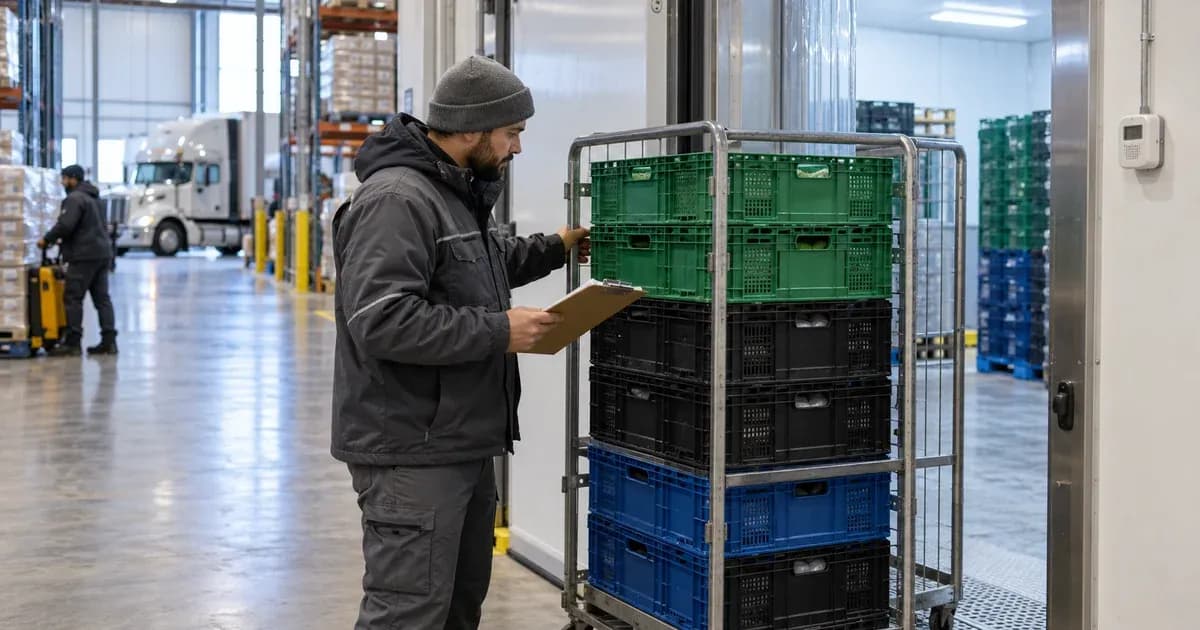
A chilled-room alert reaches the distribution supervisor. By the time someone checks, the reading has recovered and two roll cages have moved to dispatch. Checking only the goods still inside could miss part of the investigation. The useful question is which loads may have occupied the relevant area during the recorded excursion.
Consider a hypothetical US food distribution center with shared cold storage and several dispatch lanes. This is an operating method for identifying checks, not a product-release standard or a universal temperature limit.
I. Establish what the sensor actually measures
A fixed wall sensor measures conditions at its installation point. Its reading does not establish the core temperature of every product nearby. Keep the sensor identifier, mounting height, door position and cooling outlet on the layout. Explain the intended coverage and record when an installation changes.
| Evidence | What it supports | Further confirmation |
|---|---|---|
| Fixed sensor readings | Environmental change at that point | Representative coverage and product condition |
| Tag-location history | Observed place and time of a load unit | Valid association with lots and quantities |
| Quality review | A decision under the site's procedure | Product criteria and supporting checks |
These records answer different questions. A recovered room reading does not release the loads, while overlapping location records do not by themselves establish product failure. They help define a review population.
II. Recover the event interval, not only the alert time
Distinguish measurement time, system receipt and notification delivery. Delayed communication can make the useful review period begin before the supervisor received the alert. Sampling gaps also limit how precisely the onset or recovery can be placed. Preserve uncertainty instead of inventing exact transition times.
ORBRO Sensor Monitoring supports sensor-based conditions, alerts and time-series review. Zone Effect can provide a spatial indication of a relevant condition. Select the actual sensor for its measurement range, installation environment and validation needs. Platform connectivity does not establish suitability for a particular cold-room application.
III. Compare the loads that occupied the area
A tag attached to a roll cage follows that cage. Associate it with its lot and quantity over an effective period. Compare confirmed zone stays with the excursion interval, including loads already transferred elsewhere. Check evidence for loads entering after recovery rather than placing every current occupant on the same list.
In supported UWB or AoA deployments, Record can replay location information for a selected period. Matching that history automatically to sensor events and stock records remains an integration requirement: agree on identifiers, timestamps and available interfaces. A line drawn across an observation gap is not proof of continuous occupancy.
IV. Retain unresolved loads and partial transfers
Suppose one cage has a confirmed exit before the excursion, while another was last observed near the doorway during it. The second needs further location and exposure review. Missing observations should not silently become evidence that it left.
If only part of a load moved to another container, follow the transferred quantity and its association time. Record the responsible person and evidence for holds, additional measurements, relocation or release. Keep environmental recovery separate from completion of the business response.
V. Validate one room before widening the scope
Prepare the layout, sensor positions, tracking unit and quality workflow. Test ordinary transfers, movements around the event interval, delayed data and split loads using an approved trial. Compare the resulting list with independent physical notes.
Review missed candidates as well as unnecessary inclusions. Include untagged loads, sensor gaps and unresolved locations in coverage reporting. Finding the connected population quickly does not establish that all stock was checked. Hand unresolved lots and their next actions to the following shift.
Closing thoughts
The goods needing review after an excursion may already have left the room. Compare the sensor's supported interval and coverage with valid load histories, retaining missing evidence. Temperature and location narrow the investigation; product condition and release still require the responsible procedure.
For an ORBRO review, bring the room layout, sensor conditions, lot-to-container rules and response workflow. Discuss the configuration to establish which records can be reviewed together and which associations need additional integration.