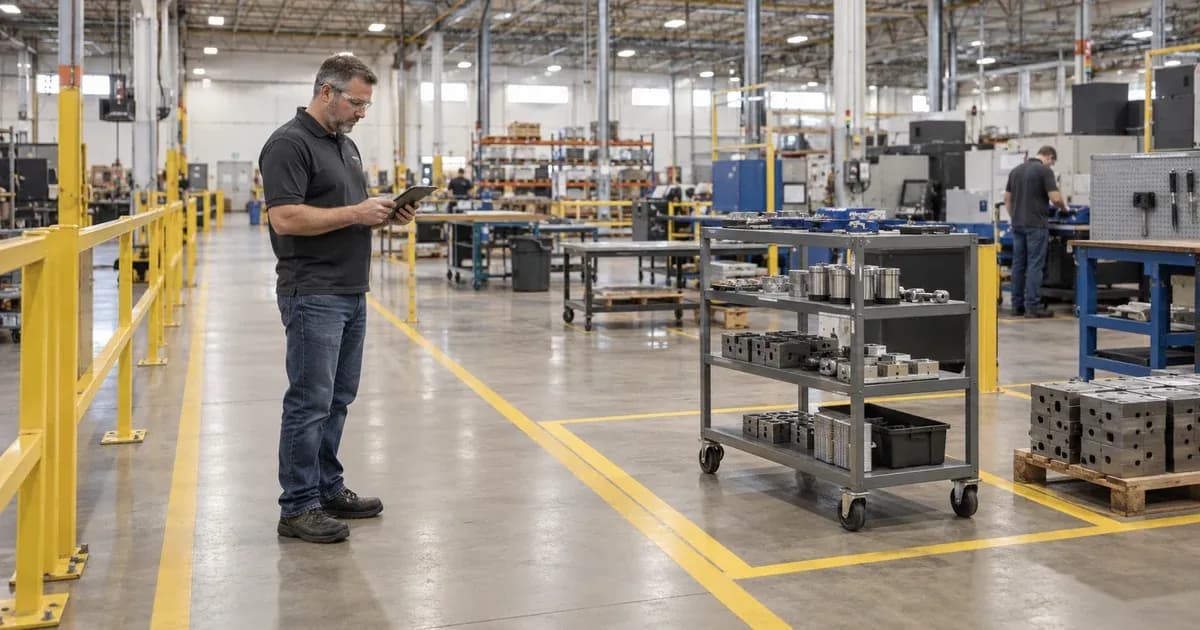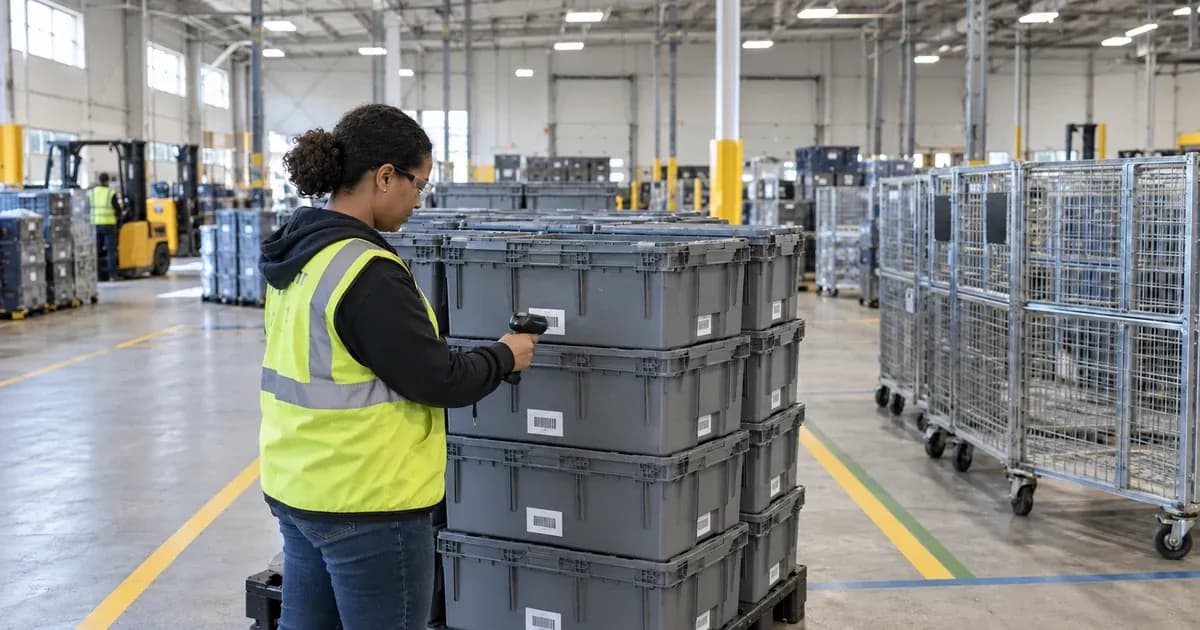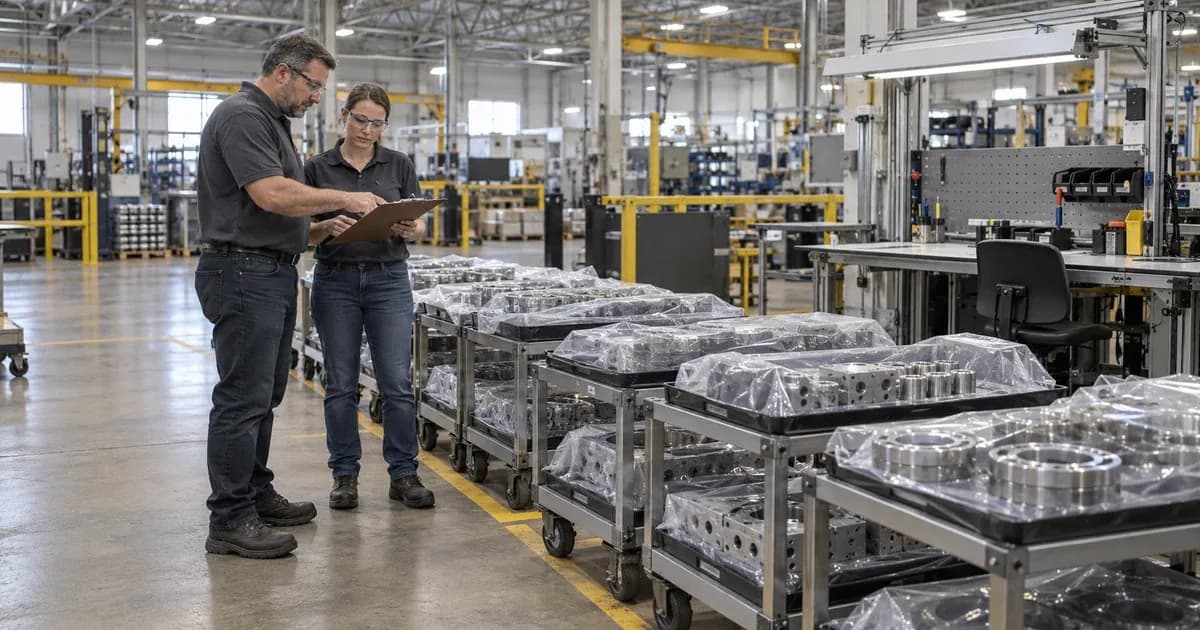
Three carts wait before assembly. One is ready for the next operation, another awaits an inspection decision and a third needs a rework instruction. On a location map they share a buffer. Operationally, they need different responses.
WIP tracking becomes useful when location and waiting reason can be compared without treating either as proof of the other. A position record helps narrow an investigation. It does not establish whether production was active, paused or complete. Start with one buffer and a clear handoff decision before expanding the scope.
I. Choose the unit being tracked
A tag on a cart tracks that cart. It does not automatically identify every part carried on it. Define how product, lot, container and tag identifiers are associated, including when each association begins and ends. Mixed loads and mid-process transfers require explicit records.
In a US contract manufacturing plant, a cart may contain several trays for different orders. A useful test moves only one tray to the next operation. Verify the remaining and transferred quantities separately. Do not overwrite the old relationship simply because the cart receives a new assignment.
| Record | What it establishes | Further evidence needed |
|---|---|---|
| Tag observation | Where and when the cart was observed | Associated lot and quantity |
| Zone stay | An interval supported by entry observations | Whether the interval included work or waiting |
| Verified waiting reason | A confirmed condition and next action | Source and effective period of that condition |
Long dwell helps select an investigation; it does not identify the cause. Keeping these records distinct helps separate a tracking gap, a missing lot association and a production delay. Their identifiers and effective periods must agree before combining them.
II. Keep dwell separate from process state
Zone entry and exit observations can describe a stay in a defined area. If a workstation and its queue share that area, the stay can include processing as well as waiting. Check whether the physical layout supports separate preparation, work and hold zones. Where it does not, production start and finish records are needed.
Use waiting reasons operators can verify: next-operation readiness, quality hold, missing material, equipment downtime, schedule hold and unresolved status. The time someone enters a reason is not necessarily the time the condition began. Retain that distinction when reviewing past stays.
III. Join records through agreed identifiers
ORBRO RTLS Manager supports location monitoring and device configuration history. Connecting inspection results or production instructions requires checking the identifiers, available interfaces and update behavior of the systems actually deployed. A cart appearing on a map does not mean production output has been posted.
For an integration review, specify asset and lot identifiers, zone, observation time, state-record source and effective time. Put mismatches or delayed updates in an unresolved queue. When a supervisor provides a manual confirmation, retain its author and evidence instead of making it look like a device observation.
IV. Investigate the oldest comparable items
Compare items with similar routes and handling requirements. A planned inspection hold and a ready-to-transfer batch should not be ranked under one unexplained limit. Calculate dwell only when the entry is known; list unknown-entry items separately. WIP still present at the reporting cutoff is different from a completed stay.
After a physical check, record the reason, responsible team and next action. A quality hold belongs with inspection; an unavailable next operation belongs with production scheduling. A new location alone should not close the issue. Determine whether processing started or the item merely moved to another waiting area.
V. Test exceptions before broad use
Include normal transfer, a split lot, rework returning upstream, an empty tagged cart and a missing observation. Write the expected asset, quantity and state for each test before comparing physical contents, production records and location history.
VI. Preserve changes of reason within one stay
Suppose a lot at the hypothetical US plant first awaits inspection and then awaits transport after release. The cart never moves, but the responsible team and next action change. Retain the inspection-release and transport-request times. Do not allocate the entire stay to the last reason entered, or assign an unexplained interval to a department without evidence.
Begin with one buffer and a representative product route. In the daily review, place the observed location, lot and container identifiers, verified reason, next owner and recheck time alongside one another. Keep items with missing evidence on the unresolved list. Otherwise a shorter list could reflect lost tracking coverage rather than faster production.
Closing thoughts
Three carts in one buffer can require three different actions. Match each cart to its actual lot, then connect its stay to verified process states. Preserve changes of reason and unresolved intervals instead of assigning one explanation to the whole stay. That provides a practical basis for directing the next action and checking whether it actually occurred.
At shift handoff, retain unresolved lots, split quantities and late reason entries. A shorter queue is not a proven improvement if more items fall outside the tracked population. Review coverage and time to verified status alongside recurring waiting reasons. Bring the buffer layout and identifier rules to ORBRO to define a practical tracking and record-sharing scope.