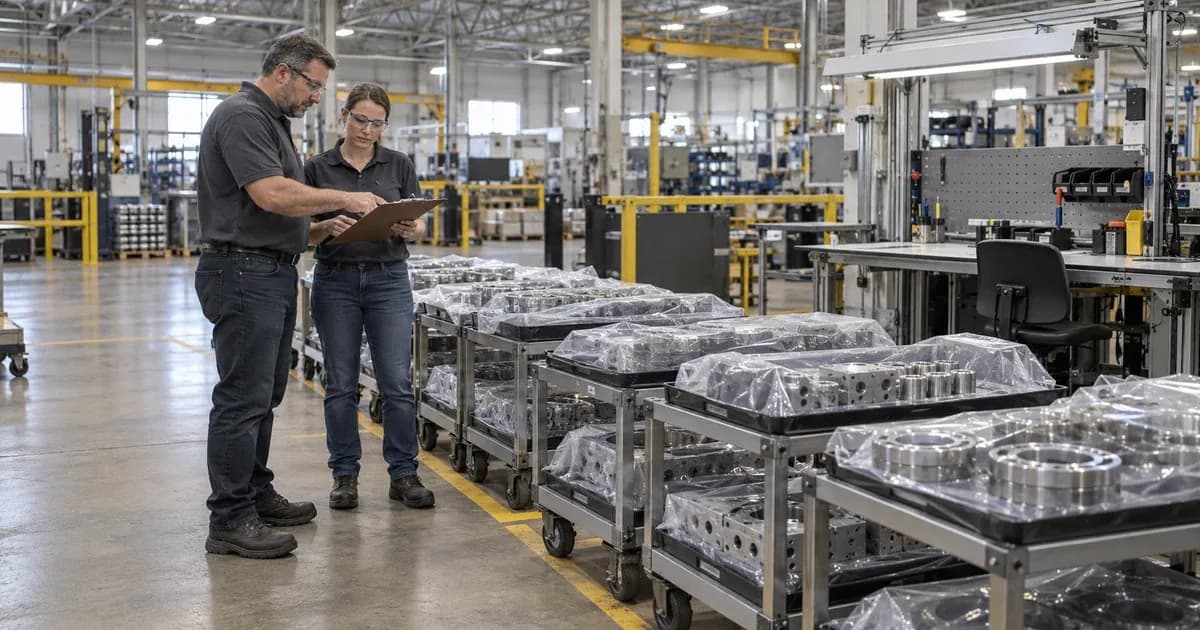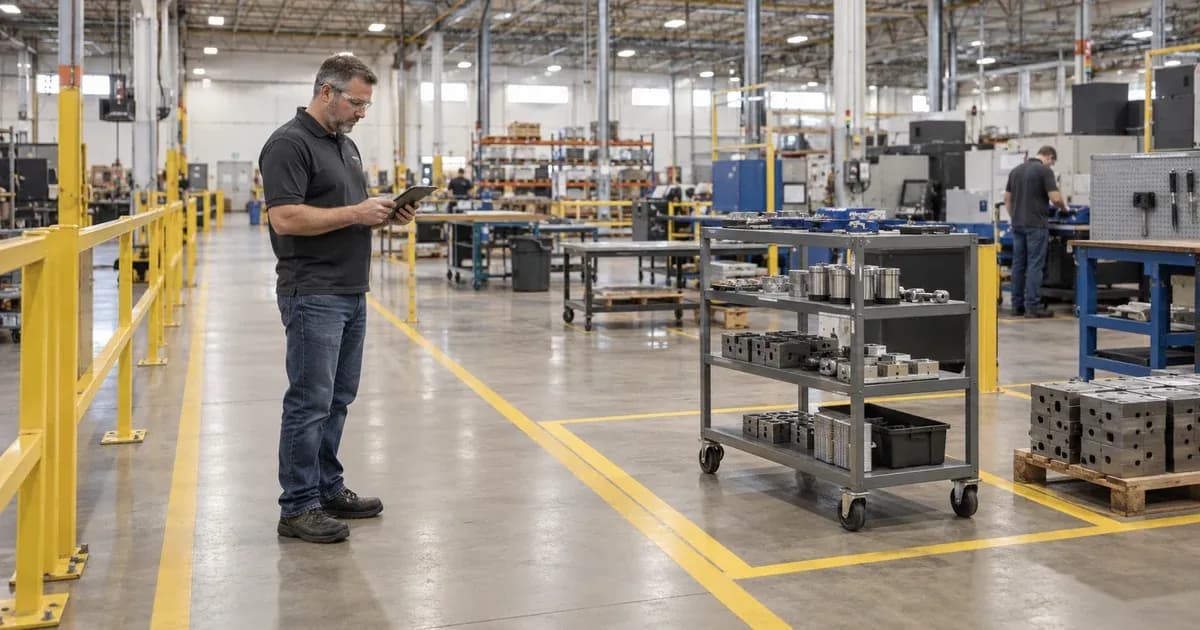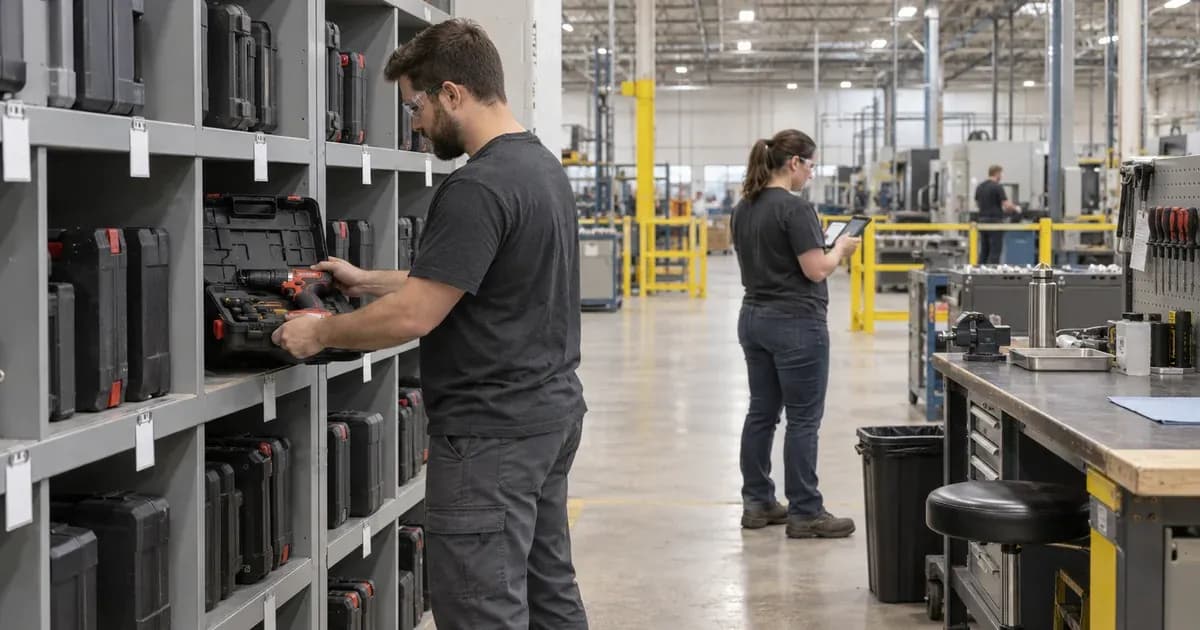
A technician searches for a cordless tool. The map shows its tool crib, but the shelf holds an empty case or an item still waiting for inspection. Location can shorten a search while leaving the next handoff unresolved.
Shared-tool management needs separate records for checkout, observed location, confirmed return and readiness. RTLS observes the tagged object. It does not establish that every accessory is present, that the tool works or that a required inspection has been completed.
I. Identify what the tag follows
A tag on a case follows the case. If the tool is removed and taken elsewhere, a case arriving at the crib does not establish the tool's return. Define whether the managed unit is a tool, a case or a complete kit. Associate their identifiers and use individual asset numbers for visually similar items.
For a US plant maintenance shop, a cordless kit might contain a drill, charger and batteries. Use the site's actual kit list rather than assuming a standard package. Check that an attachment does not obstruct grips, vents or controls. Where direct tagging is impractical, case tracking plus a physical contents check may be the better operating arrangement.
| Confirmation | What it establishes | What remains |
|---|---|---|
| Observation in the return area | The tagged object was observed there | Tool body and required accessories returned |
| Physical kit acceptance | Listed components were checked | Inspection and task-specific conditions |
| Release as available | The agreed release checks were completed | Correct kit and handoff for the next job |
These confirmations may occur at different times. A case arriving before the inspector starts work should not increase ready-to-issue stock. Display location and readiness together, while retaining their separate evidence.
II. Separate arrival from readiness
Consider states such as checked out, received for return, contents verified, inspection pending, repair hold and available. An observation in the return area can prompt a check. It should not silently approve the item for another user. Retain both the observation time and the time a responsible person confirmed the return.
Keep repair-hold items apart from ready stock where possible. If space is limited, define visible identification and a release procedure. Inspection criteria belong to the tool type, its instructions and the site's maintenance process; location tracking does not supply a universal inspection interval.
III. Join checkout and location records
ORBRO RTLS provides configurations for asset location management. Joining checkout requests, receiving parties and inspection results requires an agreed tool identifier and a review of the ledger or system actually used. Automated checkout or state synchronization should be treated as requirements to verify.
Record the tool, related case, receiving party or team, handoff place, checkout time, expected return and confirmed return. An overdue tool without a current observation differs from one observed in the return area but not physically checked. Missing observations alone should not be classified as loss.
IV. Make handoff responsibility clear
The statement “I left it on the shelf” differs from a contents check. Record missing accessories, the confirmation time and the person responsible for follow-up. Compare the last handoff with the kit contents before assigning blame. A working tool without its required battery may still be unavailable for the next job.
A direct transfer to another work area needs a new receiving party and a decision about the old checkout. A position appearing in that area is not proof that the handoff was authorized. If an item awaiting inspection is taken early, review storage and release procedures as well as the record.
V. Test from the next user's perspective
Include a normal return, an empty case, a missing accessory, a repair hold and an unobserved tag. Check whether the next user can find the asset by identifier and establish its usable state. The screen, physical kit and checkout record should describe the same item.
VI. Plan for unattended returns and urgent reissue
At the hypothetical US maintenance shop, a night-shift return may arrive after the receiving person leaves. Use a defined return location and retain inspection-pending status. The incoming person checks the case, body and required accessories against the asset number before continuing the inspection. An urgent request still needs a named person authorized to perform the required checks and release the kit.
Start with one clearly defined tool family rather than imposing the same state model on every asset. Compare its actual kit list with the return workflow. Record whether unresolved returns are waiting for an inspector, a missing accessory or clarification of the last handoff. That evidence helps decide whether storage and responsibility need changing before adding more tracking equipment.
Closing thoughts
The point on the tool-crib map does not establish readiness for the next technician. Define what the tag follows and connect physical return, contents verification, inspection and release through the tool identifier. A clear process for unattended returns lets the next shift complete the same checks without treating an observed case as an approved tool.
Review time to locate and verify, delay from return to inspection, missing contents and unresolved handoffs. Include checkout volume and tracked population when comparing periods. Keep personal details limited to what the handoff process needs. Bring the kit structure and return workflow to ORBRO to review the tracking configuration and supporting records.