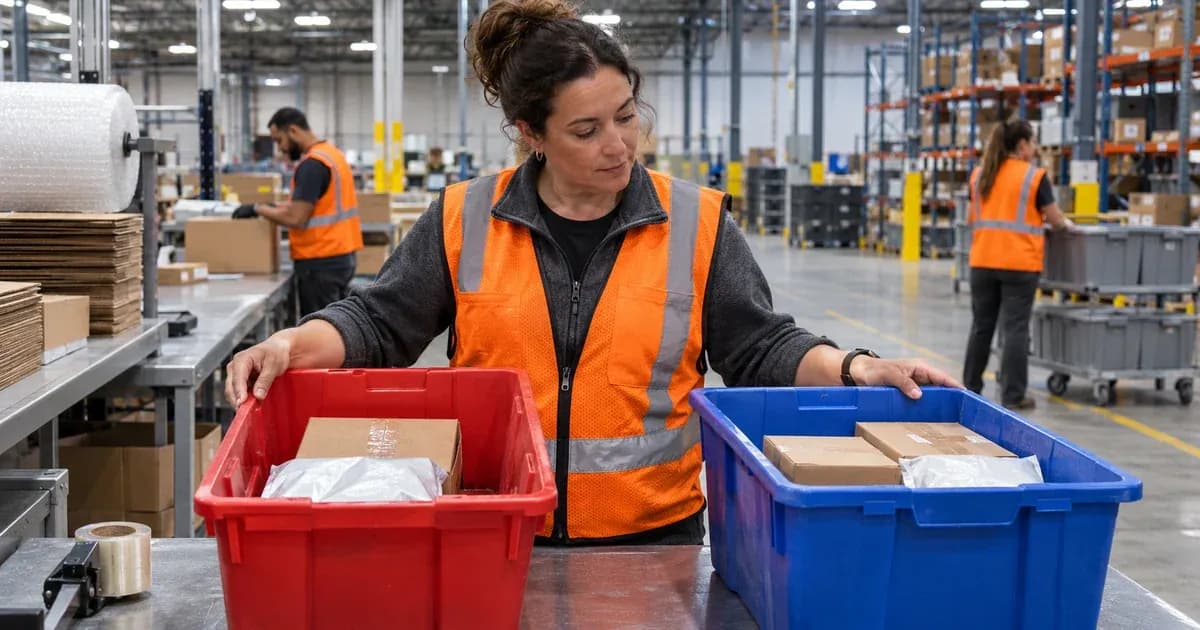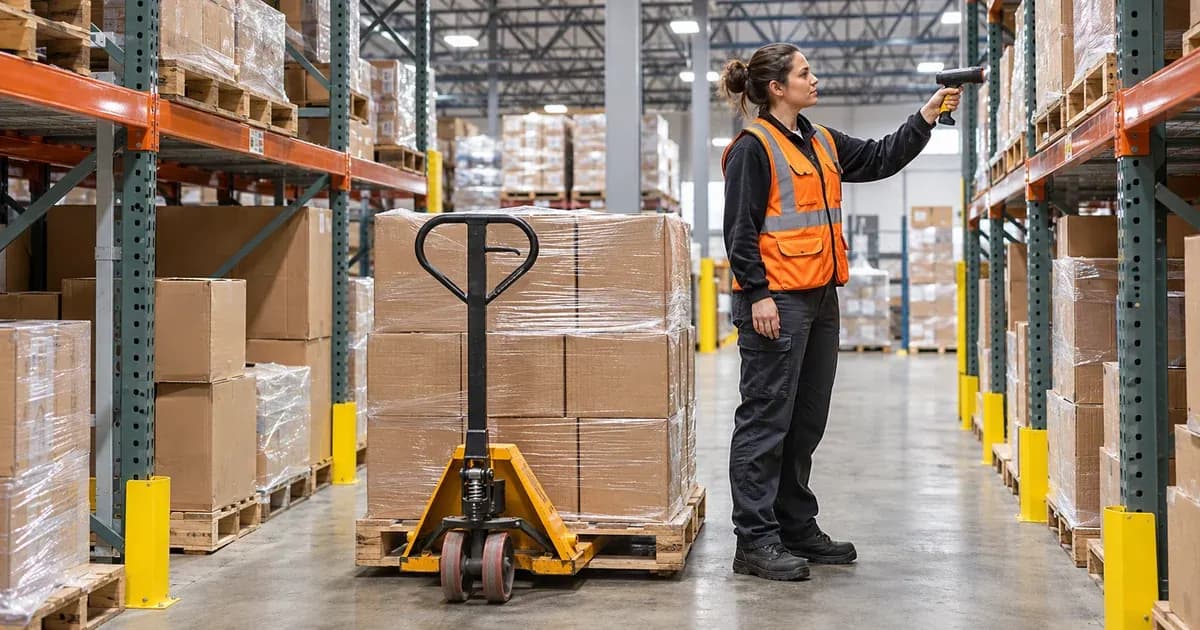
At a US fulfillment center, an associate follows a pallet tag to dispatch staging and finds the pallet, but not the carton needed for an order. That carton has already moved onto a different rolling cage. The original pallet continues moving, creating a convincing location history for goods that are no longer on it. Mixed-pallet tracking depends on maintaining the relationship between the carrier and its contents.
The 2026 US holiday forecast offers a planning context for examining this workflow. It is a forecast, not evidence of demand at a particular warehouse. This imagined US operation follows cartons through splitting and reconsolidation, keeping observed movement separate from inventory identity.
I. Decide what the tag represents
An item, carton, pallet and rolling cage are different units. A pallet tag observes the carrier; it does not continuously identify every carton on top. Record which cartons were loaded and when that relationship became valid. Only while it remains valid can the carrier location serve as a reference for those contents.
Unloading a carton ends one relationship; loading it elsewhere starts another. Splitting a carton also requires a way to identify the new handling units. Reusing the same pallet identifier without updating its contents can leave a correct carrier route attached to an incorrect inventory story.
II. Compare the tracking choices
| Method | Useful information | Separate evidence needed |
|---|---|---|
| Pallet tag | Carrier location and recorded route | Contents and composition changes |
| Carton identification and scans | Explicit carton-to-item relationships | Temporary movement between scans |
| Individual carton tags | Observed carton locations | Contents, quantity and release status |
Frequent carton separation may justify stronger carton-level identification. Sealed loads that remain together may be manageable at pallet level. Before tagging everything, identify where composition actually changes and who confirms it. The decision should follow the unit needed for the task, rather than the number of location points available.
III. Connect ORBRO observations with composition records
ORBRO OS Zone Manager can distinguish receiving, breakdown benches, consolidation holding and dispatch. Operators identify the relevant tag, check its observation time and review recorded movement in Record. Entering a breakdown area is a reason to check composition, not proof that a specific carton was removed.
The warehouse record or a physical scan establishes the contents. Showing it alongside location requires a separately defined connection between pallet, cage and carton identifiers, effective times and the handling task. Location observation alone does not generate a carton list or confirm quantities. Historical movement must be interpreted using the relationships valid at that time.
Prepare device connections and map alignment in RTLS Manager. Test loaded carriers, wrapping, tag orientation and temporary parking beside metal equipment. An empty-pallet demonstration does not establish performance for the working load.
IV. Walk through a split and a later merge
Consider an illustrative pallet P carrying cartons A, B and C. Carton B moves to cage Q. The operator identifies B and connects its removal from P and loading onto Q to the same handling task. Afterwards, P provides a location reference for A and C, while Q provides one for B. Temporary proximity between P and Q does not merge their contents.
If Q moves before registration finishes, distinguish the physical event time from the time the system receives the record. Retain the correction, source and operator when resolving a late update. A failed scan leaves the affected carton unconfirmed; it should not mark the whole pallet as transferred.
If A and B are later consolidated, confirm the new physical load instead of reviving an old relationship. Preserve previous associations as history. A cancelled or changed order must distinguish cartons already moved from those still on their original carrier.
V. Handle missing observation without losing identity
Stacked carriers, several pallets on one vehicle and an empty pallet left behind deserve explicit testing. Where only the vehicle is observed, show which lower-level units are assumed to accompany it and why. Nearby tags do not automatically establish a shared load.
A lost observation does not erase a contents record. Separate unknown location from unknown composition. The owner compares the last physical contents check with the last location observation, then decides whether to find the carton or investigate the split record first. A fresh tag observation does not resolve an outstanding quantity discrepancy.
VI. Pilot the relationship and the search together
Start with one breakdown point and a representative product group. Record carton finding time, composition-registration delay, incorrect associations and manual checks under comparable load conditions. Include missing observations. Distinguish improvements in tracking from improvements in scan discipline.
Test carton exchange, partial merging, cancellation and delayed records. Compare actual carton identities and quantities with the route and association history. The asset-to-tag identity principle remains relevant when carriers are reused.
Closing thoughts
Knowing the pallet location is not the same as knowing every carton on it. Update carrier relationships when loads split and merge, and interpret location using the composition valid at the relevant time. That lets the next operator find the right goods and choose the correct task.
Prepare packaging units, split and merge points, registration examples and recurring exceptions. Contact ORBRO to define the tracking unit, observation scope and warehouse information that needs a separate connection.