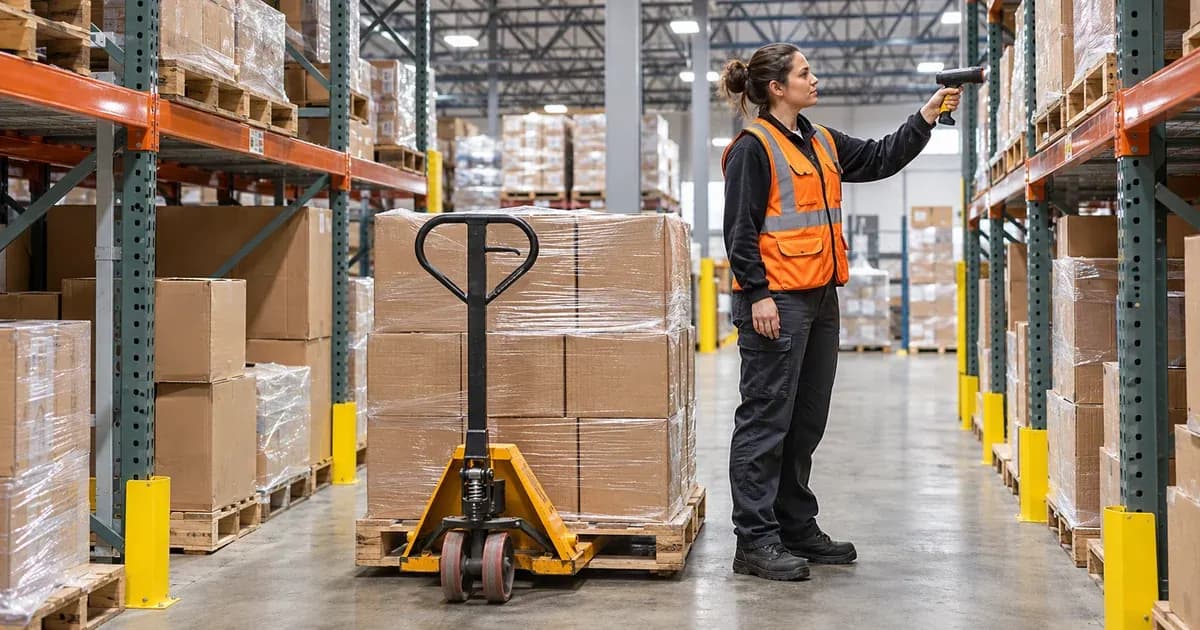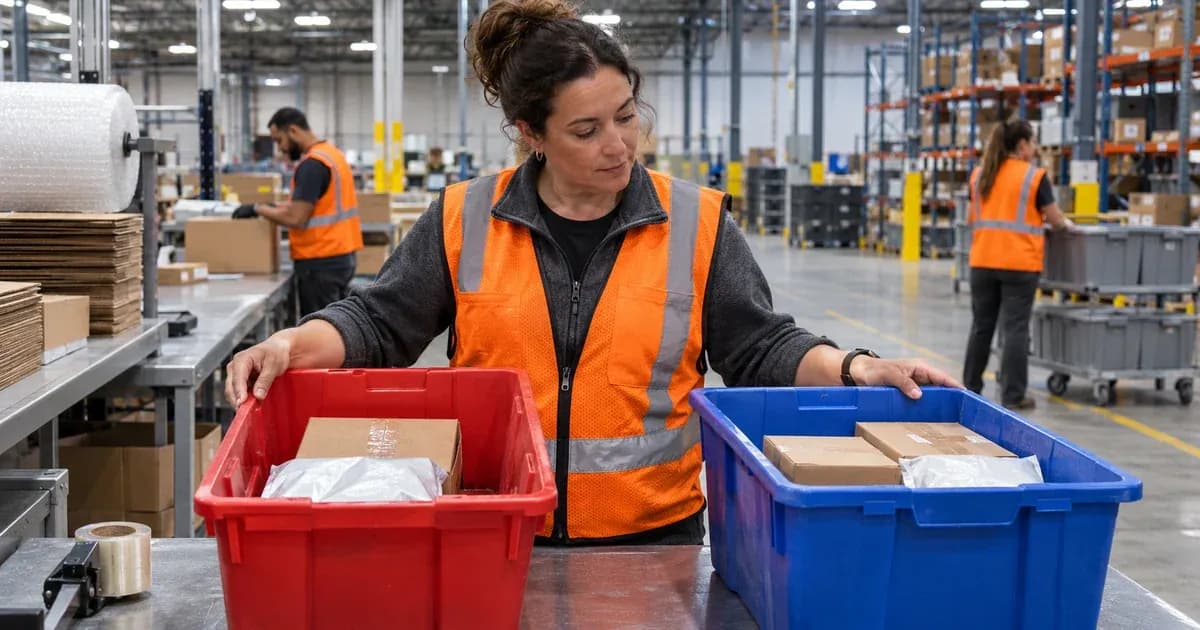
Minutes before a carrier cutoff, a US warehouse lead asks for the nearest cart to be brought to packing. The nearest cart belongs to another order, while the urgent order has one tote awaiting inspection. Moving quickly creates another return trip and occupies a packing station with an incomplete order. Urgent order tracking starts with identifying eligible stock before choosing a retrieval sequence.
The October 2026 holiday forecast is a reason to examine this workflow before seasonal operations; it is not a promise about any warehouse's demand. This imagined US example shows how location can support order readiness and movement decisions without assuming it decides customer priority or guarantees carrier acceptance.
I. Confirm eligibility before proximity
Identify the order, item and lot, required quantity, allocation, hold status and cutoff. Two totes containing the same product may have different allocations or inspection conditions. An order with one missing component must remain partly ready, even if its other tote is already beside packing.
Location helps find candidates that meet those conditions. A nearby tote may be reserved for another customer or waiting for approval. Reallocating it changes a business commitment and needs an authorized decision. Also check when the tag-to-order relationship was established: a reused cart can carry a different order while keeping the same physical tag.
II. Compare the sequencing rules
| Rule | Useful question | Conditions to retain |
|---|---|---|
| First ready, first served | Which eligible job has waited longest? | Lot rules and quality status |
| Nearest eligible asset | Where should retrieval begin? | Allocation, observation age and usable route |
| Earliest cutoff | Which order faces the next deadline? | Complete quantity, packing capacity and handoff requirements |
These rules address different decisions. Proximity alone can select unapproved stock; cutoff alone can fill packing with incomplete work. Apply sequencing to eligible tasks and assign the missing conditions to an owner. Straight-line map distance is also different from actual travel time through rack aisles and controlled crossings.
III. Connect ORBRO observations to readiness information
Zone Manager can distinguish inspection holding, ready staging, packing and carrier handoff. An operator identifies the relevant tag, checks its observation time and reviews recorded movement in Record when needed. Presence in dispatch does not establish that every item required for the order has arrived.
Order allocation, stock quantity and quality approval belong to their respective business records. Displaying them beside location requires a shared order or handling-unit identity, update rules and an agreed response when data is missing. Automated reprioritization or movement requests need a separately specified workflow, permissions and protection against duplicate requests.
RTLS Manager supports device and map preparation and live monitoring. Validate dense staging and the space behind packing benches. If observation stops, treat the last point as historical information. Set the acceptable observation gap according to movement patterns and the physical-check process rather than applying a universal time threshold.
IV. Prevent an urgent request from blocking ordinary work
Consider an illustrative order with one tote ready and another awaiting reinspection. Before moving the ready tote to a packing bench, confirm when the second can be checked and whether there is a designated consolidation location. Parking incomplete work at every bench can delay orders that are already eligible to leave.
If the urgent request is cancelled or its quantity changes, distinguish items already moved from those still awaiting collection. A cart remaining in dispatch does not preserve a cancelled release. Reassignment must end the previous order relationship and establish the new one. Where a cart carries several orders, one cart point cannot confirm each individual tote handoff.
At shift change, distinguish urgent orders with unknown location, missing quantity and pending approval. Pass on the condition that allows the next step, not just an urgent label. For repeated delays, compare recorded routes with readiness events to see whether the bottleneck is finding stock, completing inspection or obtaining packing capacity.
V. Review the whole queue
Measure request-to-identification, identification-to-physical-retrieval and waiting at packing. Compare similar workloads and order mixes. If urgent orders improve while ordinary eligible orders repeatedly miss their cutoffs, the process has displaced delay rather than resolved it. Record priority changes and wrong-item retrievals alongside elapsed time.
Test partial readiness, reassignment, missing observations, withdrawn approval and repeated movement messages. Confirm who stops the workflow and which record resolves the conflict. Separate the contribution of location, business-system status and physical checks. This makes the next automation decision specific instead of treating every delay as a routing problem.
Closing thoughts
An urgent order needs the correct items, quantity and authorization before proximity can help. ORBRO location information can support finding eligible stock and reviewing its movement; business records and accountable operators determine priority and release. A visible cart alone is not a complete order.
Prepare urgent-order examples, allocation rules, cutoff conditions and the inspection-to-packing route. Contact ORBRO to define the useful location scope, status connections and exception responsibilities for a practical pilot.