Application of Digital Twin and Positioning in Industrial Park Security Monitoring
2026-07-18
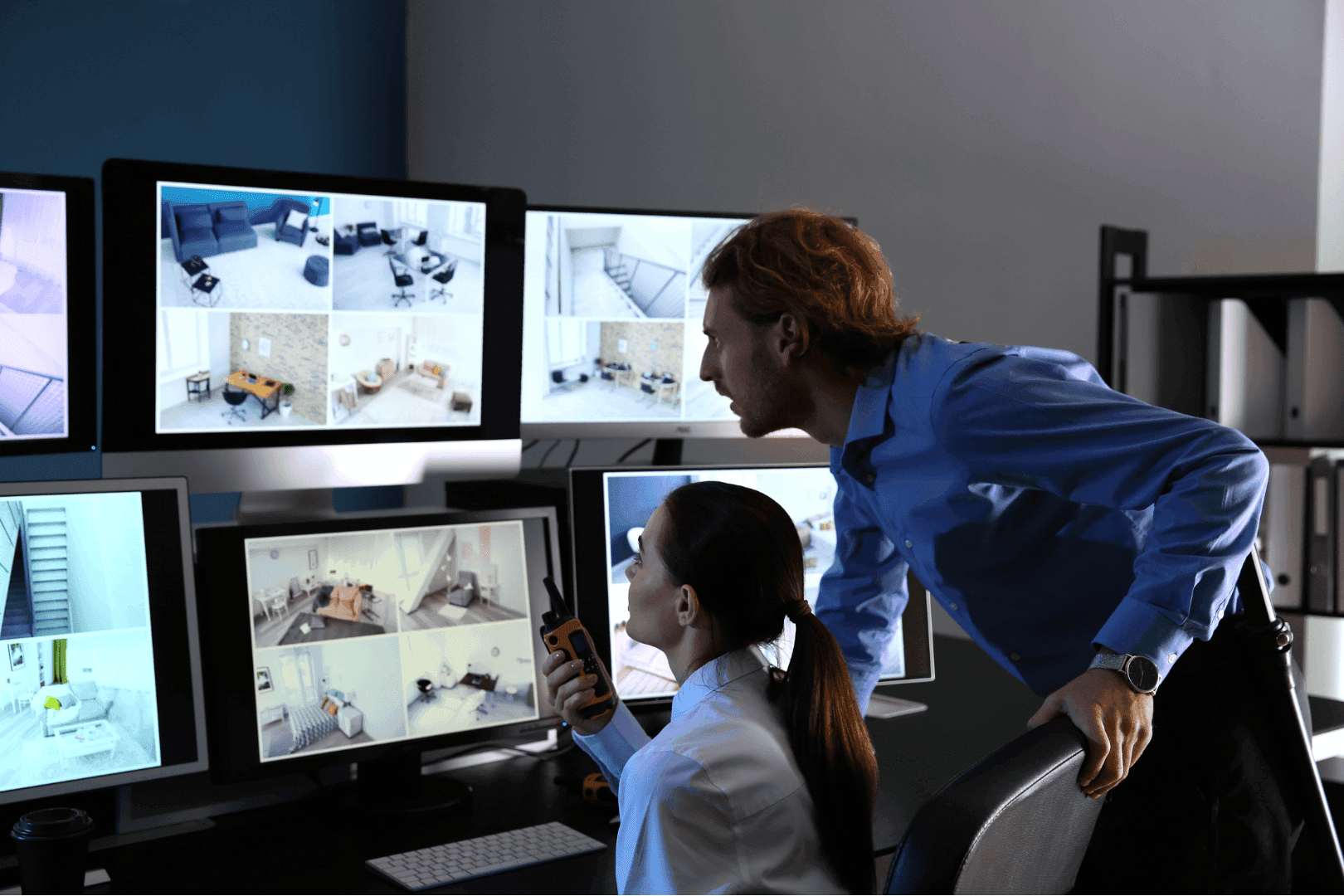
Imagine you are the director of a factory spanning tens of hectares. Every day, thousands of shift workers, hundreds of cargo trucks, and numerous groups of subcontractors and visitors are constantly moving in and out. In such a complex environment, how can you be absolutely certain that everyone is exactly where they should be, and that no one is unauthorizedly entering expensive material warehouses or highly confidential R&D centers?
Most of us would immediately think of installing more CCTV cameras and increasing security patrol forces. However, in reality, this traditional approach is gradually revealing many loopholes. Today’s article will share a new, simple yet highly effective perspective on security monitoring: the integration of positioning technology and the Digital Twin platform.
1. The Reality: When Cameras and Security Guards Are Not Enough
We all know that security cameras (CCTV) are essential. However, the biggest weakness of cameras is "blind spots." Hidden corners behind towering warehouse racks, days with heavy rain or thick fog, and poorly lit areas can render cameras virtually useless.
Furthermore, cameras are primarily used to "review" an event after assets have already been lost or an incident has occurred. It is extremely difficult for a security guard staring at a screen with dozens of tiny split views to immediately detect a stranger moving along an abnormal route. Enterprises need a proactive solution that can issue warnings the very moment a risk emerges.
2. Positioning Technology: A Simple Yet Breakthrough Solution
To solve the above problem, modern factories are actively adopting Real-Time Location Systems (RTLS) such as UWB or BLE. Do not let these technical acronyms intimidate you; their operating mechanism is very straightforward.
Simply picture this: Every employee, visitor, or high-value equipment is attached with a small Tag that looks just like a standard ID card. Around the factory, signal transceivers (Anchors) are installed. Through continuous radio waves connecting the tags and anchors, the central computer system knows the exact location of every person and every item with an error margin measured only in centimeters.
The greatest advantage is that radio waves can penetrate standard partitions, meaning there is no fear of blind spots or darkness. Every movement is recorded instantly, 24/7.
3. Digital Twin: Bringing the Giant Factory to the Computer Screen
If the positioning system is the "eyes," then the Digital Twin is the "brain." The simplest explanation for this term is: Digital Twin is a 3D virtual replica of your actual factory.
Instead of looking at dry coordinate lines or complex 2D maps, you will now see an intuitive 3D model of the factory on your computer screen. When a worker wearing a tag moves in real life, you will see a corresponding glowing dot moving on the 3D model on your screen. Everything happens synchronously and in real-time.
This combination grants managers a special "power": Sitting in one place while being able to transparently see through every corner of an industrial park spanning tens of hectares.
4. Three Real-Life Scenarios Demonstrating the System's Power
To clearly see how smoothly and professionally this system operates, let's look at 3 very common scenarios:
Scenario 1: Setting up virtual fences for restricted areas (Geofencing) On the Digital Twin map, the manager simply uses a mouse to draw a red zone around the "High-value components warehouse." This action creates an invisible virtual fence. If an unauthorized person accidentally (or intentionally) crosses this boundary, the system will immediately sound a siren on-site and send an emergency alert to the shift supervisor's phone. Risks are stopped instantly.
Scenario 2: Managing visitors and contractors Visitors to the factory are often at risk of wandering off if unaccompanied. With this system, once a visitor is issued a positioning tag, their route is recorded. If they deviate from the permitted visiting area and head towards the R&D room, an alert is triggered right away. No outsider can get lost and wander into areas containing your core trade secrets.
Scenario 3: Emergency evacuation and rescue When a fire alarm rings, the most terrifying thing is not knowing if anyone is still trapped inside. With this security monitoring system, the software will immediately display how many glowing dots (representing people) are still in the fire zone and their exact location—down to the specific floor and room. Rescue teams can head straight there, saving crucial "golden seconds" to save lives.
5. Conclusion: A Profitable Investment for the Future
Upgrading from traditional cameras to a combined Digital Twin and positioning system may initially require businesses to adapt to new technologies. However, in the long run, this is an incredibly worthwhile investment. You not only significantly reduce the cost of manual patrol personnel and completely eliminate the risk of major asset loss, but also build the strong image of a perfectly safe, smart factory in the eyes of global partners.
Managing a massive infrastructure is never easy, but with the right technology, even the most complex variables can be kept firmly under your control.
Recommended Blogs
Is That Location Still Current? Checking RTLS Data Freshness
2026-10-14
AI-generated illustration of the selected local environment; not a photograph of a customer site.
2026-10-13
Asset Tracking Across the Warehouse Door: Joining Indoor and Yard Records
2026-10-12
Forklifts Queue at Dispatch. Look at Dwell Time.
2026-10-08