Warehouse Management Has Never Been Easier with UWB Positioning
2026-08-15
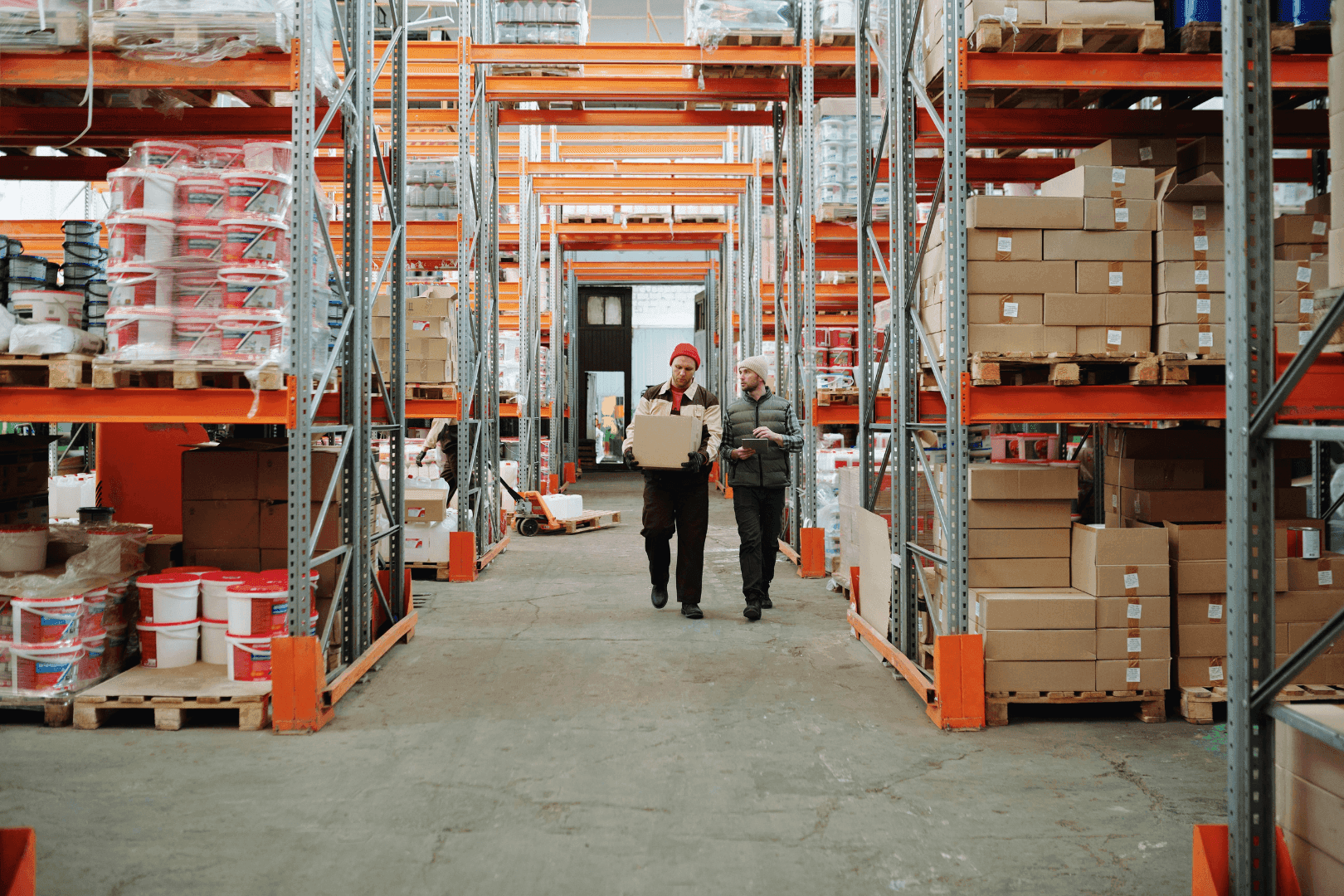
Have you ever visited a massive fulfillment center in Dongtan or Pyeongtaek? Constantly moving forklifts, long lines of trucks, and workers running around sweating... On the surface, it looks like everything is running without a hitch.
But if you are the manager in charge of the floor, you know the "real headaches" hidden behind the scenes. The reality of having to search the entire massive warehouse inside out during the monthly inventory audit. The high-value pallets that clearly show as "in stock" on the WMS, but have mysteriously vanished when you actually go look for them. Not to mention the sheer fatigue of forklift drivers and workers spinning in circles around the racks all day just to find a single item.
In an era where delivery speed and accuracy are everything, these minor bottlenecks silently eat away at a company's profits. Now is the time to move beyond relying on manual scanning and implement an "integrated smart warehouse management solution" that transforms the very foundation of your operations.
1. Simply Adopting a WMS Doesn't Instantly Make Your Warehouse Smart
Usually, when companies talk about improving warehouse management, they think about installing software worth tens of thousands of dollars and handing barcode scanners (PDAs) to their staff.
A WMS is certainly a great tool, but it has one major flaw: it only records data when a human manually scans something. What if, during a hectic dispatch hour, a worker temporarily moves some cargo to clear a path and forgets to scan it? That cargo instantly becomes "phantom inventory" in the system.
A truly smart system shouldn't rely on human memory. It must be able to recognize changes inside the warehouse on its own, in real-time.
2. Seamless Integration with Your Existing ERP or WMS
When proposing a new solution, the first question a company usually asks is: "Will this clash with our SAP or Oracle ERP? Do we have to replace our whole system?"
There is no need to worry. A proper smart warehouse solution doesn't push out your existing system; it integrates naturally via API. The "positioning" data collected from the floor is transmitted to your existing ERP in real time.
Now, instead of just showing a simple number like "5 forklifts, 100 units in stock," the system tells you "exactly which aisle that inventory is in right now." The frustrating information gap between departments is finally resolved.
3. UWB Positioning: Finding Items with Pinpoint Accuracy
For a system to grasp the floor situation on its own, reliable positioning technology is essential. GPS doesn't work indoors under a roof, and Wi-Fi or Bluetooth (BLE) are hard to use because their margin of error is 3 to 5 meters. In a warehouse with narrow aisles, a 3-meter error means you end up looking in completely the wrong aisle.
This is where UWB (Ultra-Wideband) technology comes in. UWB is so precise that its margin of error is only 10 to 30 cm.
The method is also simple. You just attach a small tag to forklifts, high-value pallets, and worker ID badges. Receivers attached to the warehouse ceiling and walls exchange radio waves with these tags, creating "real-time coordinates" for the entire warehouse. Since items report their own locations, you no longer have to wander around looking for them.
4. Preventing Collisions Between People, Forklifts, and Logistics Robots (AGVs)
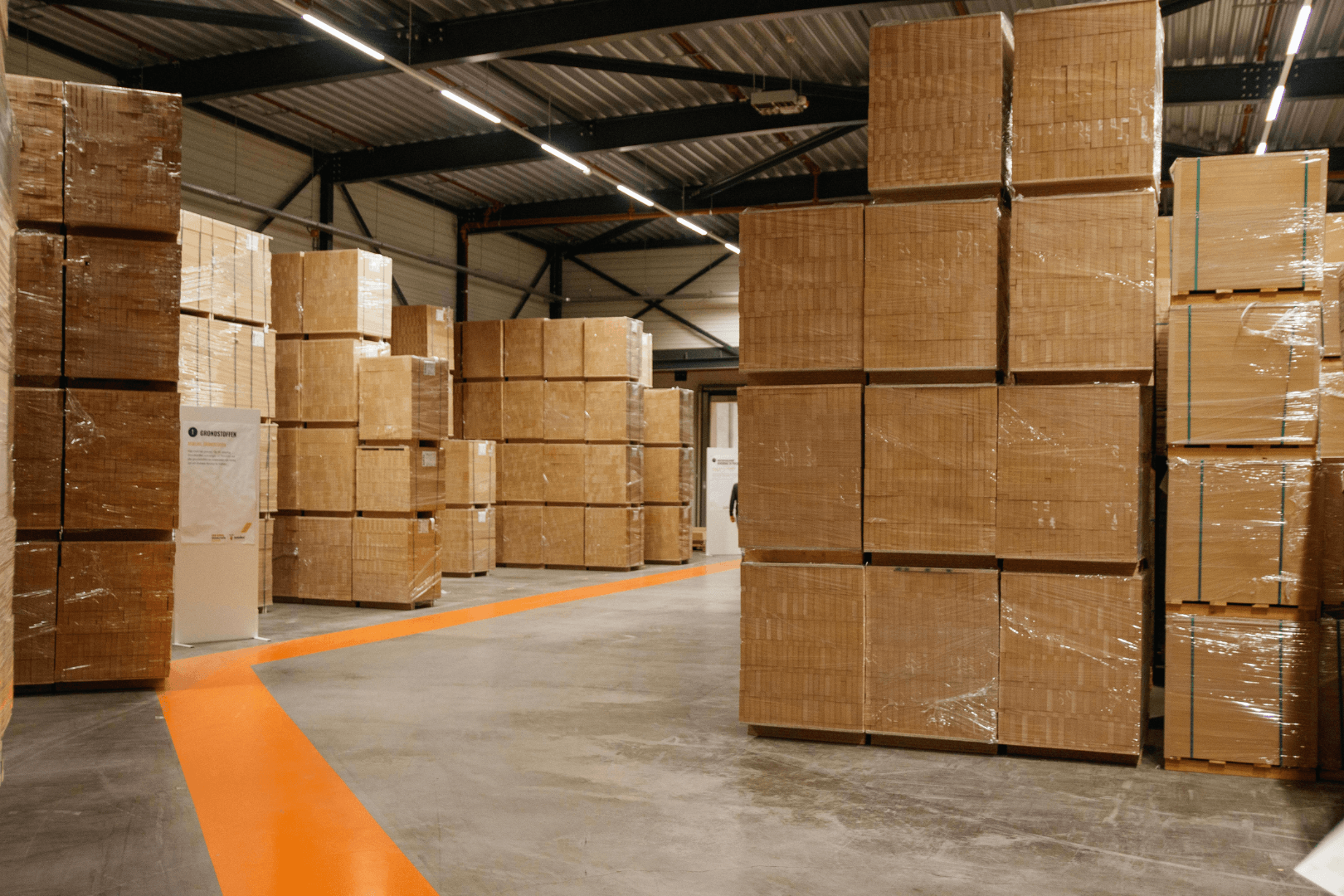
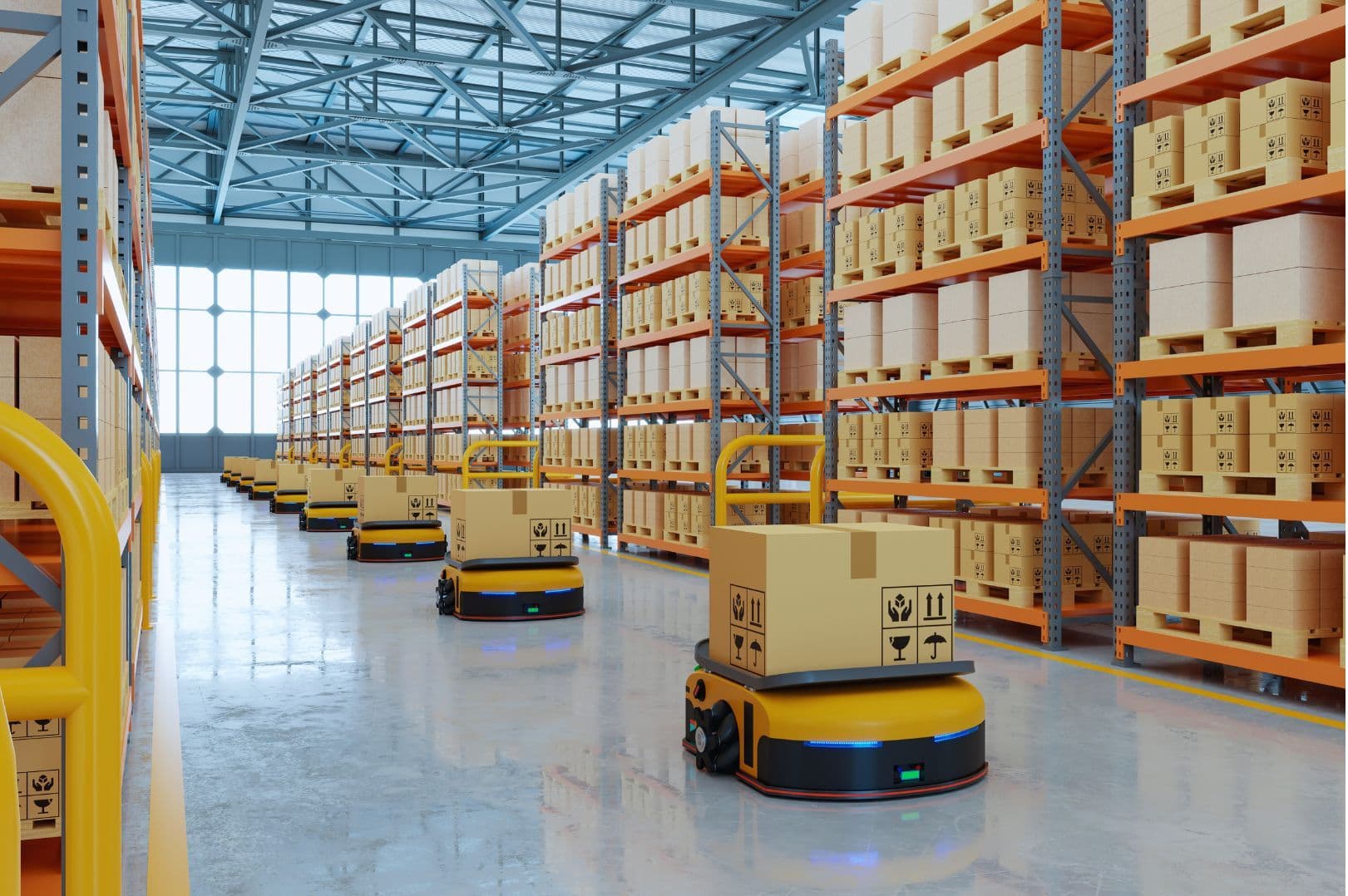
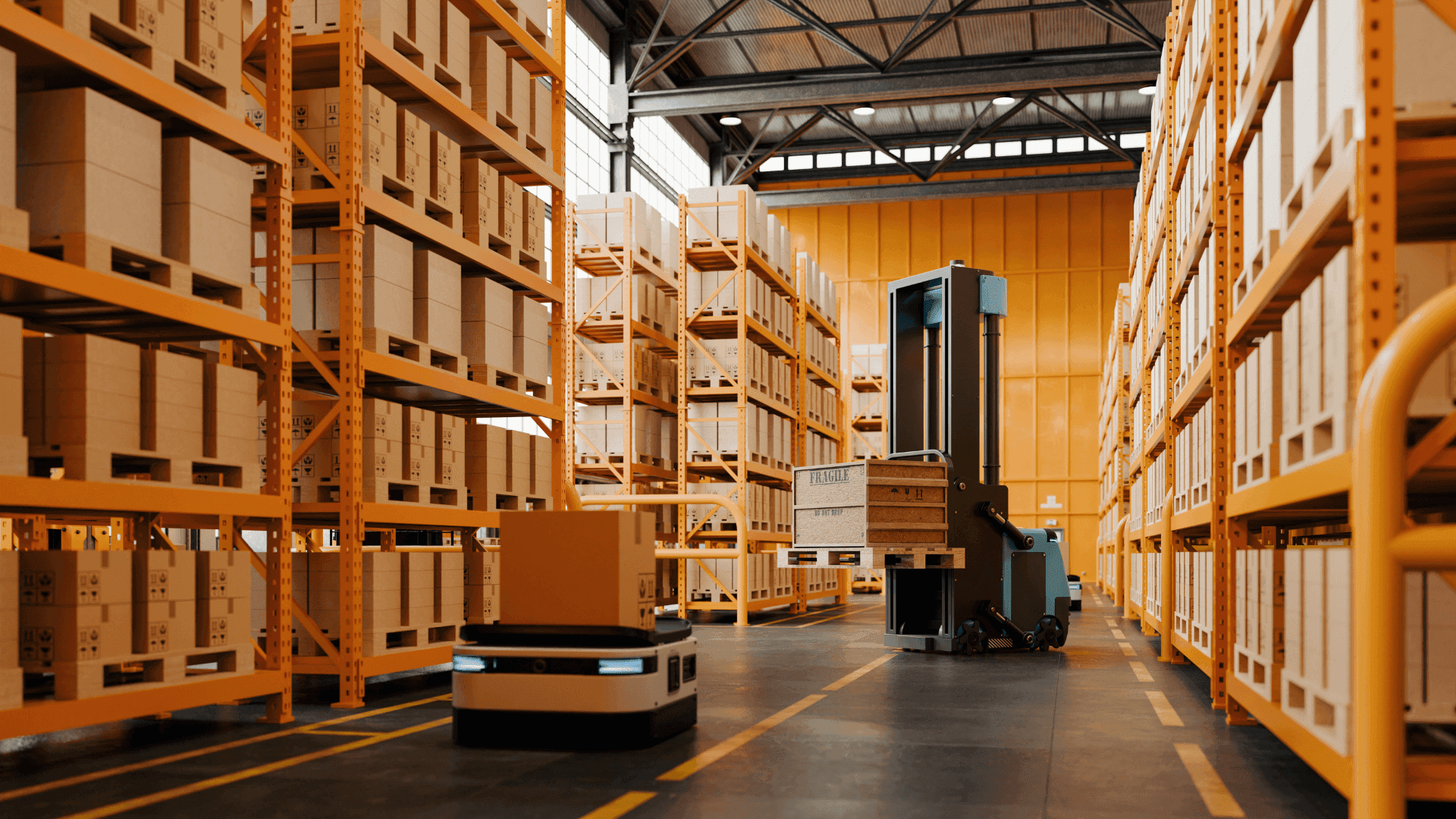
Nowadays, many places are adopting logistics robots (AGVs or AMRs) to combat labor costs. The biggest concern here is "safety." It is a disaster if the paths of robots, people, and forklifts get tangled up or collide.
When a UWB positioning network is installed, the system acts as an invisible "traffic cop." What if a worker steps out from a blind corner while a robot or forklift is approaching at high speed? The system calculates the collision risk in advance, issues an emergency stop command to the machine, and sends a vibration warning to the worker's tag. It is reliable insurance that lets you expand warehouse automation without safety worries.
5. Managing the Warehouse at a Glance with 3D Screens (Digital Twin) and AI
Once you have accurate positioning data, management needs to become easy. By using Digital Twin technology, you can sit in your Seoul office and view the real-time forklift movements in your Pyeongtaek warehouse clearly on a 3D screen. It is much more intuitive than replaying CCTV footage.
When you add Artificial Intelligence (AI) to this, work efficiency skyrockets.
Optimal Route Guidance: When a worker goes to pick items, the AI displays the shortest route on their tablet. This completely eliminates wasted steps.
Smart Forklift Dispatch: When heavy loads need to be moved, the AI checks the system and instantly calls the nearest available forklift.
6. Reducing Unnecessary Routes Naturally Leads to ESG Management
These days, major enterprise clients strictly evaluate whether their partners are adhering to eco-friendly ESG (Environmental, Social, and Governance) standards.
A smart warehouse management solution is a huge help in these ESG evaluations. When AI optimizes forklift routes and reduces the time they travel empty, you save on fuel costs and significantly cut carbon (CO2) emissions. Also, based on positioning data, it automatically adjusts lighting and air conditioning in unoccupied aisles to reduce electricity bills. Real eco-friendly logistics isn't about grand campaigns; it is about eliminating everyday waste.
Conclusion
Building a massive fulfillment center is hard, but running it smoothly without breakdowns and generating a profit is much harder. The era of relying on human memory and manual labor in a fast-paced logistics environment is over.
A "smart warehouse management solution" equipped with AI and Digital Twin, built on a foundation of UWB positioning.
Now is the time to escape the endless game of hide-and-seek and experience a new system where every flow inside the warehouse is transparent and runs seamlessly on its own.
Related Products
 NEW
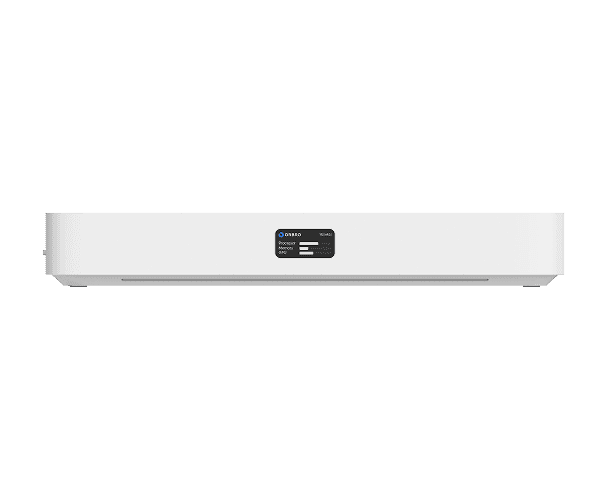
NEWORBRO Edge(UWB)
EO-S1102
Device health monitoring and control supported, Supports ORBRO UWB Tag Tracking
Contact us

TwinTracker UWB
TT-U4240
High-accuracy positioning for real-time applications, Optimized for indoor ultra-wideband (UWB) environments
Contact us
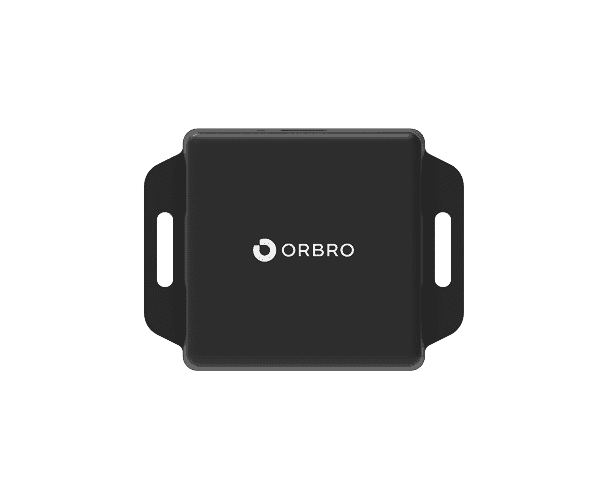
UWB Tag
RU-O3405
Ultra-Wideband (UWB) communication based on IEEE 802.15.4, High-precision ranging for RTLS (Real-Time Location System)
Contact us
Recommended Blogs
What Is a Smart Warehouse?
2025-06-26
Application of UWB and AI in Logistics: The Ultimate Solution to Smart Warehouse Challenges
2026-07-23
Making Warehouse Management Easy: How to Apply UWB Location Tracking in Logistics
2026-08-06
OSHA Warehouse NEP Renewed for Five Years, What Inspectors Check
2026-09-01