Safety Grants and Workers' Comp Premium Credits: How Contractors Fund Construction Safety Technology
2026-09-23
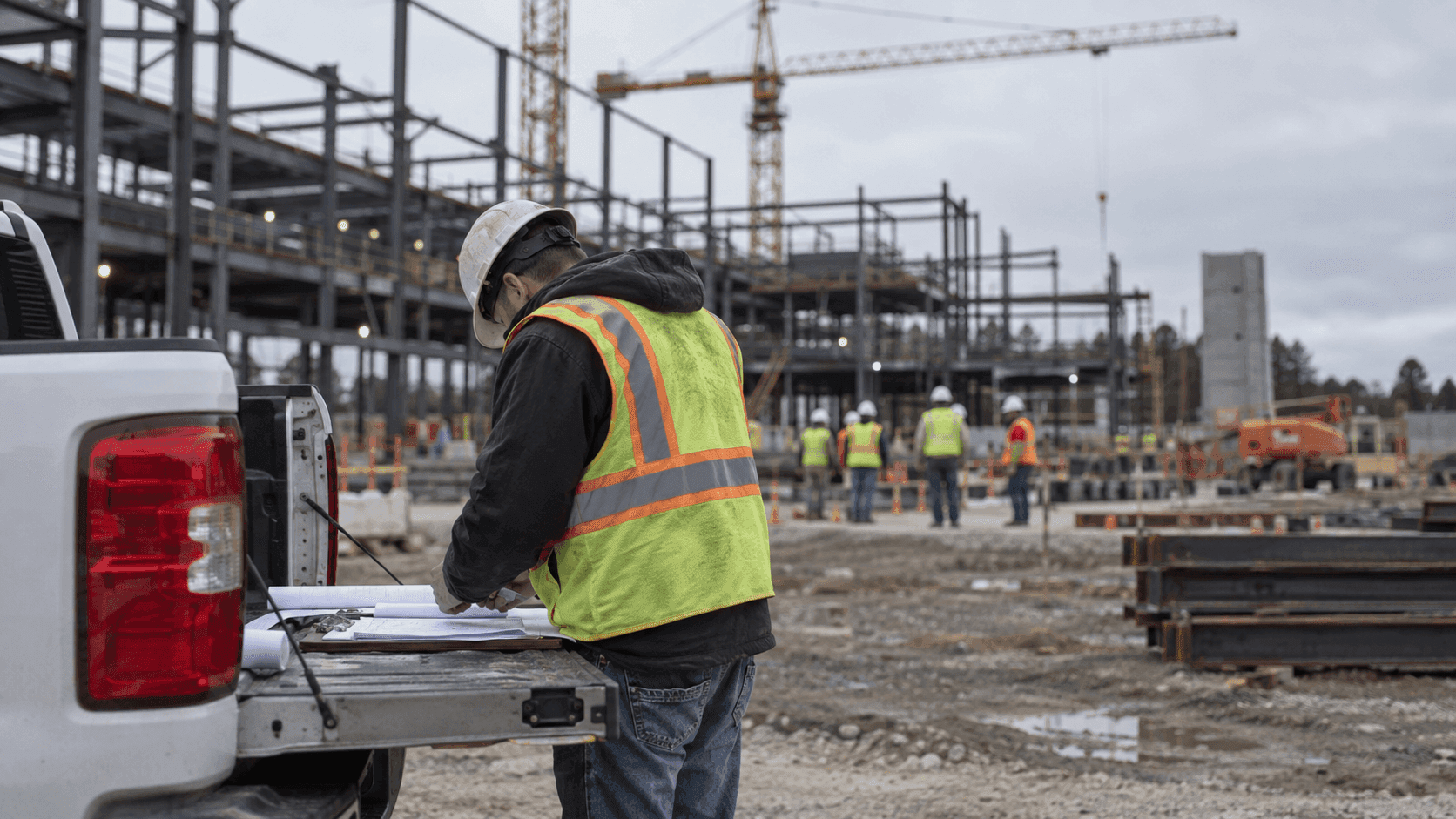
The conversation about safety technology on a US jobsite tends to end in the same place. Everyone in the trailer agrees it is a good idea. Then somebody asks which budget it comes out of, and the room goes quiet.
For a superintendent that is an accounting question, not an attitude question. The job was priced months ago. Safety spending that was not in the schedule of values rides in general conditions or in overhead, and both are numbers the company committed to on the day it won the work. Move them and you move the bid.
In several countries the question at least has an address. The safety budget is set by statute as a share of the contract price, the eligible items are published, and the site manager chooses from a list instead of arguing for a new line. The United States has no equivalent. No federal rule makes a contractor price safety technology into the job, and no line item is waiting to receive the charge.
The money exists. It sits in four separate places, none of which behaves like a budget line, and each of which refuses to buy something specific. Knowing which one you are asking is most of the difference between a signature and a quiet no.
I. Four money paths, and what each one refuses to buy
Cross off the one most people reach for first. OSHA runs the Susan Harwood Training Grant Program, and it is the federal money contractors have in mind when they ask whether Washington will help pay for equipment. It will not. The FY2023 funding opportunity announcement (SHTG-FY-23-03) allows training and educational materials, outreach and recruiting, and free training, then states that grant funds "may not be used to purchase any equipment or items to establish or update offices or training spaces," listing everything from desks to "technical equipment (such as computers, laptops, and VR equipment)." Safety gear is bought only for demonstration, capped at "what would be necessary for a training session demonstration." And there is a wall standing in front of all of that: eligible applicants are "nonprofit organizations including qualifying labor unions, community-based" organizations, so a contractor cannot apply at all. Each cycle publishes its own announcement, so read the current one. But Harwood teaches. It does not equip.
So who does pay. Four paths, different in kind rather than in size.
| Money path | Who pays | What it buys | The condition attached |
|---|---|---|---|
| State safety grant | A state agency or a state workers' compensation fund | Equipment, as a match or a flat award | Exists in some states and not others. Eligibility, match, cap, deadline and industry scope are set per program, and awards stop when the year's funding is spent |
| Workers' comp premium credit | State statute, applied through your carrier | Not equipment. A qualifying safety program | The percentage is fixed in state law, not negotiated per device. Certification and renewal windows are narrow, and self insured employers are sometimes certified but excluded from the discount |
| EMR and prequalification | Owners and general contractors | Nothing. It buys eligibility to bid | Practice, not regulation. What gets asked for, and how it is weighed, is decided by whoever is letting the work |
| Federal OSHA grant | US Department of Labor, through OSHA | Training. Explicitly not jobsite equipment | Applicants are nonprofit organizations, not employers. Terms are republished each cycle |
1. State safety grants: the only path that writes a check for hardware
Minnesota runs a Safety Grant Program through its Department of Labor and Industry under Minnesota Rules 5203.0010 to 5203.0070. It matches up to $10,000, and every dollar arrives with a string. The employer puts in at least a dollar for each dollar awarded, no award covers more than half the approved project, the business has to be two years old with at least one employee and workers' compensation coverage, and before any of it a qualified safety professional must survey the site and write a report recommending what you want to buy. After the contract is signed you have 120 days, earlier invoices do not count, and the same worksite waits two years before receiving again. Purchase and installation qualify, along with training on the equipment and its operating cost. Vehicles, weapons and personnel costs do not.
Texas Mutual, a carrier rather than a state agency, ran a $2,000,000 pool in 2026 at a flat $1,500 per award, open to policyholders in good standing on a first come basis. It opened at 8:00 a.m. Central on 14 July 2026, and by mid September 2026 the program page showed that year's funding exhausted. Approved applicants had 60 days to buy and file receipts. Ergonomic, safety, illness prevention and industrial hygiene equipment qualified. Payroll, in house labor and, revealingly, "equipment or materials needed to perform a job" did not. Because this is a carrier program rather than a state rule, its terms can change between cycles without any rulemaking at all.
Washington has two programs and both have a switch on them. The Small Employer Emergency Safety Grant (RCW 51.04.180, WAC 296-910) buys equipment for employers with 25 or fewer full time equivalents, but only activates when a governor's emergency proclamation creates a new safety requirement, and the L&I page currently reads that grant funding is not available. The larger Safety and Health Investment Projects program (WAC 296-900-175) funds proposals up to $175,000, closes 13 November 2026, announces results from January 2027, and lists NAICS 236, 237 and 238 construction among its priority industries.
Read the three together and a grammar shows up. This money buys an asset against a receipt, on a short clock, after somebody qualified wrote down that you needed it. It does not buy a subscription, and it pointedly does not buy the thing you would have purchased anyway to perform the work.
2. Premium credits: you get paid for the program, not for the device
Pennsylvania has run a certified workplace safety committee discount since Act 44 of 1993, now carried in the workers' compensation health and safety regulations at Chapter 129, Subchapter F. Certification earns 5 percent off the annual workers' compensation premium, with no cap on renewals. The committee must have operated to specification for six full months before you apply, meet monthly and hold a 51 percent quorum. An initial application lands 90 to 30 days before renewal and a renewal 90 to 15 days before, and the approval has to reach your carrier before the invoice changes. Self insured employers can be certified but are not eligible for the discount.
Florida fastens its credit to the same kind of object. Under Fla. Stat. §440.1025 and Rule 69L-5.221, F.A.C., a qualifying workplace safety program can earn up to a 2 percent premium credit, with self insurers applying on their own form.
Notice what the credit attaches to in both states. Not a device. A committee that meets, minutes that exist, a written plan somebody maintains. A technology purchase reaches this money indirectly, by making the program substantial enough to certify and to keep certified. A grant is a door that opens once. A credit is a discount that has to be re-earned on a calendar.
3. EMR and prequalification: no check, and the biggest number on the page
Owners and general contractors ask for an experience modification rate and run firms through contractor prequalification before the bid list closes. The EMR moves with claims history, claims history moves with incidents, and incidents are what the equipment exists to change. This is the only one of the four paths that can be worth more than the equipment costs, because what it gates is revenue rather than expense.
It is also the one with no rule underneath it. EMR thresholds are contract practice, not regulation. No federal standard says what your number has to be, so "is our number good enough" always resolves to "for which owner, on which job." Treat any threshold you are quoted as that owner's policy until you have read it in their prequalification packet.
II. Check the number before you build a plan on it
Ohio's Safety Intervention Grant is the program most often named when US contractors talk about buying equipment with state money, and specific match ratios and caps for it circulate widely. Read the rule and those numbers are not in it.
Ohio Administrative Code 4123-17-56, effective 9 December 2023, is precise about nearly everything else. It names who is eligible, from private state fund employers to public employer taxing districts. It requires coverage active for the year before application and held for a year after. A non training intervention has to be purchased and implemented within three months, documentation is due within thirty days of that window closing, and reports and case studies run for a year after the intervention is in place.
What the rule declines to fix is the money. It says the bureau "may establish by written agreement with the employer a requirement for matching funds from the employer in a ratio to be determined by the bureau," and separately that the bureau may set "the maximum amount of the safety grant funds" the same way. The match and the cap are administrative policy carried in a written agreement, not rule text. They can move without a rulemaking, and the ratio quoted in the article you read last week may already belong to a previous cycle.
That single rule is this article in miniature. Every figure above is fastened to a state, a program year, an eligibility class and a deadline, and at least one is fastened to nothing more durable than an agreement the agency writes. So the useful posture is not to memorize amounts. Ask the awarding body three questions before any number reaches a budget: is the program open right now, what are the match and the cap this cycle, and how many days from award to receipt. Ask your carrier the same way about credits.
III. Approved equipment and equipment that survives are two different lists
Suppose the money clears. That is where the real risk starts, because what a program will reimburse and what is still in use six months later overlap less than anyone expects. Three things separate them.
The first is whether it gets worn. A wearable's real performance is set by wear rate, not by its datasheet. Heavy, charged nightly, catching on the inside of a hard hat: wear rate drops quietly, and nobody files a complaint about it. Devices that clip to the hat or the vest and leave the work motion alone are the ones still in service at closeout. If the site issues and collects them daily, look at the return rate before anything else. Buy a hundred tags, get seventy back each evening, and the site's coverage is seventy percent whatever the invoice says.
The second is how many screens it creates. One site commonly runs a camera system, a wearable system and an access system side by side. Each of them works. Incidents happen in the gaps between them. A manager with three monitors ends up watching none of them, and that third monitor was not a line on the grant application.
The third is what record it leaves behind, and here the regulatory direction is not ambiguous. Under 29 CFR 1904.41 as amended (88 FR 47346, effective 1 January 2024), establishments in listed industries submit injury and illness data to OSHA electronically by 2 March each year. Which data depends on which list you are on, and construction sits mostly on the lighter one: covered construction establishments file the annual 300A summary, while the list that also requires Form 300 and Form 301 case detail holds exactly one construction code, NAICS 2381. Confirm which applies to you rather than assuming. But the trend is clear enough to plan against. The unit of proof is drifting from the annual total toward the individual case, and a system whose only output is that an alarm sounded will not help anyone write a case up afterward.
Those three tests filter harder than any spec sheet. A device that is not worn, that adds a monitor, and that keeps nothing you can hand to an investigator or an underwriter is one you buy once and then buy again.
IV. Location and video are worth more on the same drawing
AI cameras are good at what they do. Missing hard hat, entry into an exclusion zone, a person on the ground: a camera watches for those without getting tired. But every camera has a blind spot. Behind the structure, below grade, on a deck that went up this morning with nothing pointed at it yet.
A wearable location tag is the mirror image. It knows where somebody is in places no camera reaches, and it does not know what that person is doing. The two are complements rather than competitors. The failure mode is when they arrive from two vendors and live on two screens: two systems, each of them correct, that between them never produce a usable sentence. Put them on one drawing and the sentence appears. Two people in Zone 3, and one of them just went down.
ORBRO builds both halves of that sentence. In the construction worker safety configuration, UWB tags on hard hats and on heavy equipment alert through vibration and buzzer when they close inside a set distance, and the location and the response history are recorded in ORBRO OS, the control software. A hazard zone drawn on the plan alerts the manager's screen and the worker's device at the same moment, and during an evacuation the tag reads at the assembly point are what the headcount is checked against. Events caught by AI Event Manager, the video event detection product, appear at the same coordinates on the same plan, with gas and temperature readings on the same timeline. The manager is looking at one screen.
Construction adds a condition the money makes sharper. The site changes every day, so anchors move when the hazard zone moves, and a wearable has to keep working on a temporary deck with no permanent power. And because a grant pays once against a single approved project, whether the hardware can be pulled and redeployed on the next job is a procurement question rather than a facilities one.
All of which points at who you buy from. If the tags, the edge hardware and the control software come from three companies, "one screen" is an integration project, and an integration project is precisely the unbudgeted line that could not get approved in the first place. From one source it is a configuration. ORBRO develops the UWB tags, the edge hardware, the video AI event detection and the ORBRO OS platform that carries location and vision on the same plan, which is why the funding conversation and the deployment conversation can be the same one.
V. Five things to check before you buy
- Which pocket this comes from. A state safety grant, a carrier premium credit, or your own capital. The three have different windows, reviewers and evidence, and a case written for one will not pass for another.
- Purchase or subscription. Grant programs generally reimburse an asset against a receipt on a short clock, 60 days after approval in the Texas Mutual program and 120 days after contract in Minnesota. A monthly fee is a harder fit, so confirm the treatment before you structure the quote.
- How many screens it produces. Whether this merges into what the site already runs, or adds a monitor nobody watches.
- What record survives, and whether you can export it. Retention period, export format, how you retrieve an event after the fact. Picture the screen you would hand to an incident investigation, an insurance renewal or a prequalification review.
- Whether it moves to the next job. Reinstallation effort for anchors and cameras, license transfer. A grant pays once, and a system that works across ten sites has a different real unit cost than one that ends with this one.
Closing
None of this makes the approval automatic. It changes what is being asked for.
"Can we buy safety technology" has no owner and no budget line, which is exactly why the room goes quiet. "We are applying to this program for the pilot zone, the match and the cap for this cycle are confirmed in writing, the clock from award to receipt is sixty days, and the part the grant does not cover is carried by the premium credit and by the prequalification packet" is a request somebody can sign, because every clause in it names who pays.
It is worth being plain about scale. The awards above run from a flat $1,500 to five figures, and even at the top of that range a grant opens one zone rather than equipping a jobsite. That is its honest use. Grant money funds the pilot that produces the record, and the record is what the premium credit and the bid list respond to. The full deployment gets approved on the strength of the second conversation, not the first.
If you tell us what the site is and what worries you most about it, we can start there.
References: Susan Harwood Training Grant Program funding opportunity announcement SHTG-FY-23-03 (US Department of Labor). Minnesota Safety Grant Program (Minnesota Rules 5203.0010 to 5203.0070). Texas Mutual Safety Grants. Washington L&I Small Employer Emergency Safety Grant Program (RCW 51.04.180, WAC 296-910) and Safety and Health Investment Projects (WAC 296-900-175). Pennsylvania Certified Workplace Safety Committee (Act 44 of 1993; Chapter 129, Subchapter F). Florida Safety Program Premium Credit (Fla. Stat. §440.1025; Rule 69L-5.221, F.A.C.). Ohio Administrative Code 4123-17-56. 29 CFR 1904.41 (88 FR 47346). Program terms, amounts and availability were reviewed in September 2026 and change by state, by carrier and by program year. Eligibility and funding decisions rest with the awarding agency or your insurer, and nothing here is a determination that any product or purchase satisfies a regulatory requirement. Confirm with the awarding body and with your carrier before planning around any figure.
Recommended Blogs

Visitor Flow Analytics, Camera or Smartphone When You Cannot Hand Out Tags
2026-09-22

Smartphone Indoor Positioning, What an App and Beacons Cover and When You Need a Badge Tag
2026-09-21
RTLS for Senior Living: Filling the Daily Care Log with Resident Location Data
2026-09-18

Warehouse Labor Tracking: Why the Shift Plan and the Actual Headcount at Each Process Differ
2026-09-17