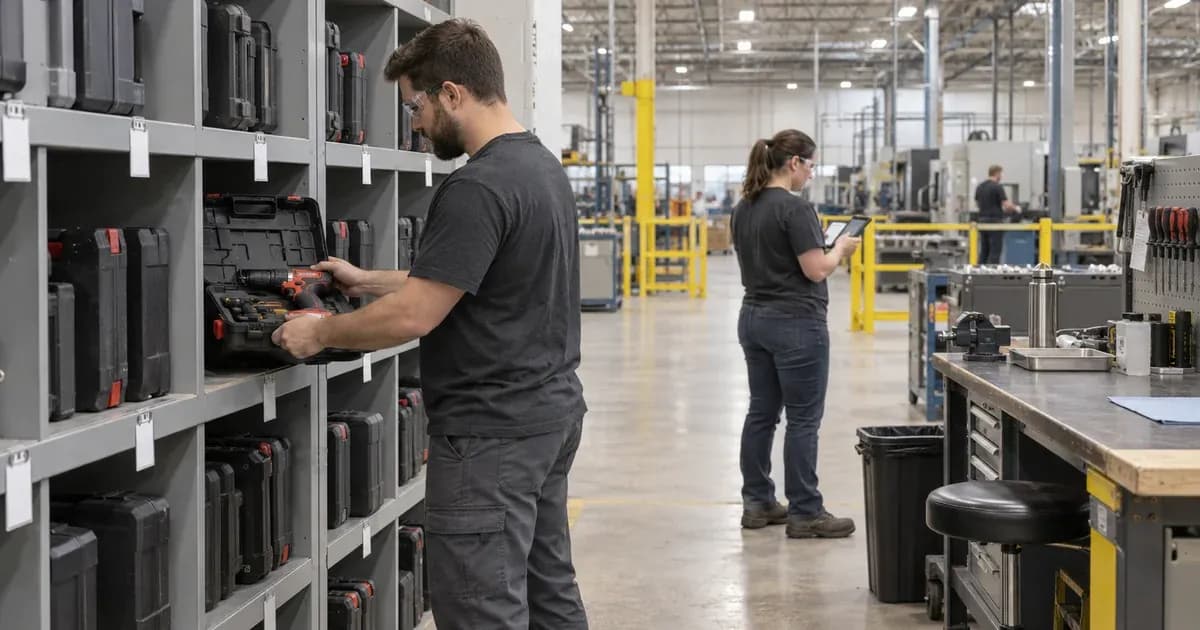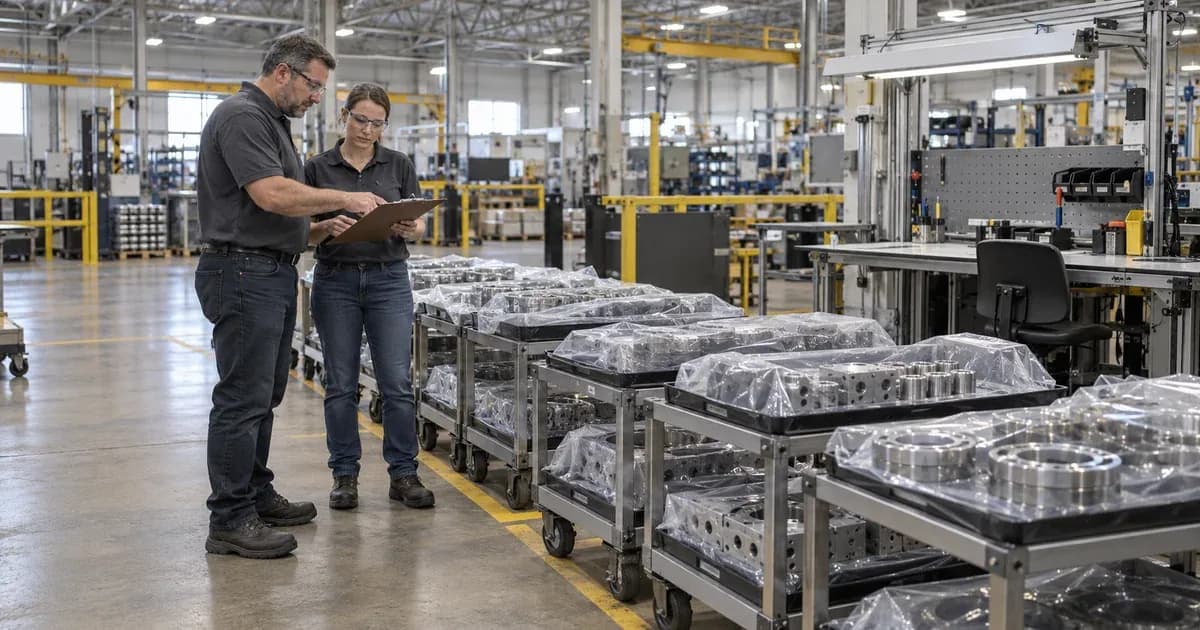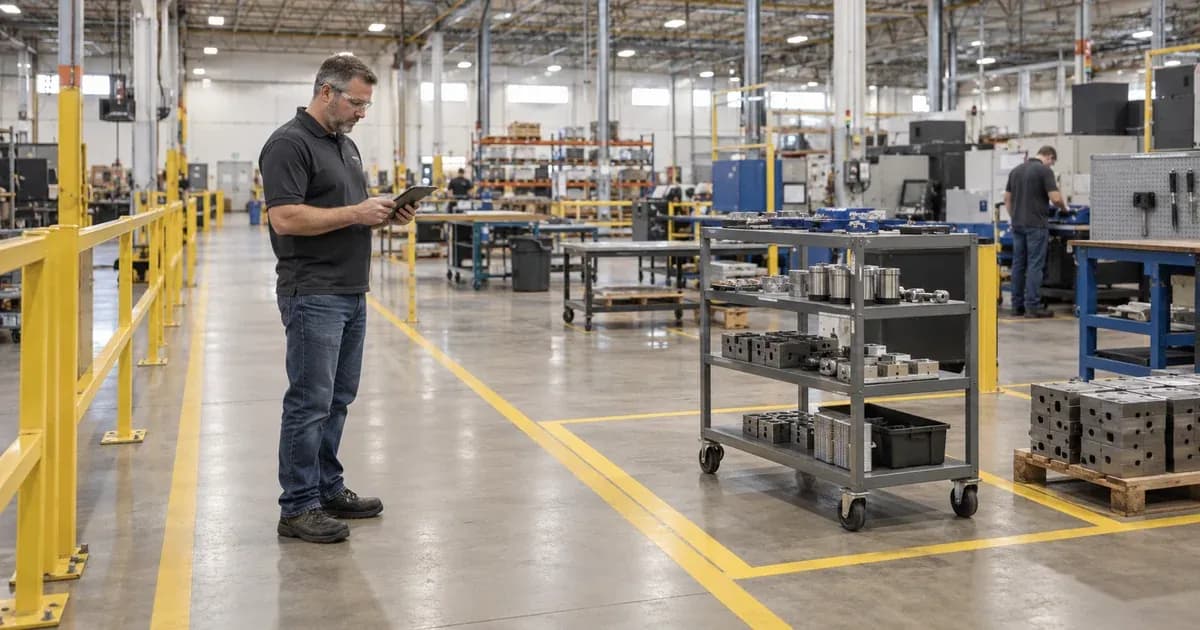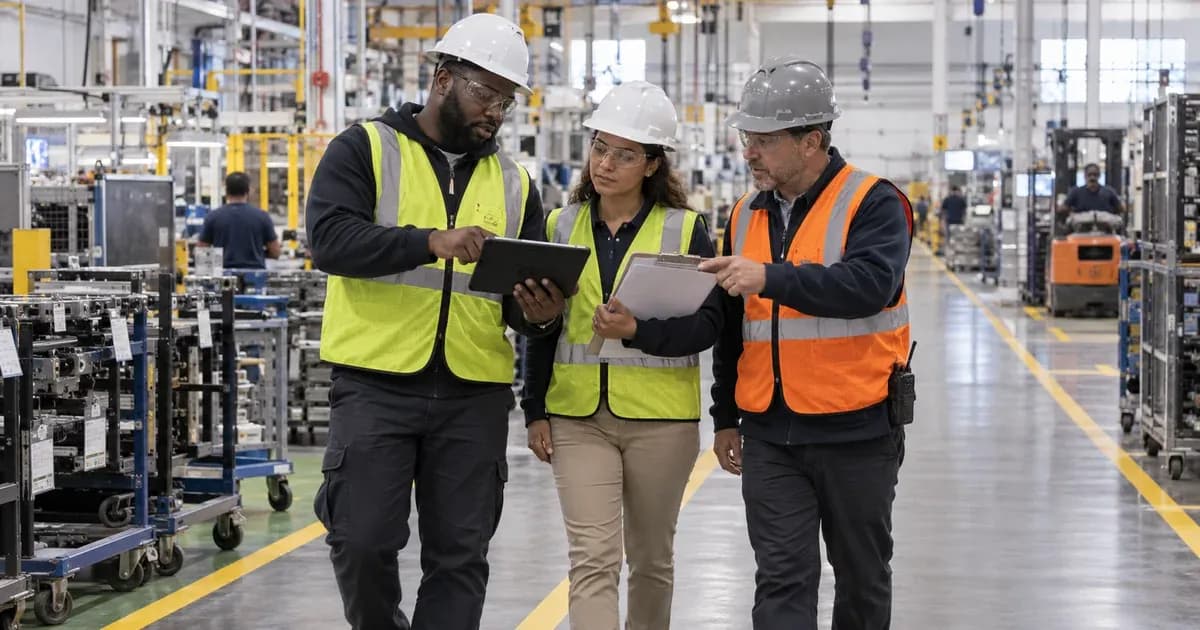
We began this series with the story of whales measuring distance through sound in the dark. From there we traveled past sonar at sea, radar in the sky, and GPS in Earth orbit, down into the world of UWB inside buildings — and in the previous installment, we followed the data journey of a single coordinate becoming a dot on a monitoring screen. From a whale's call to the control room display: a century of location tracking and RTLS.
This final chapter asks a single question: where does location tracking go from here? Making pronouncements about the future is always a delicate business, but reading the direction of changes already underway at sites where RTLS is actually deployed is entirely possible. This article is not a prophecy — it is a field report on currents already in motion.
Here is the conclusion up front. Location tracking is moving from being "a technology that puts dots on a map" to "a technology that understands an entire site — and, beyond that, moves it." We will trace that transition through five currents: sensor fusion, seamless indoor-outdoor positioning, the evolution of the tag, location as an input, and trust.
Of course, these five do not move independently. Fused sensors build a more complete picture; that picture crosses freely between indoors and outdoors; tags woven into what we wear make it all feel natural; automated systems act on top of it; and trust holds the whole structure up. Let's take them one at a time.
I. Two Sets of Eyes — Sensor Fusion of RTLS and Vision AI
The strength of tag-based RTLS is unambiguous. For anything wearing a tag, it knows who or what it is and exactly where it is right now. It can track vast numbers of assets and workers simultaneously, distinguishing floors and zones. But its weakness sits in the very same place: anything without a tag — an outside intruder, a partner company's vehicle, an unregistered forklift — never appears on the RTLS map.
Camera-based vision AI is precisely the opposite. It detects even untagged objects the moment they enter the frame, but it struggles to know exactly "who" they are, or what is happening beyond a wall or on another floor. In exchange, the camera sees not just position but "situation." A person collapsed on the floor, movement straying from a designated route, a vehicle approaching — reading scenes that coordinates alone cannot explain is vision AI's territory.
| Category | Tag-based RTLS | Camera Vision AI |
|---|---|---|
| What it sees well | Exact position and identity of tagged people and assets | The full on-site situation, including untagged outsiders and vehicles |
| What it struggles with | Anything without a tag | Identifying who someone is; beyond the frame and behind walls |
So the two technologies are not competitors but complements. One eye that knows precisely what has been tagged; another that sees even what has not. Only when these two eyes merge onto a single screen does the complete picture of a site emerge. The conclusion from Part 2 — that "the answer to indoor positioning is not a single technology but a combination" — extends here beyond combinations of positioning technologies into sensor fusion as a whole.
ORBRO is already turning this direction into product. Tag-based ORBRO RTLS and the video event detection product AI Event Manager are integrated into a single view on the monitoring platform ORBRO OS. The position the tag reports and the event the camera catches meet on the same map.
II. The Threshold Disappears — Seamless Indoor-Outdoor Tracking
Location tracking has always had an invisible threshold. Outside the building was GPS territory; inside was the realm of indoor positioning — and at that boundary, tracking would frequently break.
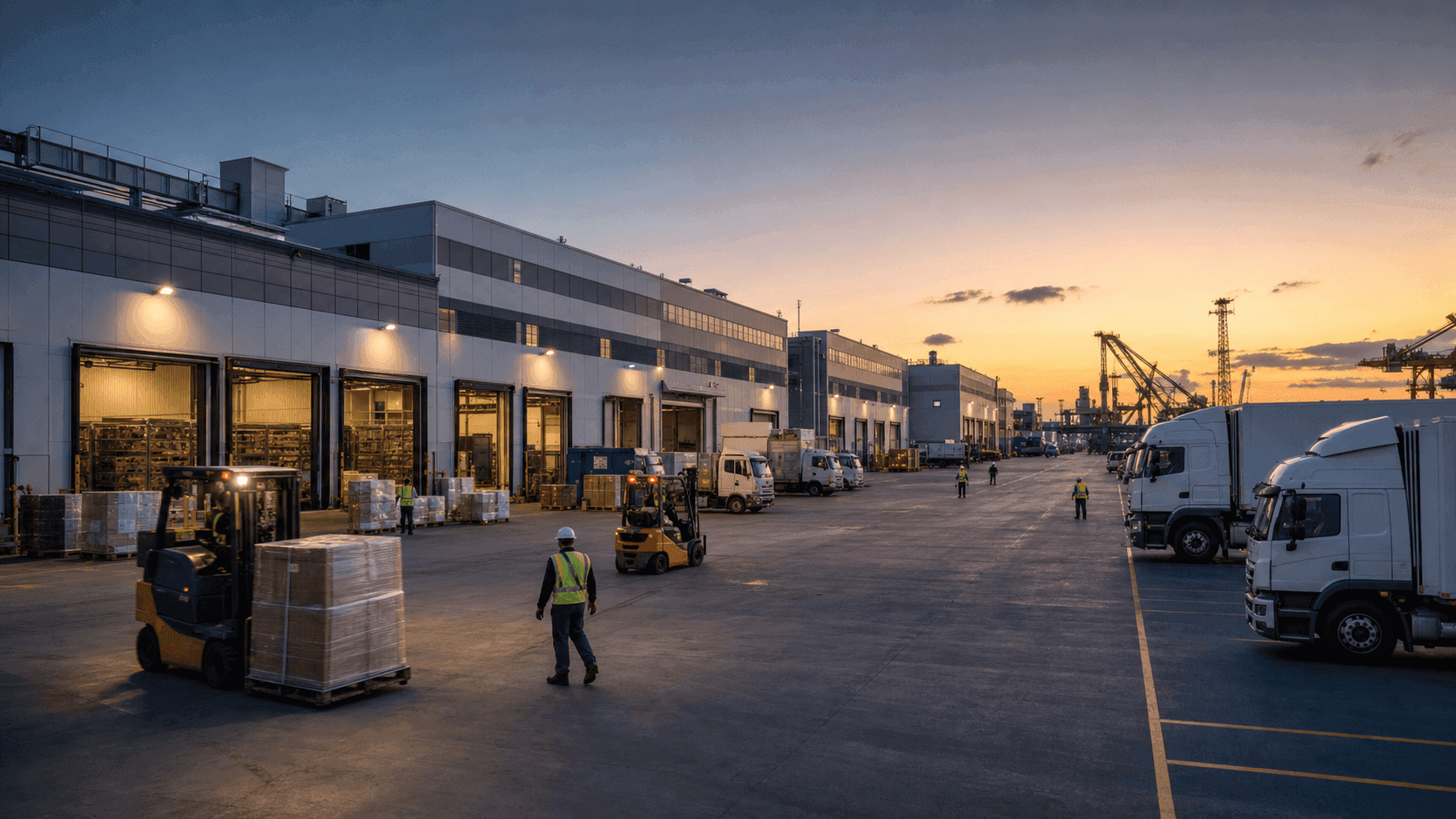
The current now flowing is one that erases this threshold. While a logistics vehicle crosses the yard, GPS strings its coordinates together; the moment it passes through the warehouse door, indoor positioning smoothly takes the baton — a handover. On the monitoring screen, a single trajectory runs unbroken from outdoors to indoors. Where the cargo lingered in the yard, which gate it came in through, which rack it stopped in front of — it all connects into a single story.
The essential point is that no one needs to notice the moment the technology changes. Just as we do nothing when a smartphone hands off between cellular and Wi-Fi, seamless indoor-outdoor positioning aims at exactly that kind of seamless experience. The more a site shuttles between indoors and outdoors — yards and warehouses, parking lots and factory buildings, dozens of times a day — the more this continuity is worth.
III. The Tag That Melts into the Body
As we saw in Part 3 when covering the principles of UWB, a tag is ultimately a small device exchanging radio waves. As standardization advances and the ecosystem widens, the device keeps moving in one direction: smaller, longer battery life, more natural form.
At the end of this current, the tag stops being "equipment you have to remember to carry" and becomes something absorbed into an employee badge, a hard hat, a wearable. As access cards once did, and as smartphones did, a technology becomes everyday life only when it gets small enough and lasts long enough. Like most good infrastructure, well-made location tracking eventually becomes invisible. The moment the wearer stops being conscious of wearing it is the moment the technology has fully settled into the field.
IV. From Watching to Acting — The Next Chapter of the Smart Factory
Until now, monitoring has largely been "a person watching a screen." Location data put dots on a map; judging and acting remained human work.
The next stage is a world where location becomes the system's "input." Equipment slows itself down when a person enters a hazard zone; the access system decides whether to open a door based on where a worker stands; AGVs and robots receive the real-time positions of people and assets and recompute their paths — beneath the autonomous operation the smart factory speaks of lies exactly this kind of location input. This is less a distant future to imagine than a matter of sequence: connecting the rules on the monitoring screen to the devices on the floor, one by one.
There is, of course, a precondition. As Part 4 showed, the pipeline from coordinate creation to on-screen display must be fast enough and reliable enough. A human watching a screen forgives a moment's delay; an input that halts a machine does not. This is why the maturity of "watching" monitoring is the starting line for "acting" monitoring.
V. Trust, the Final Condition
The last current is not about technology but about attitude. Location data is powerful. And precisely because it is powerful, the concern naturally follows that, misused, it can become an instrument of surveillance.
For location tracking to be sustainable, three things must come first: purpose limitation — using the data only for its original ends of safety and operational improvement; consent from the people being tracked; and transparency that hides nothing about what data is used and how. This is a matter of trust before it is a matter of regulatory compliance. Location tracking takes root in a workplace only when the people there feel "this system is not watching me — it is watching over me," and the organizations whose systems endure are the ones that build these three principles into the design from the very start of deployment.
In Closing — From Knowing to Moving
The whale measured distance in darkness with sound. Over the course of a century, humans learned that method and carried it through the sea, the sky, and space, all the way into our buildings. Unfold the timeline this series has followed and the direction was always the same: farther, more precise, and closer — into the spaces where we work and live.
"A world where everything knows its place" is not the destination of that journey but the starting point of the next chapter. The theme of that next chapter is moving beyond knowing — a world where a site that knows where everything is judges and responds on its own. And at that frontier stands ORBRO.
Thank you for traveling these five installments with us. Here is the story so far.
- The History of Positioning ① — From whale echolocation to sonar, radar, GPS, and indoor UWB: the grand arc of a century of location tracking
- The History of Positioning ② — The great indoor positioning showdown: why the answer is a combination, not a single technology
- The History of Positioning ③ — UWB in depth: how measuring distance with radio waves became the benchmark for indoor positioning
- The History of Positioning ④ — From coordinate to control screen: the journey a single piece of location data walks