Manufacturing Traceability: How Location Data Builds Process History Automatically
2026-08-24
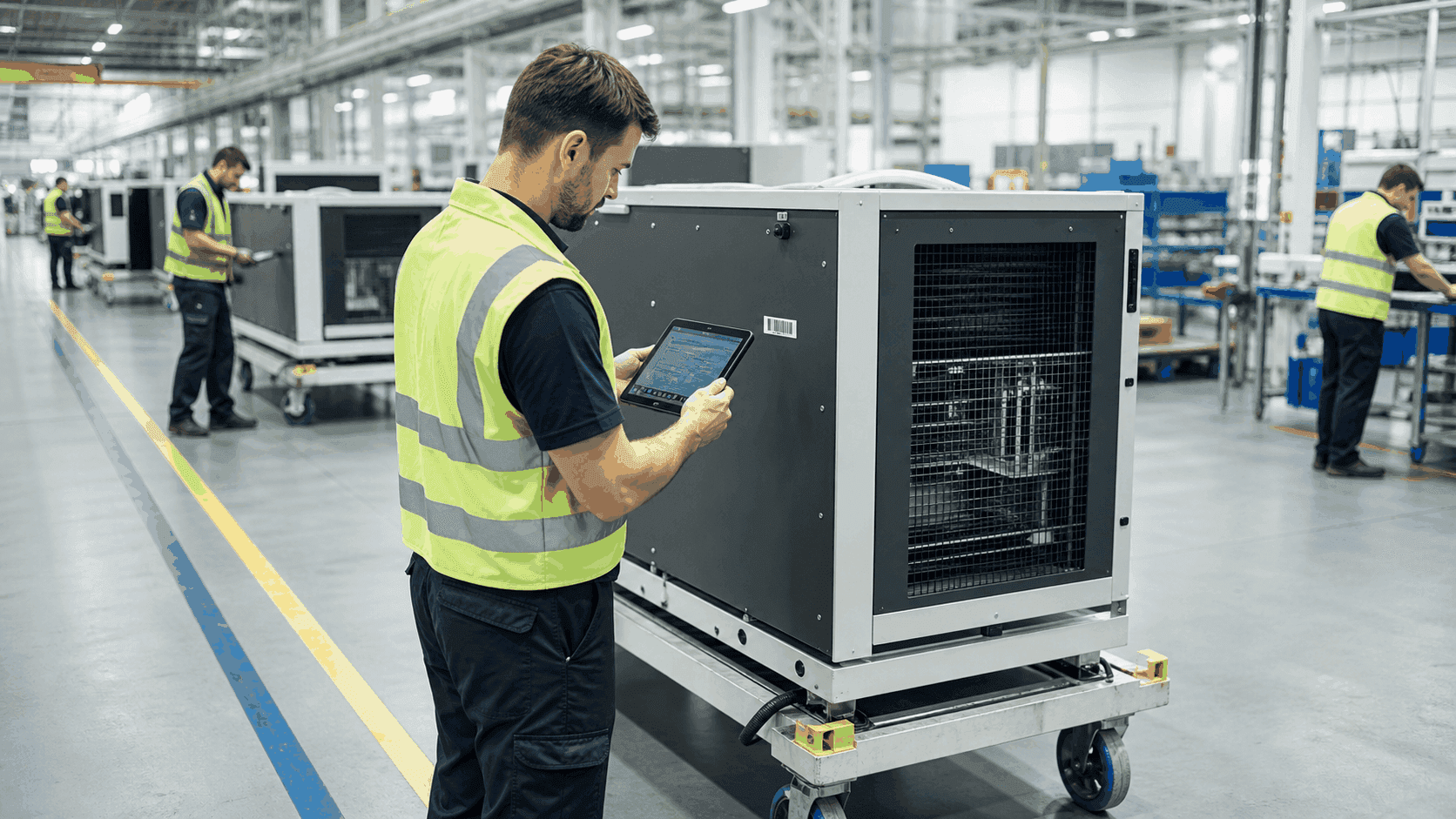
The meeting room on the day a recall notice arrives looks much the same in any factory. A serial number goes up on the whiteboard, and beneath it the work logs, barcode scan records, and MES entries are lined up in chronological order. Then someone notices the gap: nothing between the assembly-complete scan and the inspection-start scan. What fills that empty stretch of time is not a record. It is the memory of whoever happened to be on shift that day.
That scene tells you one thing. In many factories, history is not something that exists; it is something reconstructed after the fact. Reconstruction leans on memory, and memory does not hold up as evidence. This is why a thick stack of work logs suddenly feels thin when an auditor asks, "Can you prove when this product passed through which process?"
This article is about changing that structure. When you track a product's position in real time, its location history becomes its process history. Here is how to build a system where records accumulate without anyone writing them down.
I. Between One Scan and the Next
Barcode and QR based process records are event driven. The moment of the scan is accurate, but the time between scans is blank. Waiting between processes, a detour back for rework, temporary staging on the floor: none of these are part of the normal flow, so no scan point exists for them, and they leave no trace anywhere. A large share of lead time hides in exactly this invisible waiting.
A fair objection: why not simply enforce scanning discipline? Many factories try that route first. But scanning is work stacked on top of work, and on the busiest days it is the first thing skipped. The moment records matter most and the moment records get dropped are the same moment. Worse still, when you find a missing scan later, you cannot tell whether someone skipped the scan or the product skipped the process.
When the resolution of your records depends on human diligence rather than on equipment, pushing people harder does not fix it. You have to change who does the recording.
II. Zones Become Processes
The clue to changing the recorder is already painted on the factory floor. Processes are, for the most part, divided by space: an assembly zone, an inspection zone, a shipping staging zone. Which zone a product is in tells you which process step it is in.
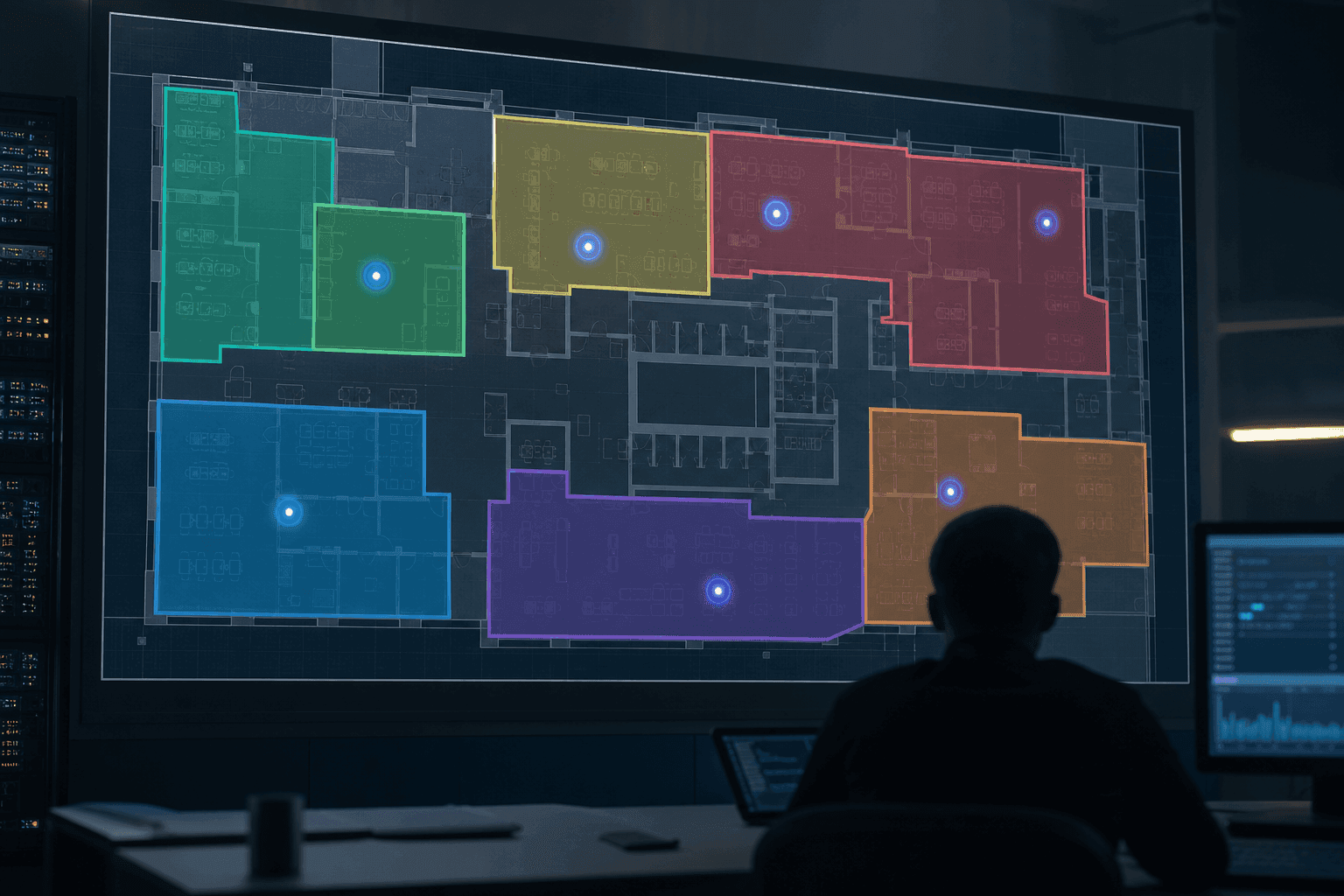
You simply carry that mapping into the system. Attach a location tag to the product, and draw process zones on the floor plan in the monitoring screen. When the product enters a zone, an entry event is recorded; while it stays, dwell time accumulates; when it leaves, an exit event is logged. The process-complete entry a person used to type is now written by location data. In ORBRO OS, zones are defined with Zone Manager, and the events zones generate are covered in detail in the moment you draw a zone, monitoring begins.
Real deployments follow the same structure. A vehicle processing center in Korea, where hundreds of cars move between inspection, bodywork, and painting zones, set work status to change automatically the moment a vehicle enters a zone. A financial device factory abroad defined its five-stage production line as five zones, so every unit's process transition is recorded without human input. What the two sites share is not hardware but design: defining the zones is defining the processes.
III. Only One Scan Remains
Automatic recording does not mean zero scans. One remains: at line entry, the product's serial barcode and its location tag are scanned in sequence and linked one to one. After that link, no human input is needed. The tag's location history accumulates as that serial's process history.
When the product is finished and reaches packing and shipment, the tag is collected and the link released, and the tag cycles to the next product. So you need tags not for every product you make, but only for as many work-in-process units as sit on the line at once.
The operational hinge is collection. If a tag is not collected, it ships out with the finished product. The safe pattern is to manage collection itself as a zone event, for example an alert that fires the moment a tag leaves the packing zone. A system that automates history should keep its own operating procedures under the same automation.
IV. Reconstruction Becomes a Lookup
Once history accumulates on its own, the first thing to disappear is the search party. Where a given serial is right now, in which process and at which position, comes back in a single query, so nobody walks the floor looking for it.
The next thing to disappear is the meeting-room reconstruction. In an audit or a recall, you can print the full process timeline for any serial, and you can pull every unit that passed through the same zone in the same time window as the affected one, narrowing the impact scope. This data is what lets you shrink a recall from everything to just this segment. Where memories used to be stitched together, a query result now sits.
And the accumulated history does not stop at evidence; it becomes material for improvement. How long units dwell in each process is recorded per unit, so bottlenecks show up as numbers rather than impressions, and the grounds for line balancing and capacity decisions build themselves. The same principle holds outside the factory: on a plant construction site, tag the materials and define installation areas as zones, and you get a record of which material entered which area when, plus per-zone installation progress.
V. Considerations Before Adopting
- Zone design is data quality: decide up front which Zone owns ambiguous boundaries (such as the waiting area between processes), or the history will come out muddy.
- Run a parallel period: do not drop the existing scan procedure at once; compare it against automatic records, confirm the match rate, then scale it down.
- MES and ERP integration scope: agree on which system and which fields receive zone events, and what counts as process completion.
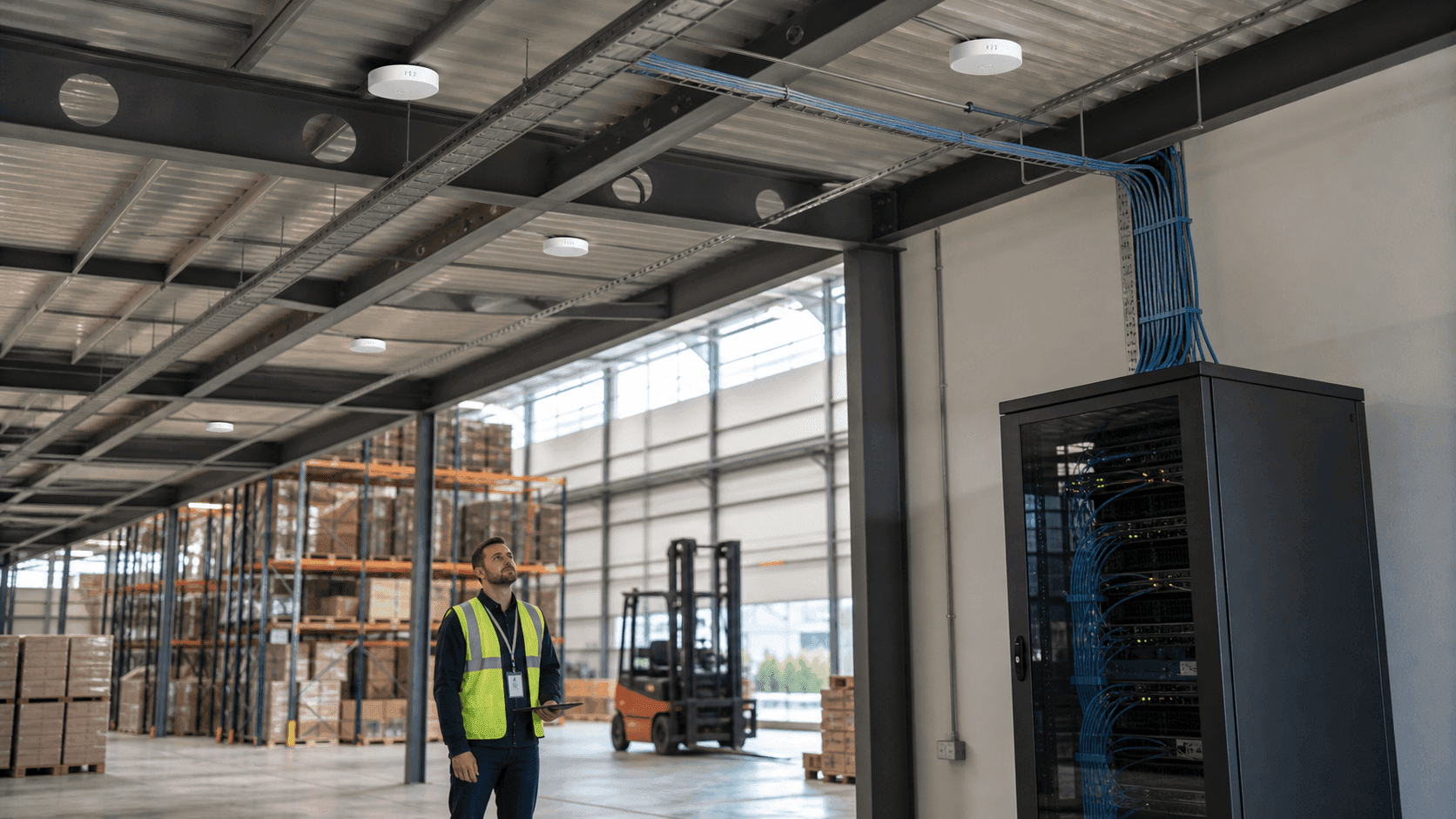
- Verify the site environment: manufacturing floors dense with metal equipment are tough radio environments. For system components and anchor placement conditions, see the UWB positioning system components guide.
- Tag collection rate: missed collections translate directly into operating cost. Put collection points, owners, and miss alerts into the design from day one.
Closing
Return to the meeting room on the day the recall notice arrived. The difference between the factory filling whiteboard blanks from memory and the factory opening a query screen was not created that day. It only surfaced that day; what decided it was who had been keeping the records all along. History kept by people has gaps the size of people. History kept by location has no empty hours.
ORBRO OS manages real-time positions of products and work in process, zone based process events, and per-serial timelines on one screen, and integrates with your existing MES and ERP. If your process history still depends on human record keeping, we can start by finding where your current records go blank. Send us your site conditions and we will take it from there.
Recommended Blogs
Monitoring Begins the Moment You Draw a Zone — Ten Location Tracking Apps
2026-08-05
What an Indoor UWB Location Tracking System Is Actually Made Of
2026-08-14
Mold Tracking: How to Locate Tooling Where Metal Is Densest
2026-08-04
Warehouse Labor Tracking: Why the Shift Plan and the Actual Headcount at Each Process Differ
2026-09-17
Material Handling Cart Tracking, Four Numbers to Check Before Buying More Carts
2026-09-29